Getting Around Vienna
Find the best way to access the city from anywhere.
Vienna Airport information
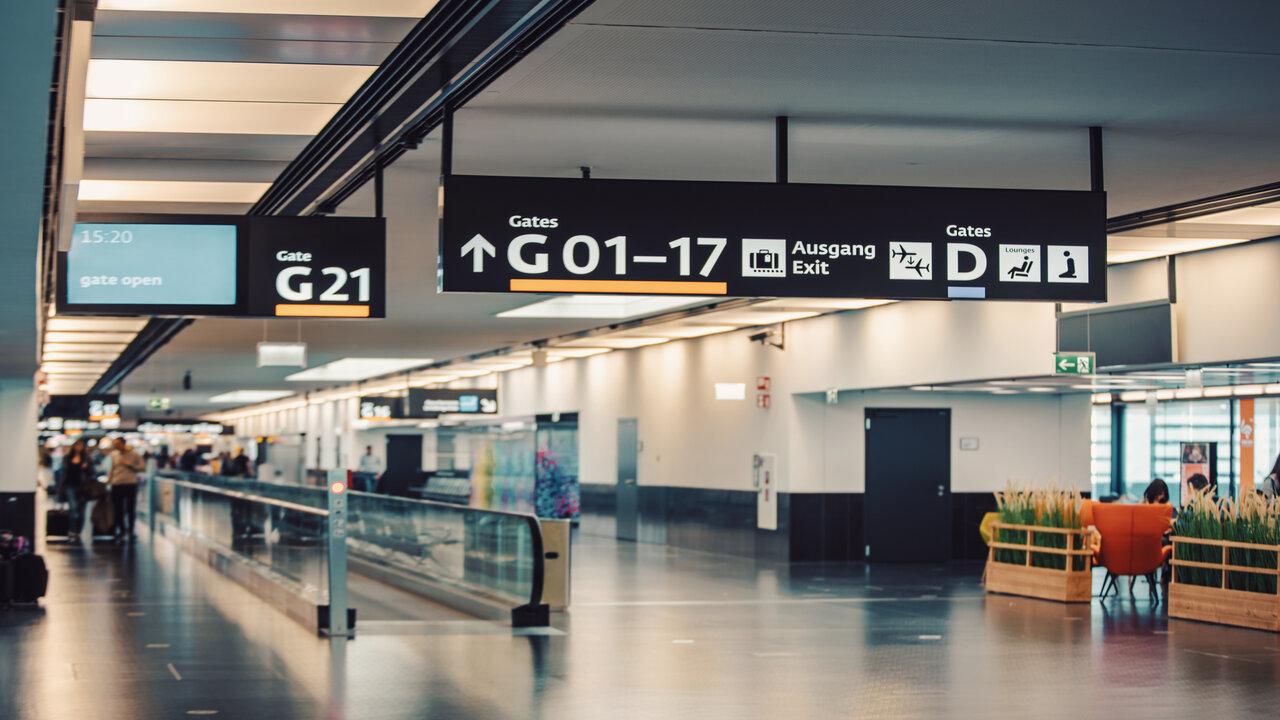
Vienna International Airport (VIE), also called Flughafen Wien-Schwechat, is the main airport for the city and is located just outside Vienna, about 18–20 minutes from the center by train or taxi. The airport is compact and modern, with clear signs in English and German, making it easy even for first-time visitors to find baggage claim, exits, and transport options. For event planners, the good news is that guests have several reliable ways to get into the city, from fast premium trains to cheaper local options and airport buses, so you can match the transport to your event budget and schedule.
Airport name: Vienna International Airport (VIE), located in Schwechat about 18–20 km from the city center.
Fastest option to city: City Airport Train (CAT) runs non-stop between the airport and Wien Mitte in about 16 minutes, usually every 30 minutes.
Cheaper train option: S-Bahn S7 commuter train also goes to Wien Mitte and other stations, taking around 23–25 minutes and costing only a few euros.
Airport buses: Vienna Airport Lines buses connect the airport with key spots like Schwedenplatz, Hauptbahnhof (main station), and Westbahnhof, with journeys of around 20–30 minutes depending on traffic.
Taxis and private transfers: A taxi or pre-booked car to central Vienna usually takes about 20 minutes in light traffic and offers door-to-door service, helpful for VIP guests or late-night arrivals.
Ticket tips: For budget-conscious events, suggest guests use the S7 train or Vienna Airport Lines bus and combine this with a city transport pass (24/48/72-hour or weekly ticket).
Planner suggestion: Include clear instructions in your event invite: name of arrival station (often Wien Mitte or Hauptbahnhof), recommended route (for example, “CAT to Wien Mitte + metro U3”), and estimated travel time.
Airport name: Vienna International Airport (VIE), located in Schwechat about 18–20 km from the city center.
Fastest option to city: City Airport Train (CAT) runs non-stop between the airport and Wien Mitte in about 16 minutes, usually every 30 minutes.
Cheaper train option: S-Bahn S7 commuter train also goes to Wien Mitte and other stations, taking around 23–25 minutes and costing only a few euros.
Airport buses: Vienna Airport Lines buses connect the airport with key spots like Schwedenplatz, Hauptbahnhof (main station), and Westbahnhof, with journeys of around 20–30 minutes depending on traffic.
Taxis and private transfers: A taxi or pre-booked car to central Vienna usually takes about 20 minutes in light traffic and offers door-to-door service, helpful for VIP guests or late-night arrivals.
Ticket tips: For budget-conscious events, suggest guests use the S7 train or Vienna Airport Lines bus and combine this with a city transport pass (24/48/72-hour or weekly ticket).
Planner suggestion: Include clear instructions in your event invite: name of arrival station (often Wien Mitte or Hauptbahnhof), recommended route (for example, “CAT to Wien Mitte + metro U3”), and estimated travel time.
Vienna Train information
Vienna is a major rail hub in Europe, which is perfect if your attendees are arriving from other Austrian cities or neighboring countries like Germany, Hungary, or Slovakia. The main gateway is Wien Hauptbahnhof (Vienna Central Station), a modern station with good signage, shops, and easy connections to the metro and trams, so guests can switch from long-distance trains to local transport without confusion. This makes it simple to organize events that involve regional travel, pre- or post-event tours, or multi-city itineraries.
Main long-distance station: Wien Hauptbahnhof (Vienna Central Station) is the key hub for most national and international trains.
Location and metro: Wien Hauptbahnhof is in the Favoriten district and has a direct connection to metro line U1, which quickly takes travelers to the city center (Stephansplatz) and other areas.
Other important stations:
Wien Meidling: Important stop for many long-distance and regional trains, with good connections to U6 metro and trams.
Wien Mitte: A central station linked to S-Bahn, metro lines U3 and U4, and the City Airport Train.
International links: Vienna has frequent trains to cities like Salzburg, Graz, Budapest, Prague, and Bratislava, with some route upgrades continuing through 2025 to improve speed and comfort.
New and improved routes: Rail plans for 2025 include upgrades to lines connecting Vienna with other regions, making long-distance travel smoother for conference and event guests.
On-site facilities: Wien Hauptbahnhof offers shops, cafés, luggage lockers, and car-rental desks, useful for guests arriving early or leaving late.
Planner suggestion: When booking venues, note the nearest major station (often Wien Hauptbahnhof, Meidling, or Wien Mitte) and share step-by-step directions (for example, “U1 from Hauptbahnhof to Karlsplatz, then tram”).
Main long-distance station: Wien Hauptbahnhof (Vienna Central Station) is the key hub for most national and international trains.
Location and metro: Wien Hauptbahnhof is in the Favoriten district and has a direct connection to metro line U1, which quickly takes travelers to the city center (Stephansplatz) and other areas.
Other important stations:
Wien Meidling: Important stop for many long-distance and regional trains, with good connections to U6 metro and trams.
Wien Mitte: A central station linked to S-Bahn, metro lines U3 and U4, and the City Airport Train.
International links: Vienna has frequent trains to cities like Salzburg, Graz, Budapest, Prague, and Bratislava, with some route upgrades continuing through 2025 to improve speed and comfort.
New and improved routes: Rail plans for 2025 include upgrades to lines connecting Vienna with other regions, making long-distance travel smoother for conference and event guests.
On-site facilities: Wien Hauptbahnhof offers shops, cafés, luggage lockers, and car-rental desks, useful for guests arriving early or leaving late.
Planner suggestion: When booking venues, note the nearest major station (often Wien Hauptbahnhof, Meidling, or Wien Mitte) and share step-by-step directions (for example, “U1 from Hauptbahnhof to Karlsplatz, then tram”).

Vienna Ground information
Taxis and Rental Cars
An excellent network of motorways, expressways, and highways makes it easier to travel in and around Vienna by taxis and rental cars. Taxis are an easy, quick, and comfortable mode of transport in Vienna. You can either dial a taxi hotline number or book it using taxi apps.
For car rentals, companies like ARAC, Europcar, Avis, Budget, Hertz, Sixt, Union Car, and more offer services across Vienna.
An excellent network of motorways, expressways, and highways makes it easier to travel in and around Vienna by taxis and rental cars. Taxis are an easy, quick, and comfortable mode of transport in Vienna. You can either dial a taxi hotline number or book it using taxi apps.
For car rentals, companies like ARAC, Europcar, Avis, Budget, Hertz, Sixt, Union Car, and more offer services across Vienna.

Vienna Public information
Vienna’s public transport is one of its biggest advantages for events and business trips: it is clean, safe, punctual, and easy to understand even for teenagers or first-time visitors. The network includes the metro (U-Bahn), trams, buses, and S-Bahn trains, all working together so people can move quickly between hotels, conference centers, restaurants, and sightseeing spots. For planners, this means you can confidently choose venues across the city, not just in the historic center, without worrying that guests will get lost.
Main transport types:
U-Bahn (metro): 5 lines (U1, U2, U3, U4, U6) covering most of the city; new U5 line is under construction with sections opening later this decade.
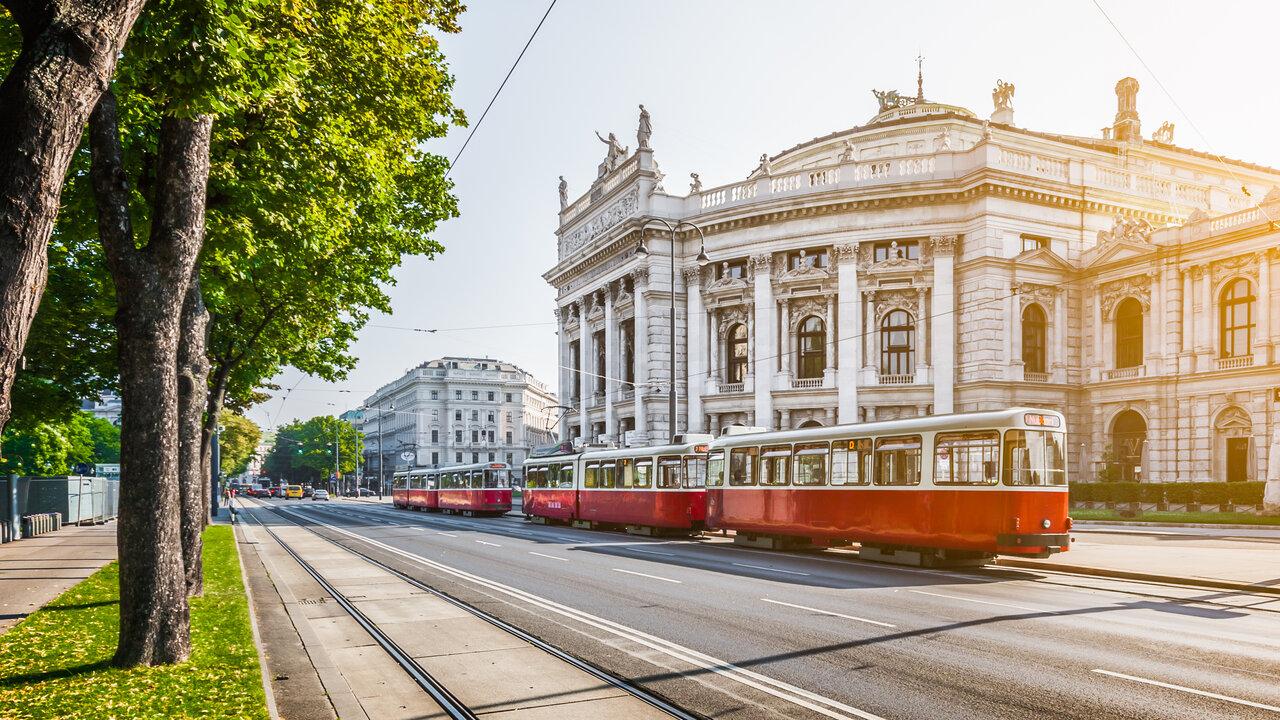
Trams: One of the largest tram networks in the world; great for short trips and sightseeing, especially lines 1 and 2 along the Ringstraße.
Buses: Fill in gaps where the metro and trams do not go, including night bus lines.
S-Bahn: Suburban trains connecting the city with outer districts and the airport (S7 line).
Operating times: Metro usually runs from around 5:00 a.m. to midnight, with 24-hour service on weekends and nights before public holidays, which is very helpful for evening events.
Tickets and passes: Single tickets and time-based passes (24/48/72-hour and weekly tickets) are valid across metro, trams, buses, and most S-Bahn lines in the core zone, making it easy for guests to use one ticket for the whole day.
Visitor-friendly routes: Trams 1 and 2 are recommended for simple, low-cost “city tours,” passing landmarks such as the State Opera and City Hall, which can be nice for group activities or free time before or after events.
Safety and clarity: Stations and vehicles are well-lit, with clear route maps and digital displays, and English is common on signs and ticket machines, which reduces confusion for international guests.
Planner suggestion: In your event materials, add a small “How to get there by public transport” section that names the nearest metro or tram stops and suggests using a day or multi-day pass for convenience and cost savings.
Main transport types:
U-Bahn (metro): 5 lines (U1, U2, U3, U4, U6) covering most of the city; new U5 line is under construction with sections opening later this decade.
Trams: One of the largest tram networks in the world; great for short trips and sightseeing, especially lines 1 and 2 along the Ringstraße.
Buses: Fill in gaps where the metro and trams do not go, including night bus lines.
S-Bahn: Suburban trains connecting the city with outer districts and the airport (S7 line).
Operating times: Metro usually runs from around 5:00 a.m. to midnight, with 24-hour service on weekends and nights before public holidays, which is very helpful for evening events.
Tickets and passes: Single tickets and time-based passes (24/48/72-hour and weekly tickets) are valid across metro, trams, buses, and most S-Bahn lines in the core zone, making it easy for guests to use one ticket for the whole day.
Visitor-friendly routes: Trams 1 and 2 are recommended for simple, low-cost “city tours,” passing landmarks such as the State Opera and City Hall, which can be nice for group activities or free time before or after events.
Safety and clarity: Stations and vehicles are well-lit, with clear route maps and digital displays, and English is common on signs and ticket machines, which reduces confusion for international guests.
Planner suggestion: In your event materials, add a small “How to get there by public transport” section that names the nearest metro or tram stops and suggests using a day or multi-day pass for convenience and cost savings.