Getting Around Brussels
Brussels Airport information
Brussels Airport (often called Zaventem) is the main international airport for the city and is very handy for both business travelers and event planners. It sits just outside Brussels, and the airport is directly linked to the city by train, bus, taxi, and private transfer, so you can choose the option that fits your time and budget. Trains from the airport go straight to major city stations in under 20 minutes, which is great if your event is near the center or close to a train hub. For groups, taxis and pre-booked transfers can be easier to manage, especially if attendees are arriving with luggage or after a long flight.
Airport name: Brussels Airport – Zaventem (code: BRU), the main international airport for Brussels.
Train to city: Direct Airport Express trains run roughly every 10–20 minutes to Brussels Central and other main stations, taking around 17–20 minutes.
Train cost: A one-way ticket usually costs about €9–€11, depending on ticket type and time.
Bus options: STIB airport buses (Line 12 on weekdays, Line 21 evenings and weekends) connect the airport to parts of the city in about 30–40 minutes, a good choice for budget-conscious travelers.
Taxi and transfers: Official taxis from the arrivals area take about 20–30 minutes to the center and typically cost around €45–€52, which can be efficient for VIPs or small groups.
Event tip: When planning an event, it helps to choose a hotel or venue close to a central train or metro station so guests can easily reach it from the airport by train or bus.
Airport name: Brussels Airport – Zaventem (code: BRU), the main international airport for Brussels.
Train to city: Direct Airport Express trains run roughly every 10–20 minutes to Brussels Central and other main stations, taking around 17–20 minutes.
Train cost: A one-way ticket usually costs about €9–€11, depending on ticket type and time.
Bus options: STIB airport buses (Line 12 on weekdays, Line 21 evenings and weekends) connect the airport to parts of the city in about 30–40 minutes, a good choice for budget-conscious travelers.
Taxi and transfers: Official taxis from the arrivals area take about 20–30 minutes to the center and typically cost around €45–€52, which can be efficient for VIPs or small groups.
Event tip: When planning an event, it helps to choose a hotel or venue close to a central train or metro station so guests can easily reach it from the airport by train or bus.

Brussels Public information
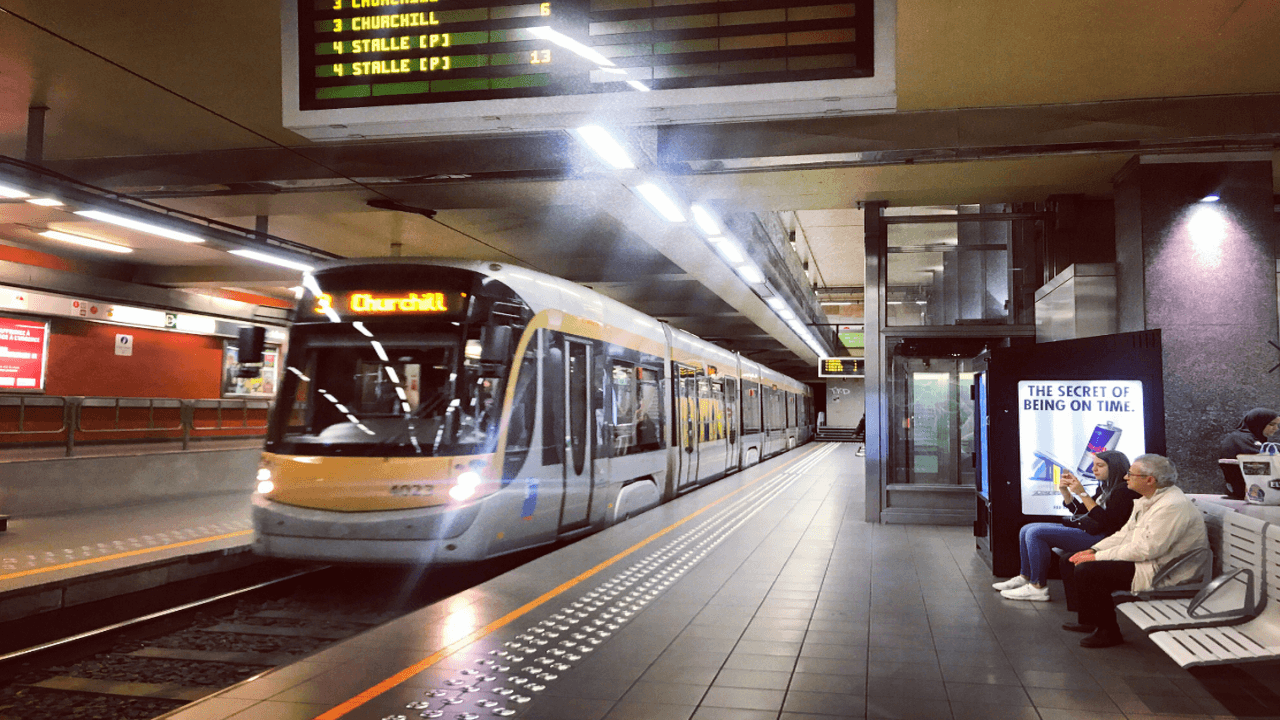
Brussels has a well-organized public transport system that is quite simple to use once you understand the basics, which is great for both tourists and people attending events. The main network inside the city is run by STIB/MIVB and includes metro, trams, and buses that all use the same ticket system. Metro lines are usually the fastest way to move across town, while trams and buses help you reach specific neighborhoods, hotels, and event venues that are not right next to a metro station. For planners, this means you can confidently suggest that guests rely on public transport instead of taxis for most daily trips.
Main operators: STIB/MIVB runs metro, trams, and buses in Brussels; other operators like De Lijn, TEC, and SNCB/NMBS trains connect the city with surrounding areas.
Metro and tram: Brussels has four main metro lines, with Lines 1 and 5 running east–west and Lines 2 and 6 forming a loop around the center, making it easy to reach business areas and main sights.
Buses and night buses: Regular buses cover areas without metro or tram, and the Noctis night bus network operates on weekends to help people get back to their hotels after evening events.
Tickets and passes: Brupass tickets let travelers use train, tram, bus, and metro within Brussels and nearby zones, which is useful for visitors staying slightly outside the center.
Apps and planning: The Floya app can help plan, book, and pay for different kinds of transport in Brussels, including public transport and shared bikes or scooters, which is handy for tech-savvy business travelers.
Event tip: When organizing an event, consider including a simple “How to get here by metro/tram” section in your info pack with the nearest station name and line number, so attendees feel confident navigating the city on their own.
Main operators: STIB/MIVB runs metro, trams, and buses in Brussels; other operators like De Lijn, TEC, and SNCB/NMBS trains connect the city with surrounding areas.
Metro and tram: Brussels has four main metro lines, with Lines 1 and 5 running east–west and Lines 2 and 6 forming a loop around the center, making it easy to reach business areas and main sights.
Buses and night buses: Regular buses cover areas without metro or tram, and the Noctis night bus network operates on weekends to help people get back to their hotels after evening events.
Tickets and passes: Brupass tickets let travelers use train, tram, bus, and metro within Brussels and nearby zones, which is useful for visitors staying slightly outside the center.
Apps and planning: The Floya app can help plan, book, and pay for different kinds of transport in Brussels, including public transport and shared bikes or scooters, which is handy for tech-savvy business travelers.
Event tip: When organizing an event, consider including a simple “How to get here by metro/tram” section in your info pack with the nearest station name and line number, so attendees feel confident navigating the city on their own.
Brussels Train Information
Brussels is a major rail hub in Europe, which makes it very attractive for conferences and business events where people come from different countries. The city’s main international station is Brussels-Midi/Zuid (also called Brussels-South), where high-speed trains like Eurostar and ICE arrive from cities such as Paris, London, Amsterdam, Cologne, and Frankfurt. From there, local trains, metro, trams, and buses connect quickly to the rest of the city and to key business districts. This means many attendees can skip flying and arrive right in the city center by train, often with fewer check-in formalities and shorter total travel time.
Main stations:
Brussels-Midi/Zuid (South): biggest station and main stop for international high-speed trains like Eurostar and ICE.
Brussels-Central: very close to the historic center, good for hotels, meetings, and sightseeing.
Brussels-Nord: another busy station used for regional and some international services.
International links: From Brussels-Midi, direct high-speed trains go to Paris in about 1 hour 22 minutes and to other major cities such as London, Amsterdam, Cologne, and Frankfurt.
Airport connection: Trains from Brussels Airport go directly to Brussels-Midi, Brussels-Central, and Brussels-Nord, making transfers easy for people heading to events near any of these hubs.
Station facilities: Brussels-Midi has shops, cafés, and services that make it comfortable for early arrivals or people waiting between trains.
Event tip: When inviting international guests, mention which station is closest to your venue (for example, “near Brussels-Central”) and share simple directions from Brussels-Midi to avoid confusion.
Main stations:
Brussels-Midi/Zuid (South): biggest station and main stop for international high-speed trains like Eurostar and ICE.
Brussels-Central: very close to the historic center, good for hotels, meetings, and sightseeing.
Brussels-Nord: another busy station used for regional and some international services.
International links: From Brussels-Midi, direct high-speed trains go to Paris in about 1 hour 22 minutes and to other major cities such as London, Amsterdam, Cologne, and Frankfurt.
Airport connection: Trains from Brussels Airport go directly to Brussels-Midi, Brussels-Central, and Brussels-Nord, making transfers easy for people heading to events near any of these hubs.
Station facilities: Brussels-Midi has shops, cafés, and services that make it comfortable for early arrivals or people waiting between trains.
Event tip: When inviting international guests, mention which station is closest to your venue (for example, “near Brussels-Central”) and share simple directions from Brussels-Midi to avoid confusion.