
Edmonton, AB Travel and Things to Do Guide
Edmonton, the capital of Alberta, is a growing meetings destination in Canada, recognized for its strong event infrastructure, sustainability focus, and diverse cultural offerings.
According to a Statistics Canada report, the city has a population of over 1 million in the metropolitan area, providing a stable base for corporate, association, and international events.
Edmonton is also featured in Lonely Planet’s Best in Travel 2025 Top Cities list, reinforcing its global visibility as a destination.
Known as “Canada’s Festival City,” Edmonton hosts a wide range of events year-round, supported by its extensive venue options and active cultural calendar. The city offers a mix of convention facilities, unique venues, and more than 15,000 hotel rooms across the region, making it suitable for conferences, trade shows, and corporate meetings of varying scale.
Why Edmonton is Ideal for Event Planning
Edmonton is structured to support and deliver cost-effective events. The city is ranked among the Top 4 Cities in North America on the Global Destination Sustainability Index, highlighting its commitment to sustainable and responsible event practices.
The destination offers strong financial advantages, including no provincial sales tax, which can significantly reduce overall event costs. This makes Edmonton a practical option for planners managing large-scale budgets.
Event planning support is led by Explore Edmonton, which provides complimentary, full-service assistance from planning through execution. This includes access to venues, coordination support, and connections to local suppliers.
Edmonton is also recognized as a Rainbow Registered destination, ensuring inclusive and welcoming experiences for attendees.
Major Convention Centers
Edmonton Convention Centre
Located in downtown Edmonton, this is the city’s primary venue for conferences, conventions, and exhibitions.
Key features:
Multiple exhibit halls and meeting rooms
Ballrooms and breakout spaces for flexible event setups
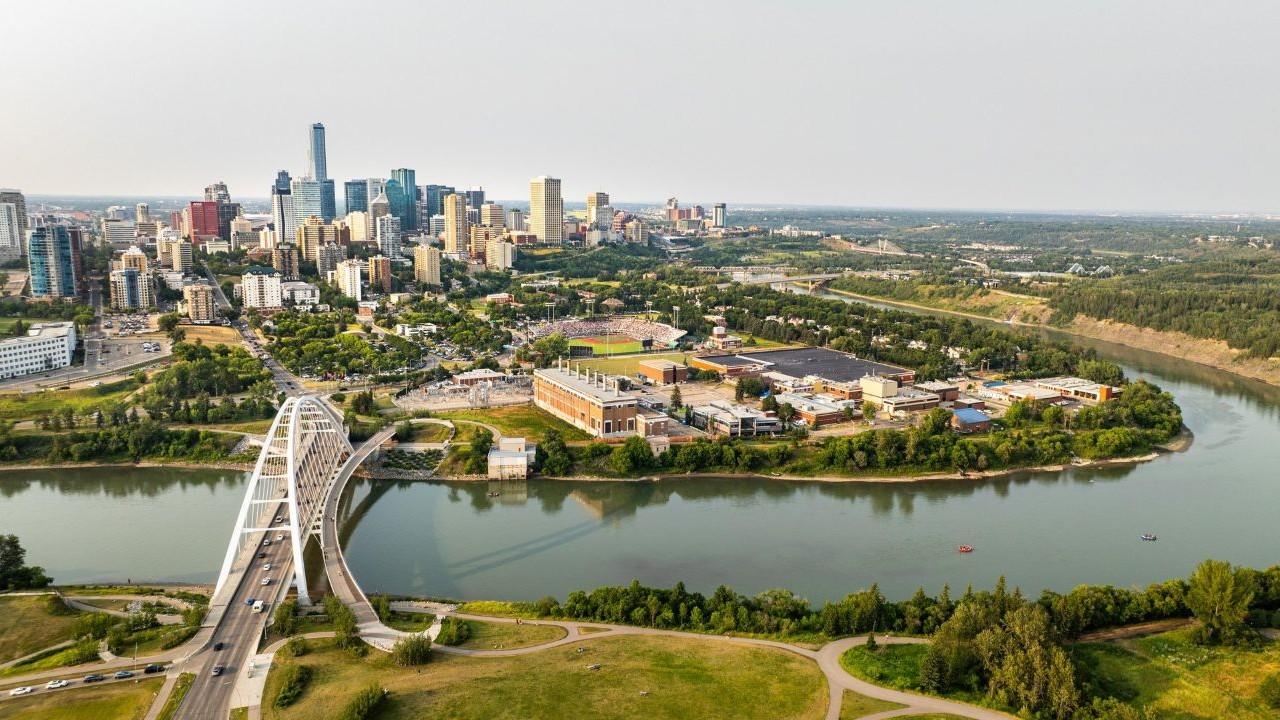
Views overlooking the North Saskatchewan River valley
The venue supports mid- to large-scale events and is located near major hotels and downtown amenities.
Strengths: central location, integrated facilities, scenic setting.
Accessibility and Connectivity
Edmonton is served by Edmonton International Airport, located approximately 25–30 minutes from downtown.
The airport offers direct connections to major Canadian cities, the United States, and select international destinations. Ground transportation options include taxis, rideshare services, airport shuttles, and rental cars.
Within the city, public transportation includes buses and light rail transit (LRT), providing access to key districts and venues. Travel times are generally manageable, supporting efficient event logistics.
Headquarters Hotels and Accommodation
Edmonton’s hotel landscape includes convention hotels, business properties, and boutique accommodations. Many hotels are located in the downtown core and near major venues, supporting coordinated event planning.
Key event-friendly hotels include:
Fairmont Hotel Macdonald – Landmark property with meeting space and river valley views.
JW Marriott Edmonton ICE District – Modern hotel with extensive meeting and conference facilities.
The Westin Edmonton – Centrally located with event-ready infrastructure.
Delta Hotels by Marriott Edmonton Centre Suites – Offers flexible meeting spaces for corporate events.
Additional hotels across the city provide capacity for large attendee groups and multi-venue events.
Unique Event Venues
Edmonton offers a range of venues that reflect its cultural and natural identity:
Edmonton International Fringe Theatre Festival: Highlights the city’s strong festival culture and creative industries.
Indigenous cultural venues: Provide immersive experiences and culturally themed events.
River Valley outdoor spaces – Suitable for networking events and team-building activities.
Culinary venues – Support dining experiences and private group events.
These venues are well-suited for incentive programs, experiential events, and social functions.
Strategic Neighborhood Experiences
Downtown Edmonton – Central business district with major venues and hotels.
ICE District – Modern entertainment and event hub with integrated facilities.
Old Strathcona – Cultural district with historic venues and dining options.
River Valley – Natural setting for outdoor and recreational activities.
Each area supports different event formats, from formal conferences to informal networking.
Academic and Innovation Venues
Edmonton is home to institutions such as the University of Alberta, supporting academic conferences and research-driven events. The city also has strong industry sectors, including energy, technology, health innovation, agri-business, and advanced manufacturing, making it relevant for specialized conferences and industry events.
Event Planning Support Services
Edmonton offers access to a well-developed network of event
professionals and organizations who assist with:
Venue sourcing and coordination
Transportation and logistics
Event production and audiovisual services
Sustainable event planning solutions
Industry connections through organizations such as Edmonton Global
These services support both national and international events.
Climate and Best Time for Events
Spring (March–May): Suitable for conferences and indoor events as temperatures begin to rise
Summer (June–August): Peak season with festivals and outdoor event opportunities
Autumn (September–November): Strong period for conferences with moderate weather
Winter (December–February): Cold season, suitable for indoor meetings and themed events
Conclusion: Edmonton as an Event Destination
Edmonton provides a well-balanced option for planners seeking a destination with strong sustainability credentials, supportive infrastructure, and diverse venue options. The combination of a central convention center, accessible hotels, and a wide range of cultural and outdoor experiences supports events of all sizes.
With its focus on sustainability, affordability, and inclusive event experiences, Edmonton is well-suited for conferences, corporate meetings, and incentive programs that benefit from both structure and a distinctive Canadian setting.
According to a Statistics Canada report, the city has a population of over 1 million in the metropolitan area, providing a stable base for corporate, association, and international events.
Edmonton is also featured in Lonely Planet’s Best in Travel 2025 Top Cities list, reinforcing its global visibility as a destination.
Known as “Canada’s Festival City,” Edmonton hosts a wide range of events year-round, supported by its extensive venue options and active cultural calendar. The city offers a mix of convention facilities, unique venues, and more than 15,000 hotel rooms across the region, making it suitable for conferences, trade shows, and corporate meetings of varying scale.
Why Edmonton is Ideal for Event Planning
Edmonton is structured to support and deliver cost-effective events. The city is ranked among the Top 4 Cities in North America on the Global Destination Sustainability Index, highlighting its commitment to sustainable and responsible event practices.
The destination offers strong financial advantages, including no provincial sales tax, which can significantly reduce overall event costs. This makes Edmonton a practical option for planners managing large-scale budgets.
Event planning support is led by Explore Edmonton, which provides complimentary, full-service assistance from planning through execution. This includes access to venues, coordination support, and connections to local suppliers.
Edmonton is also recognized as a Rainbow Registered destination, ensuring inclusive and welcoming experiences for attendees.
Major Convention Centers
Edmonton Convention Centre
Located in downtown Edmonton, this is the city’s primary venue for conferences, conventions, and exhibitions.
Key features:
Multiple exhibit halls and meeting rooms
Ballrooms and breakout spaces for flexible event setups
Views overlooking the North Saskatchewan River valley
The venue supports mid- to large-scale events and is located near major hotels and downtown amenities.
Strengths: central location, integrated facilities, scenic setting.
Accessibility and Connectivity
Edmonton is served by Edmonton International Airport, located approximately 25–30 minutes from downtown.
The airport offers direct connections to major Canadian cities, the United States, and select international destinations. Ground transportation options include taxis, rideshare services, airport shuttles, and rental cars.
Within the city, public transportation includes buses and light rail transit (LRT), providing access to key districts and venues. Travel times are generally manageable, supporting efficient event logistics.
Headquarters Hotels and Accommodation
Edmonton’s hotel landscape includes convention hotels, business properties, and boutique accommodations. Many hotels are located in the downtown core and near major venues, supporting coordinated event planning.
Key event-friendly hotels include:
Fairmont Hotel Macdonald – Landmark property with meeting space and river valley views.
JW Marriott Edmonton ICE District – Modern hotel with extensive meeting and conference facilities.
The Westin Edmonton – Centrally located with event-ready infrastructure.
Delta Hotels by Marriott Edmonton Centre Suites – Offers flexible meeting spaces for corporate events.
Additional hotels across the city provide capacity for large attendee groups and multi-venue events.
Unique Event Venues
Edmonton offers a range of venues that reflect its cultural and natural identity:
Edmonton International Fringe Theatre Festival: Highlights the city’s strong festival culture and creative industries.
Indigenous cultural venues: Provide immersive experiences and culturally themed events.
River Valley outdoor spaces – Suitable for networking events and team-building activities.
Culinary venues – Support dining experiences and private group events.
These venues are well-suited for incentive programs, experiential events, and social functions.
Strategic Neighborhood Experiences
Downtown Edmonton – Central business district with major venues and hotels.
ICE District – Modern entertainment and event hub with integrated facilities.
Old Strathcona – Cultural district with historic venues and dining options.
River Valley – Natural setting for outdoor and recreational activities.
Each area supports different event formats, from formal conferences to informal networking.
Academic and Innovation Venues
Edmonton is home to institutions such as the University of Alberta, supporting academic conferences and research-driven events. The city also has strong industry sectors, including energy, technology, health innovation, agri-business, and advanced manufacturing, making it relevant for specialized conferences and industry events.
Event Planning Support Services
Edmonton offers access to a well-developed network of event
professionals and organizations who assist with:
Venue sourcing and coordination
Transportation and logistics
Event production and audiovisual services
Sustainable event planning solutions
Industry connections through organizations such as Edmonton Global
These services support both national and international events.
Climate and Best Time for Events
Spring (March–May): Suitable for conferences and indoor events as temperatures begin to rise
Summer (June–August): Peak season with festivals and outdoor event opportunities
Autumn (September–November): Strong period for conferences with moderate weather
Winter (December–February): Cold season, suitable for indoor meetings and themed events
Conclusion: Edmonton as an Event Destination
Edmonton provides a well-balanced option for planners seeking a destination with strong sustainability credentials, supportive infrastructure, and diverse venue options. The combination of a central convention center, accessible hotels, and a wide range of cultural and outdoor experiences supports events of all sizes.
With its focus on sustainability, affordability, and inclusive event experiences, Edmonton is well-suited for conferences, corporate meetings, and incentive programs that benefit from both structure and a distinctive Canadian setting.
Weather and Seasonality
Edmonton enjoys four distinct seasons that typically transition easily from one to another. During the winter months, Edmonton's average temperature is -15°C, but temperatures have been known to drop to as low as -35°C. The average temperature throughout June and July is 22°C, though significantly higher temperatures are recorded regularly.
The city is fairly dry in terms of precipitation, with an average of 144 centimeters of snow per year and 38 centimeters of rain. Warm, dry weather makes summer the best time to visit and enjoy long days in the city.
The city is fairly dry in terms of precipitation, with an average of 144 centimeters of snow per year and 38 centimeters of rain. Warm, dry weather makes summer the best time to visit and enjoy long days in the city.
| Month | High/Low °F | Seasonality |
|---|---|---|
| January | 19°/2° | - |
| February | 23°/4° | - |
| March | 34°/16° | - |
| April | 50°/29° | - |
| May | 62°/39° | - |
| June | 68°/46° | - |
| July | 71°/50° | - |
| August | 69°/47° | - |
| September | 61°/39° | - |
| October | 51°/29° | - |
| November | 31°/13° | - |
| December | 21°/3° | - |