
Manchester Travel and Things to Do Guide
Manchester is consistently ranked as a leading conference destination for planners and delegates alike, backed by an enviable track record of delivering large-scale events and continuous investment in its venues and infrastructure.
Known as a "city of firsts" - from splitting the atom and building the first programmable computer to founding the first professional football league - Manchester has transformed from an industrial heartland into a vibrant, ambitious city at the heart of northern England, making it a natural global gateway for international meetings and conventions.
The city pairs serious meetings capability with a distinctive urban character: a celebrated independent food and drink scene, a deep cultural and sporting heritage, walkable districts such as Spinningfields and the Northern Quarter, and easy access to surrounding experiences. Its temperate maritime climate keeps conditions moderate year-round, with cool summers, mild winters, and rare snowfall, which supports a long, dependable events calendar.
Sustained development underpins Manchester's appeal for organizers. The city offers a full range of flexible event space in Manchester - from 12,000 delegates theater-style down to a 10-person boardroom - supported by more than 11,000 city-centre hotel bedrooms, a compact and walkable core, and one of the UK's most connected airports. Together, these assets make sourcing and staging events in Manchester straightforward and scalable.
Why Manchester is Ideal for Event Planning
Manchester's compact city centre is a major logistical advantage for planners. The principal convention center, headquarters hotels, dining districts, and unique venues sit within easy walking distance of one another, reducing transfer times and simplifying delegate movement across a multi-day program.
The city is exceptionally well connected for both domestic and international audiences. Manchester Airport - the largest UK airport outside London - sits roughly 20 minutes from the city centre and offers direct connections to more than 200 destinations worldwide, while four city-centre rail stations and an integrated tram, bus, and rail network make onward travel efficient.
Hospitality strength rounds out the picture. A broad mix of branded, boutique, and historic hotels, an experienced convention bureau, and a long history of hosting national party conferences and major international trade shows give planners confidence in the city's ability to deliver at scale.
Accessibility and Connectivity
Manchester Airport is the global gateway to northern England and the largest UK airport outside London, handling more than 27 million passengers a year across three terminals and offering direct connections to over 200 destinations, including Beijing, Dubai, New York, Los Angeles, Paris, and Amsterdam. It sits roughly 20 minutes from the city centre, with frequent direct trains to Manchester Piccadilly and a tram link on the Metrolink network.
- Metrolink trams link the airport, city-centre stations, and surrounding districts, with frequent services through the central zone
- Free city-centre shuttle buses connect major rail stations, hotels, and key districts such as Spinningfields, the Northern Quarter, and Chinatown
- A compact, walkable core keeps most hotels, venues, and dining within easy reach on foot
The city centre is anchored by four rail stations - Piccadilly, Victoria, Oxford Road, and Deansgate - with strong intercity rail and motorway links across the UK.
Many of the city's leading hotels sit within a short walk of Manchester Central, simplifying delegate logistics for convention programs.
Entertainment and Outdoor Activities
Manchester offers a deep cultural, sporting, and recreational program that easily extends an event itinerary.
- World-class free museums and galleries including the Science and Industry Museum, Manchester Art Gallery, the People's History Museum, and the National Football Museum
- Stadium tours and matchday hospitality at Old Trafford and the Etihad
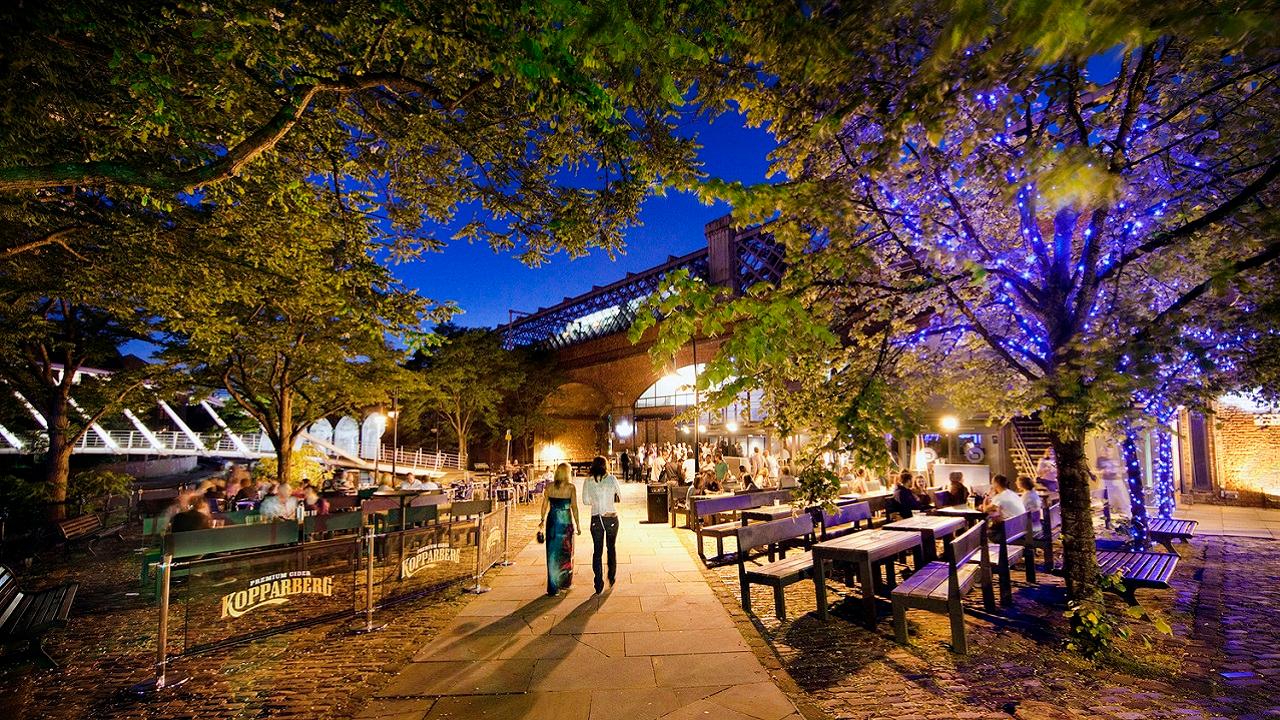
- Heritage and waterfront experiences at Castlefield, the Bridgewater Canal, and Salford Quays / MediaCityUK
- A lively arts and nightlife scene across the Northern Quarter, the Gay Village, and venues such as HOME and Factory International
These attractions make it easy to build pre- and post-event experiences that take delegates beyond the convention floor and into the wider city.
Event Planning Support Services
Manchester offers a well-developed support ecosystem to help planners deliver events efficiently.
- Convention bureau support for venue sourcing, bid assistance, and destination coordination
- Hotel and room-block coordination across a large, walkable city-centre inventory
- Ground transport, transfers, and integrated public transit planning
- On-site AV, production, and live-streaming capabilities at major venues, including in-house broadcast facilities at Manchester Central
- DMC, logistics, and group-experience providers for receptions, tours, and team activities
These services support the full range of meetings, from intimate corporate functions to large international conferences and exhibitions.
Climate and Best Time for Events
- Spring (March–May): Mild and increasingly bright, with daytime highs rising from around 8°C to 15°C - a comfortable shoulder season for conferences.
- Summer (June–August): The peak season, with highs around 19°C, long daylight hours, and the most reliable weather for outdoor receptions and festivals.
- Autumn (September–November): Cooling from the mid-teens toward single digits, with a strong calendar of conferences and cultural events as the city returns to business rhythm.
- Winter (December–February): Cool and mild rather than harsh, with January temperatures around 1–6°C and rare snowfall - well suited to indoor conferences and gala events.
Conclusion: Manchester as an Event Destination
Manchester combines large-scale convention infrastructure, outstanding global air access, a compact and walkable city centre, and a deep base of hotels, unique venues, and independent dining into one of the UK's most capable meeting destinations. Its blend of industrial heritage, cultural energy, and sporting identity gives planners a distinctive backdrop that resonates with delegates.
For organizers weighing scalability, accessibility, and delegate experience, the breadth of event space in Manchester - anchored by Manchester Central and supported by an experienced hospitality sector - makes the city a confident choice for everything from boardroom meetings to international conferences.
Known as a "city of firsts" - from splitting the atom and building the first programmable computer to founding the first professional football league - Manchester has transformed from an industrial heartland into a vibrant, ambitious city at the heart of northern England, making it a natural global gateway for international meetings and conventions.
The city pairs serious meetings capability with a distinctive urban character: a celebrated independent food and drink scene, a deep cultural and sporting heritage, walkable districts such as Spinningfields and the Northern Quarter, and easy access to surrounding experiences. Its temperate maritime climate keeps conditions moderate year-round, with cool summers, mild winters, and rare snowfall, which supports a long, dependable events calendar.
Sustained development underpins Manchester's appeal for organizers. The city offers a full range of flexible event space in Manchester - from 12,000 delegates theater-style down to a 10-person boardroom - supported by more than 11,000 city-centre hotel bedrooms, a compact and walkable core, and one of the UK's most connected airports. Together, these assets make sourcing and staging events in Manchester straightforward and scalable.
Why Manchester is Ideal for Event Planning
Manchester's compact city centre is a major logistical advantage for planners. The principal convention center, headquarters hotels, dining districts, and unique venues sit within easy walking distance of one another, reducing transfer times and simplifying delegate movement across a multi-day program.
The city is exceptionally well connected for both domestic and international audiences. Manchester Airport - the largest UK airport outside London - sits roughly 20 minutes from the city centre and offers direct connections to more than 200 destinations worldwide, while four city-centre rail stations and an integrated tram, bus, and rail network make onward travel efficient.
Hospitality strength rounds out the picture. A broad mix of branded, boutique, and historic hotels, an experienced convention bureau, and a long history of hosting national party conferences and major international trade shows give planners confidence in the city's ability to deliver at scale.
Accessibility and Connectivity
Manchester Airport is the global gateway to northern England and the largest UK airport outside London, handling more than 27 million passengers a year across three terminals and offering direct connections to over 200 destinations, including Beijing, Dubai, New York, Los Angeles, Paris, and Amsterdam. It sits roughly 20 minutes from the city centre, with frequent direct trains to Manchester Piccadilly and a tram link on the Metrolink network.
- Metrolink trams link the airport, city-centre stations, and surrounding districts, with frequent services through the central zone
- Free city-centre shuttle buses connect major rail stations, hotels, and key districts such as Spinningfields, the Northern Quarter, and Chinatown
- A compact, walkable core keeps most hotels, venues, and dining within easy reach on foot
The city centre is anchored by four rail stations - Piccadilly, Victoria, Oxford Road, and Deansgate - with strong intercity rail and motorway links across the UK.
Many of the city's leading hotels sit within a short walk of Manchester Central, simplifying delegate logistics for convention programs.
Entertainment and Outdoor Activities
Manchester offers a deep cultural, sporting, and recreational program that easily extends an event itinerary.
- World-class free museums and galleries including the Science and Industry Museum, Manchester Art Gallery, the People's History Museum, and the National Football Museum
- Stadium tours and matchday hospitality at Old Trafford and the Etihad
- Heritage and waterfront experiences at Castlefield, the Bridgewater Canal, and Salford Quays / MediaCityUK
- A lively arts and nightlife scene across the Northern Quarter, the Gay Village, and venues such as HOME and Factory International
These attractions make it easy to build pre- and post-event experiences that take delegates beyond the convention floor and into the wider city.
Event Planning Support Services
Manchester offers a well-developed support ecosystem to help planners deliver events efficiently.
- Convention bureau support for venue sourcing, bid assistance, and destination coordination
- Hotel and room-block coordination across a large, walkable city-centre inventory
- Ground transport, transfers, and integrated public transit planning
- On-site AV, production, and live-streaming capabilities at major venues, including in-house broadcast facilities at Manchester Central
- DMC, logistics, and group-experience providers for receptions, tours, and team activities
These services support the full range of meetings, from intimate corporate functions to large international conferences and exhibitions.
Climate and Best Time for Events
- Spring (March–May): Mild and increasingly bright, with daytime highs rising from around 8°C to 15°C - a comfortable shoulder season for conferences.
- Summer (June–August): The peak season, with highs around 19°C, long daylight hours, and the most reliable weather for outdoor receptions and festivals.
- Autumn (September–November): Cooling from the mid-teens toward single digits, with a strong calendar of conferences and cultural events as the city returns to business rhythm.
- Winter (December–February): Cool and mild rather than harsh, with January temperatures around 1–6°C and rare snowfall - well suited to indoor conferences and gala events.
Conclusion: Manchester as an Event Destination
Manchester combines large-scale convention infrastructure, outstanding global air access, a compact and walkable city centre, and a deep base of hotels, unique venues, and independent dining into one of the UK's most capable meeting destinations. Its blend of industrial heritage, cultural energy, and sporting identity gives planners a distinctive backdrop that resonates with delegates.
For organizers weighing scalability, accessibility, and delegate experience, the breadth of event space in Manchester - anchored by Manchester Central and supported by an experienced hospitality sector - makes the city a confident choice for everything from boardroom meetings to international conferences.
Weather and Seasonality
Like most of the British Isles, Manchester has a temperate maritime climate, characterized by fairly cool summers, mild winters and light precipitation throughout the year. The summer months of June through August see high temperatures of about 19°C and low temperatures of around 10°C. Temperatures in January drop to about 1°C to 6°C. Manchester sees about 807 millimeters of rainfall per year and about 140 days of rain, compared to the UK average of 154 days. Snowfall is rare in the city.
| Month | High/Low °F | Seasonality |
|---|---|---|
| January | 6°/1° | - |
| February | 6°/1° | - |
| March | 8°/2° | - |
| April | 11°/4° | - |
| May | 15°/7° | - |
| June | 17°/10° | - |
| July | 19°/12° | - |
| August | 19°/12° | - |
| September | 16°/10° | - |
| October | 13°/7° | - |
| November | 8°/4° | - |
| December | 7°/2° | - |