Getting Around Tulsa, OK
Tulsa, OK Airport Information
Tulsa International Airport (TUL) is the primary airport for the city and is only about 5 miles (around 10–15 minutes by car) northeast of downtown, which makes it very handy for business trips and events. It is a medium-size airport, so lines are usually shorter than at big hubs, but it still offers a good mix of nonstop flights across the country, which helps planners bring in guests from different cities. For busy travelers, the airport is designed to be simple to navigate, with clear signs, easy parking, and a growing list of direct routes that cut down on layovers and travel time.
Airport code: TUL, located about 5 miles (8 km) from downtown Tulsa.
Commercial airlines at TUL serve around 25 nonstop destinations across the United States, with over 3 million passengers handled in 2024.
New nonstop flights to Seattle (SEA) and San Diego (SAN) on Alaska Airlines are scheduled to begin in March 2026, which is helpful for tech, aerospace, defense, and biotech travelers coming to Tulsa.
The airport operates 24 hours a day, with on-site parking and rental car options suitable for groups and corporate travelers.
Taxis, rideshare services, and private shuttles are commonly used to reach downtown and major hotels, usually in about 15–20 minutes depending on traffic.
The airport hosts many aviation-related businesses and services, which can be useful if your event is tied to aerospace or aviation industries.
Airport code: TUL, located about 5 miles (8 km) from downtown Tulsa.
Commercial airlines at TUL serve around 25 nonstop destinations across the United States, with over 3 million passengers handled in 2024.
New nonstop flights to Seattle (SEA) and San Diego (SAN) on Alaska Airlines are scheduled to begin in March 2026, which is helpful for tech, aerospace, defense, and biotech travelers coming to Tulsa.
The airport operates 24 hours a day, with on-site parking and rental car options suitable for groups and corporate travelers.
Taxis, rideshare services, and private shuttles are commonly used to reach downtown and major hotels, usually in about 15–20 minutes depending on traffic.
The airport hosts many aviation-related businesses and services, which can be useful if your event is tied to aerospace or aviation industries.
Tulsa, OK Train Information
At the moment, Tulsa does not have regular Amtrak passenger train service directly into the city, so most long‑distance business travelers rely on flights or driving instead. There are active freight rail lines, and there have been discussions and studies about bringing back passenger service, but these are still in the planning and evaluation stage, so event planners should not depend on trains as a main option yet.
There is no active Amtrak station in Tulsa for daily passenger service as of late 2025.
Existing rail lines in and around Tulsa are currently used for freight, not regular passenger travel.
Regional passenger trains, such as services linked to the Heartland Flyer, mainly connect other Oklahoma and Texas cities and are being adjusted or reduced, so they are not practical for reaching Tulsa directly.
For events, planners should guide out‑of‑town guests to use Tulsa International Airport or driving from nearby cities rather than expecting train connections.
There is no active Amtrak station in Tulsa for daily passenger service as of late 2025.
Existing rail lines in and around Tulsa are currently used for freight, not regular passenger travel.
Regional passenger trains, such as services linked to the Heartland Flyer, mainly connect other Oklahoma and Texas cities and are being adjusted or reduced, so they are not practical for reaching Tulsa directly.
For events, planners should guide out‑of‑town guests to use Tulsa International Airport or driving from nearby cities rather than expecting train connections.
Tulsa, OK Public Information
Tulsa has a city bus system called MetroLink Tulsa (also known as the Metropolitan Tulsa Transit Authority), which operates fixed bus routes, paratransit, and newer rapid bus lines that make it easier to move people along key corridors. For event planners and travelers, this means there are options to move attendees between downtown, major venues, and some colleges and business areas, although buses may not be as frequent as in very large cities, so schedules should be checked in advance.
MetroLink Tulsa runs about 18 regular bus routes plus microtransit zones, with main hubs at Denver Avenue Station downtown and Memorial Midtown Station in midtown.
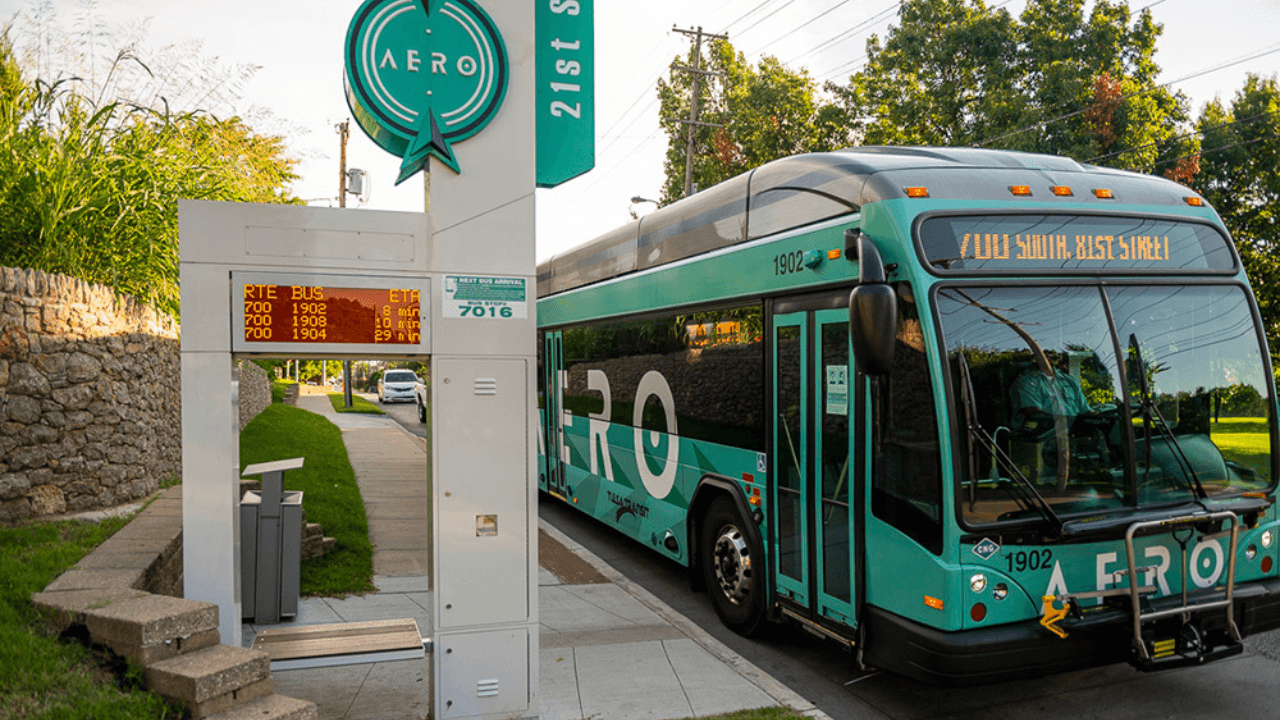
The Peoria AERO Bus Rapid Transit (BRT) line offers faster, more frequent service along a north–south corridor, with buses typically arriving every 15–30 minutes at upgraded stations.
A second BRT route along historic Route 66 (Route 66 AERO) is planned to provide another fast east–west connection, designed to offer frequent service and better rider amenities as it opens in phases.
Recent 2025 service updates have adjusted some routes to better serve colleges and major stops, such as routing buses to local campuses and extending select lines, which can help with student or campus‑based events.
Riders can use the MetroLink Tulsa website and trip planner tools to check current routes, stops, and real‑time information, which is useful for sharing custom directions in event invitations.
For many business travelers, taxis, rideshare services, and hotel shuttles are still the most convenient options, with buses and BRT working best for budget‑friendly or environmentally conscious groups who are comfortable using public transit.
MetroLink Tulsa runs about 18 regular bus routes plus microtransit zones, with main hubs at Denver Avenue Station downtown and Memorial Midtown Station in midtown.
The Peoria AERO Bus Rapid Transit (BRT) line offers faster, more frequent service along a north–south corridor, with buses typically arriving every 15–30 minutes at upgraded stations.
A second BRT route along historic Route 66 (Route 66 AERO) is planned to provide another fast east–west connection, designed to offer frequent service and better rider amenities as it opens in phases.
Recent 2025 service updates have adjusted some routes to better serve colleges and major stops, such as routing buses to local campuses and extending select lines, which can help with student or campus‑based events.
Riders can use the MetroLink Tulsa website and trip planner tools to check current routes, stops, and real‑time information, which is useful for sharing custom directions in event invitations.
For many business travelers, taxis, rideshare services, and hotel shuttles are still the most convenient options, with buses and BRT working best for budget‑friendly or environmentally conscious groups who are comfortable using public transit.