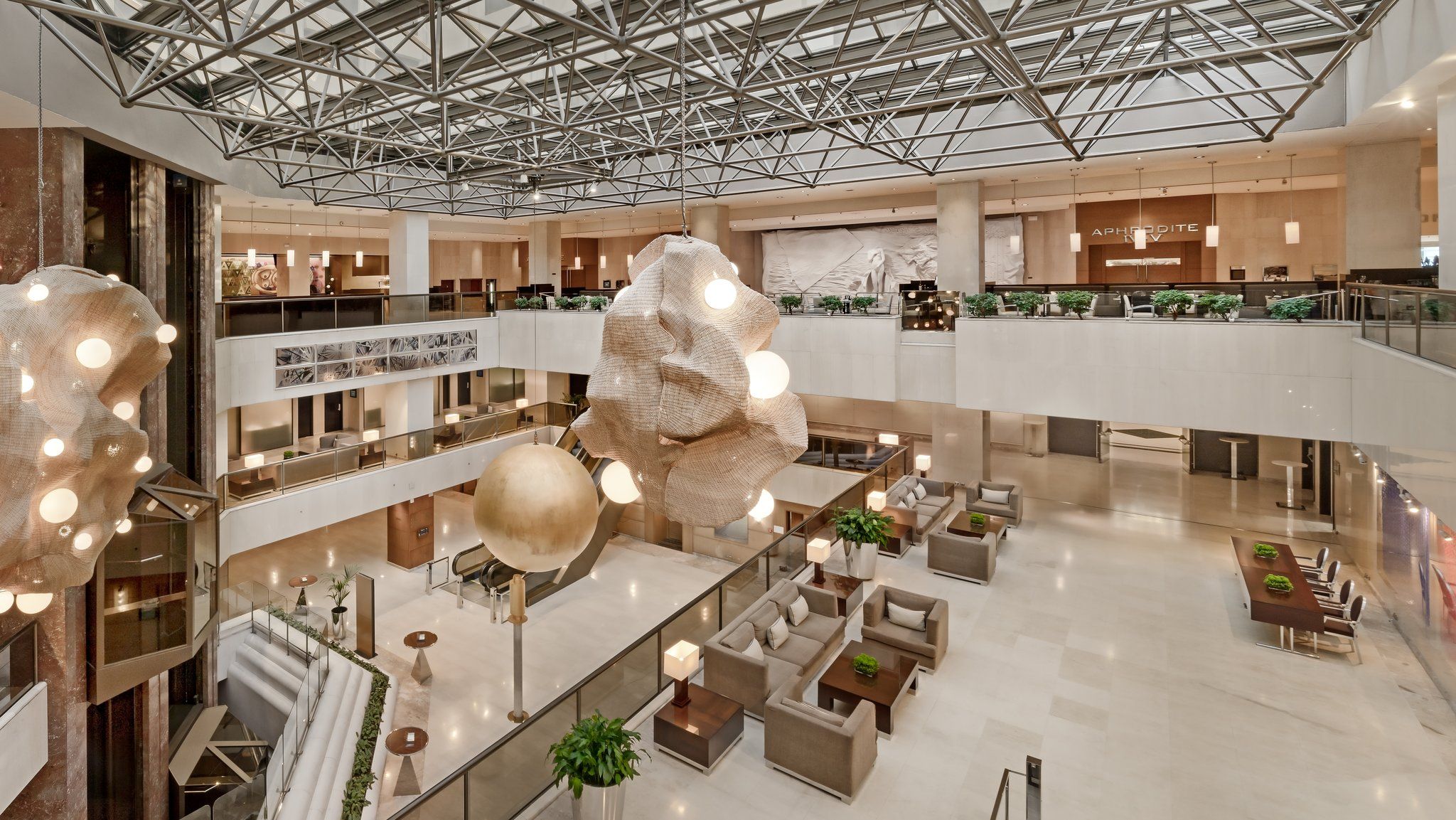
- Located close to the city centre and its many historic monuments such as the Acropolis
- Largest hotel in Athens (563 rooms) & among the largest hotels in Europe, group ceiling up to 450 rooms
- 35 sqm room size, the largest in Athens
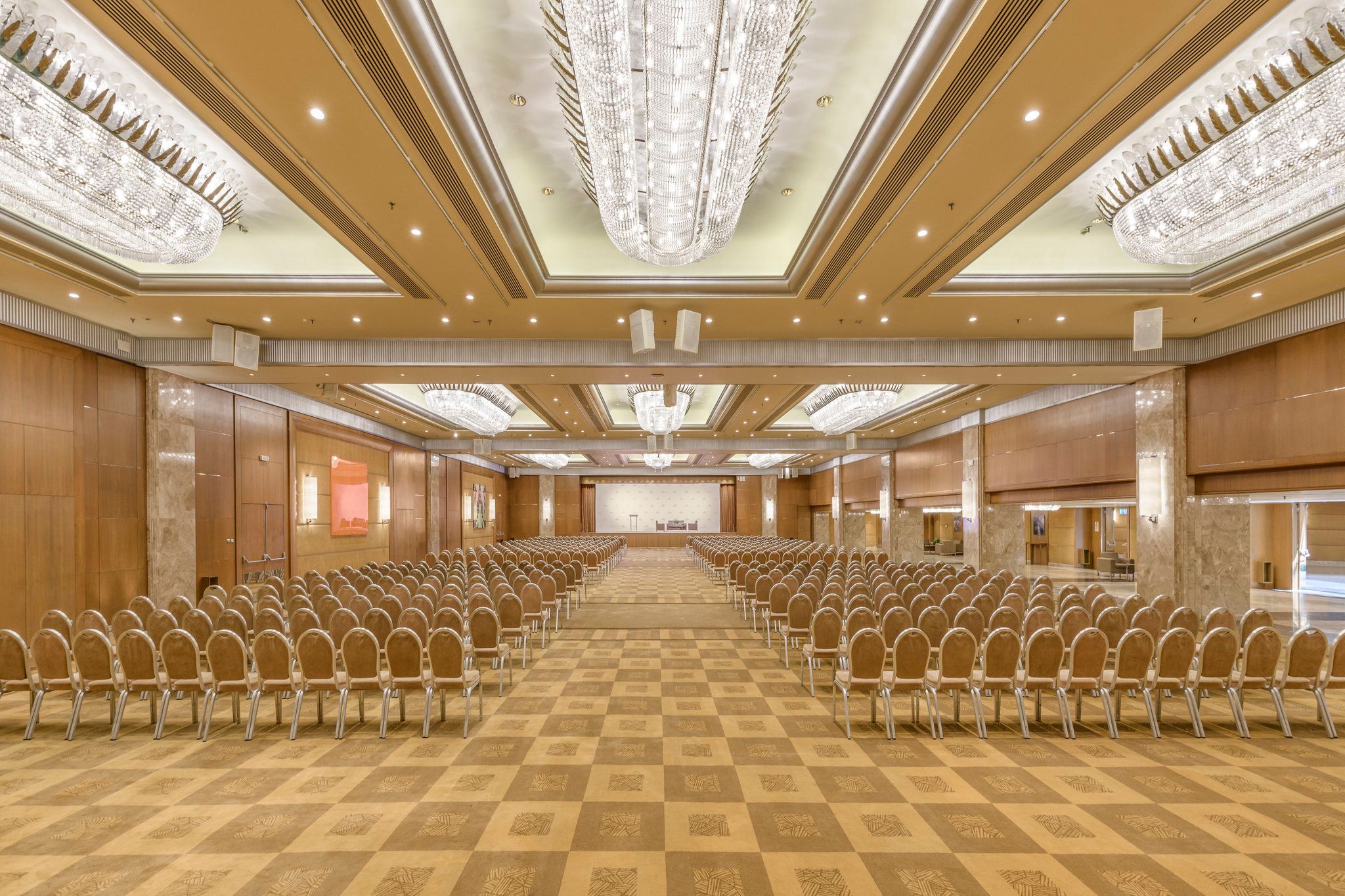
- 3500 sqm of meeting & banqueting space
- 35 break out rooms & extensive banqueting facilities for up to 2000 guests
- Largest column free Ballroom (1500 sqm)
- Cocktail reception or dinner event at the Acropolis Terrace
- Extensive branding around the meeting space
- Hotel personnel experienced in handling big events
Venue Details
ChainIHG
BrandInterContinental Hotels
Built1982
Renovated2026
Total meeting space56,000 sq. ft.
Guest Rooms563
Venue typeLuxury hotel
Industry Ratings
AAA
Awards
Cvent awards
Industry awards
- Greece's Leading Conference Hotel at the World Travel Awards 2025
- Greece's Leading Business Hotel at the World Travel Awards 2025
- Best Greek MICE City Hotel at the Greek Hospitality Awards 2025
- Best Business City Hotel at the Greek Hospitality Awards 2025
DRIVING DIRECTIONS
From El. Venizelos Airport take Attiki Odos Highway towards Elefsina and take the Imittos Ring. Turn right at Athina – Kessariani – University Campus. Follow the sign Kessariani. Turn left at Peiraias - Athina - Vouliagmenis avenue. Turn right at National Road 1 Peiraios street into Lagoumtzi street. Follow the sign Athina and turn right at the traffic lights. The hotel is located on your right hand side.
TRANSPORTATION
Eleftherios Venizelos Airport
Distance: 36 km / 22.37 mi south east to hotel
Time by taxi: 45 min approximately
Metro Station: Syngrou / Fix
Distance: 0.6 km / 0.4 mi to hotel
Tramway Station: Kasomouli
Distance: 0.2 km / 0.12 mi to Hotel
For further information, contact our Concierge:
0030 210 920 6011, concierge-ic@donkeyhotels.gr
DRIVING DIRECTIONS
From El. Venizelos Airport take Attiki Odos Highway towards Elefsina and take the Imittos Ring. Turn right at Athina – Kessariani – University Campus. Follow the sign Kessariani. Turn left at Peiraias - Athina - Vouliagmenis avenue. Turn right at National Road 1 Peiraios street into Lagoumtzi street. Follow the sign Athina and turn right at the traffic lights. The hotel is located on your right hand side.
TRANSPORTATION
Eleftherios Venizelos Airport
Distance: 36 km / 22.37 mi south east to hotel
Time by taxi: 45 min approximately
Metro Station: Syngrou / Fix
Distance: 0.6 km / 0.4 mi to hotel
Tramway Station: Kasomouli
Distance: 0.2 km / 0.12 mi to Hotel
For further information, contact our Concierge:
0030 210 920 6011, concierge-ic@donkeyhotels.gr
Distance from airport
22.37 mi
Distance from airport 22.37 mi
Parking in the area
Parking in the area
Complimentary parking
Paid parking
Valet parking
Street parking
Local Attractions
The Acropolis
Historical landmark
2 kms
In Greek culture, there is no greater achievement than the world-famous Parthenon atop the Acropolis of Athens. Though it has not been in use for many centuries, it still holds power over local residents and tourists alike.
The Acropolis Museum is located in the historical area of Makriyianni, southeast of the Rock of the Acropolis, on Dionysiou Areopagitou Street, Athens. It is only 300 metres from the Acropolis and approximately two kilometres from Syntagma Square, the main square of the city of Athens. The Museum entrance is located at the beginning of the pedestrian walkway of Dionysiou Areopagitou Street, which constitutes the central route for the unified network of the city’s archaeological sites. The Acropolis metro station is on the east side of the Museum site.
One's love for Athens begins in Plaka. It is located under the Sacred Rock of the Acropolis and it is by far the quaintest neighborhood of Athens and a morning stroll there is something more than that: it is becoming familiar with the recent history of the city, a certain sweet flashback to the past, when life was simpler.
Plaka is full of neoclassical buildings, with houses from previous centuries (see on number 27 of Tripodon Street) that give a feeling of a village inside the capital itself.
Ancient Agora
Historical landmark
2 kms
The Agora was the heart of the Ancient Greek city and the center of social, spiritual and economic life. It was a place to meet, have political discussions and commercially trade.
Adrianou Street
Athens, GR 10555
Monastiraki
Historical landmark
2 kms
Monastiraki is a flea market neighborhood in the old town of Athens, Greece, and is one of the principal shopping districts in Athens. The area is home to clothing boutiques, souvenir shops, and specialty stores, and is a major tourist attraction in Athens and Attica for bargain shopping. The area is named after Monastiraki Square, which in turn is named for the Church of the Pantanassa that is located within the square. The main streets of this area are Pandrossou Street and Adrianou Street.The Monastiraki Metro Station, located on the square, serves both Line 1 and Line 3 of the Athens Metro.
Syntagma Square - Change of Guards
Historical landmark
2 kms
Syntagma Square (Constitution Square), is the central square of Athens. The Square is named after the Constitution that the first King of Greece Otto was obliged to grant, after a popular and military uprising on September 3, 1843. It is located in front of the 19th century Old Royal Palace, housing the Greek Parliament since 1934. Syntagma Square is the most important square of modern Athens from both a historical and social point of view, at the epicentre of commercial activity and Greek politics.
Temple of Olympian Zeus
Historical landmark
1 km
The Temple of Olympian Zeus, also known as the Olympieion or Columns of the Olympian Zeus, is a colossal ruined temple in the center of the Greek capital Athens that was dedicated to Zeus, king of the Olympian gods. Construction began in the 6th century BC during the rule of the Athenian tyrants, who envisaged building the greatest temple in the ancient world, but it was not completed until the reign of the Roman Emperor Hadrian in the 2nd century AD some 638 years after the project had begun.
Athens, GR
Panathinaiko Stadium
Historical landmark
2 kms
The Panathenaic Stadium is a classical cultural and touristic monument of Greece and one of the most significant monuments not only for Athens, but for the whole Greece.
It is one of our city’s most popular touristic attractions and one of Athens’ landmarks.
Its rich history is directly connected to the Modern Olympic Games as from their revival in 1896 until the Athens Olympic Games in 2004. It is also the place from where the Olympic flame sets up its journey to the cities of the Olympic Games, both Winter, Summer and Youth.
The National Garden (formerly the Royal Garden) is a public park of 15.5 hectares (38 acres) in the center of Athens. It is located directly behind the Greek Parliament building (The Old Palace) and continues to the South to the area where the Zappeion is located, across from the Panathenaiko or Kalimarmaro Olympic Stadium of the 1896 Olympic Games. The Garden also encloses some ancient ruins, tambourines and Corinthian capitals of columns, mosaics, and other features. On the Southeast side are the busts of Ioannis Kapodistrias, the first governor of Greece, and of the Philhellene Jean-Gabriel Eynard. On the South side are the busts of the celebrated Greek poets Dionysios Solomos, author of the Greek National Hymn, and Aristotelis Valaoritis.
National Archaeological Museum
Museum
5 kms
The National Archaeological Museum of Athens is the largest archaeological museum in Greece and one of the most important museums in the world devoted to ancient Greek art.
It was founded at the end of the 19th century to house and protect antiquities from all over Greece, thus displaying their historical, cultural and artistic value.
The Benaki Museum, established and endowed in 1930 by Antonis Benakis in memory of his father Emmanuel Benakis, is housed in the Benakis family mansion in downtown Athens, Greece. The museum houses Greek works of art from the prehistorical to the modern times, an extensive collection of Asian art, hosts periodic exhibitions and maintains a state-of-the-art restoration and conservation workshop. Although the museum initially housed a collection that included Islamic art, Chinese porcelain and exhibits on toys, its 2000 re-opening led to the creation of satellite museums that focused on specific collections, allowing the main museum to focus on Greek culture over the span of the country's history
The Byzantine and Christian Museum, is one of Greece’s national museums. Its areas of competency are centred on – but not limited to – religious artefacts of the Early Christian, Byzantine, Medieval, post-Byzantine and later periods which it exhibits, but also acquires, receives, preserves, conserves, records, documents, researches, studies, publishes and raises awareness of.
The Museum of Cycladic Art is dedicated to the study and promotion of ancient cultures of the Aegean and Cyprus, with special emphasis on Cycladic Art of the 3rd millennium BC.
Located at the Faliro Delta, right where the city
meets the sea, the SNFCC consists of the new
state-of-the-art facilities for the National Library
of Greece and the Greek National Opera as well
as the 42 acre Stavros Niarchos Park
The Onassis Cultural Centre is an Athens’ cultural space hosting events and actions across the whole spectrum of the arts from theatre, dance, music, cinema and the visual arts to the written word, with an emphasis on contemporary cultural expression, on supporting Greek artists, on cultivating international collaborations and on educating children and people of all ages through life-long learning
Mount Lycabettus is a Cretaceous limestone hill in Athens, Greece at 300 meters (908 feet) above sea level. Pine trees cover its base, and at its two peaks are the 19th century Chapel of St. George, a theatre, and a restaurant.The hill is a tourist destination and can be ascended by the Lycabettus Funicular, a funicular railway which climbs the hill from a lower terminus at Kolonaki (The railway station can be found at Aristippou street).
Sounion
Historical landmark
40 kms
Cape Sounion promontory located south-southeast of Athens, at the southernmost tip of the Attica peninsula in Greece.Cape Sounion is noted as the site of ruins of an ancient Greek temple of Poseidon, the god of the sea in classical mythology. The remains are perched on the headland, surrounded on three sides by the sea. The ruins bear the deeply engraved name of English Romantic poet Lord Byron (1788–1823).The site is a popular day-excursion for tourists from Athens, with the sunset over the Aegean Sea, as viewed from the ruins, a sought-after spectacle.
Looking for more vendor options?
Browse additional vendors for AV, entertainment, transportation, and other event needs.
Explore frequently asked questions from the InterContinental Athenaeum Athens regarding Health and Safety, Sustainability, and Diversity and Inclusion
Sustainable Practices
Please provide comments or a link to any publicly communicated InterContinental Athenaeum Athens's sustainability or social impact goals/strategy.
No response.
Does InterContinental Athenaeum Athens have a strategy that focuses on the elimination and diversion of waste (i.e. plastics, papers, cardboard, etc.)? If yes, please elaborate on your strategy of elimination and diversion of waste.
No response.
Diversity and Inclusion
For US hotels only, is InterContinental Athenaeum Athens and/or parent company certified as a 51% diverse owned business enterprise (BE)? If yes, please indicate which one of the following you are certified as:
No response.
If applicable, could you please provide a link to InterContinental Athenaeum Athens's public report on their commitments and initiatives related to diversity, equity, and inclusion?
No response.
Health and Safety
Were practices at InterContinental Athenaeum Athens developed based on health service recommendations from public governmental entities or private organizations? If Yes, please list which organizations were used to develop these practices.
No response.
Does InterContinental Athenaeum Athens clean and sanitize public areas and publicly accessible facilities (i.e. meeting rooms, restaurants, elevator banks, etc.)? If yes, describe any new measures that are taken.
No response.
Please explain, if applicable, the carbon offsetting options you offer to corporations.
Please provide, if applicable, an e-mail address for a contact who can address any follow up questions relating to sustainability and social impact goals and initiatives.
Has your hotel taken steps to reduce single-use plastics, such as removing plastic straws (except upon request for guests with disabilities), stirrers and cotton buds? If yes, please provide detail as to the steps you have taken to reduce single use plastics?
Does your hotel generate (onsite) or purchase (offsite) renewable energy (beyond your utility's standard offerings)? If yes, please describe your practices for generating or purchasing renewable energy.
Does your hotel engage in activities to protect & restore the natural environment in which it is located (i.e. trees planted, coral reef restored, etc.)?
Yes
Will your hotel be imposing any additional fees for cleaning services? If yes, please specify those fees.
Are specific cleaning/disinfection routines in place for pillows, duvets and their covers, headboard, bathrobe etc.? If yes, please describe.
Please include a link to your public report on community impact if applicable.
Please provide any other comments you wish to make regarding your efforts/initiatives to obtain certification in these programs.
Please provide, if applicable, an e-mail address for a contact who can address any follow up questions relating to diversity, equity, and inclusion.
Ready to send your inquiry?
Ready to send your inquiry?
Report an issue with this venue profile to the Cvent Supplier Network.