


Carl Sandburg once called Chicago the "City of the Big Shoulders," and more than a century later, the description still fits, especially if your job is filling a convention hall. This is a city built to carry weight. McCormick Place is one of the largest convention centers in North America.
It offers about 2.6 million square feet of exhibit space, more than 1,200,000 square feet of total meeting space, and nearly 3,000 connected hotel rooms, which is why national associations keep it in steady rotation.
Chicago's real advantage in 2026 comes down to range. You can host a 20,000-attendee trade show at McCormick Place, then plan VIP dinners in Fulton Market, a museum event, or a reception at The Salt Shed, the former Morton Salt warehouse, all as part of the same visit. Few cities make it this easy to combine major event infrastructure with distinctive local venues.
If you are planning an event in Chicago, here's a look at the top venues, unique spaces, getting around, and the best times of year to host.
Why Chicago is a top event destination in 2026
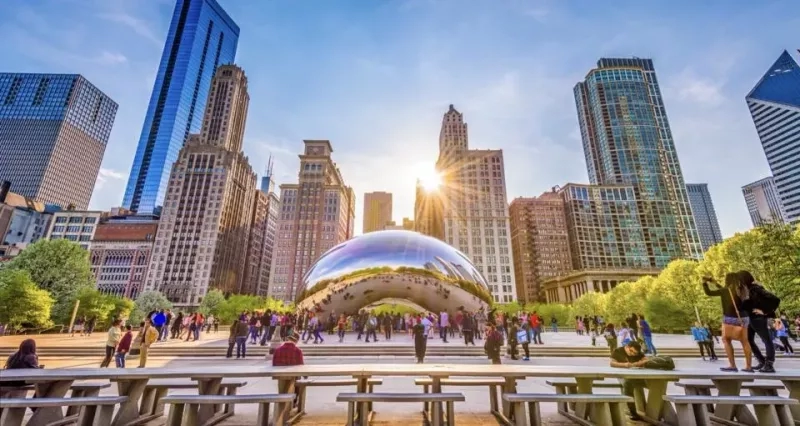
Ask a room of meeting planners to name a reliable large-format convention city, and Chicago comes up fast, usually right after someone mentions the deep-dish and the lake. The appeal holds up in 2026 for reasons that go well beyond square footage. Part of it is how walkable and photogenic the city feels between sessions, part of it is a food and culture scene that can carry an entire evening program, and part of it is how easy it is to get everyone in and out.
Here are the 5 things that make Chicago stand out for events
- A lakefront that doubles as a break space. The pedestrian-only Riverwalk and the Lake Michigan shoreline give attendees places to decompress, network on foot, or fit in a walk, which is harder to do in denser downtown cores.
- A dining scene deep enough to be the program. From James Beard-recognized rooms in the West Loop to neighborhood classics, Chicago lets you build back-to-back hosted dinners that never feel repetitive, so food becomes part of the experience rather than an afterthought.
- Architecture that gives you built-in talking points. Spaces like The Rookery Building and the Chicago Cultural Center turn a reception into a story, no extra decor budget required.
- Two airports and direct rail into the city. Attendees can fly into O'Hare or Midway and reach downtown by train in well under an hour, which keeps arrival day smoother than many competing markets.
- Neighborhoods you can plan around. The Loop, River North, West Loop, and Hyde Park each have their own character, so you can spread a program across districts and give every day a different feel.
With Chicago on your shortlist, start your venue search with the established anchors that can support a large program.
The famous anchors every planner should know
Some venues are famous because they simply work, and Chicago has a deep bench of them. These are the names you can put on a proposal with confidence, knowing they have the space, service history, and location to carry out a large program. Start with these established options, then weigh their scale and location against your event needs.
Navy Pier

On the lakefront, Navy Pier remains one of the most flexible large-format options in the city. Originally opened in 1916 and reinvented as Chicago's top leisure destination, it now draws more than 8 million visitors a year while still handling trade shows and corporate meetings with ease. The layout lets you run a full exhibition in Festival Hall and still tuck breakouts, receptions, and a lakeside terrace under the same roof. For planners, that combination of scale and setting is hard to beat.
- About 263,742 square feet of total meeting space across 38 meeting rooms.
- Festival Hall alone offers 170,100 square feet of column-free exhibit space.
- A 15,355-square-foot Lakeview Terrace and roughly 27,125 square feet of outdoor space for warm-weather events.
- Sits about 16.7 miles from O'Hare and just minutes from downtown, with onsite catering.
Aon Grand Ballroom at Navy Pier
Inside the same complex, the Aon Grand Ballroom is the room you book when the evening needs to feel special. Built in 1916 and set high on the pier, the square-foot ballroom pairs historic architecture with skyline and water views that photograph beautifully for galas and awards nights. A wraparound balcony adds a second level for cocktails or overflow seating, and the entire footprint measures close to 27,700 square feet. It's a natural fit for a headline dinner as part of a larger citywide program.
- Total meeting event space is about 27,700 square feet.
- Standing capacity up to 1,800 guests, or around 1,100 seated for a plated dinner.
- About 5,000 square feet of adjoining outdoor space for receptions.
- Onsite catering and alcohol service, with skyline and lake views built in.
Marriott Marquis Chicago
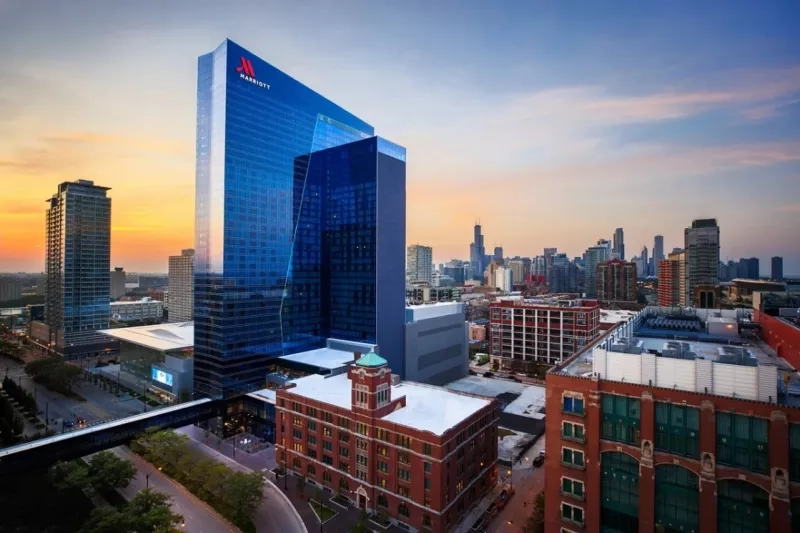
For headquarters hotels tied to the convention core, the Marriott Marquis Chicago is purpose-built for the job. It sits inside McCormick Square with direct indoor access to Wintrust Arena and the convention halls, which makes moving thousands of attendees between rooms, sessions, and beds genuinely simple. That connectivity is exactly what large associations look for when they want a room block on campus rather than across town. It works best as the anchor hotel for a big citywide.
- Located inside McCormick Square with direct access to Wintrust Arena and McCormick Place.
- Total meeting event space is about 193,289 square feet.
- Built as a convention headquarters hotel, so meeting and prefunction space is sized for large groups.
- Skyline and lakefront views from a modern high-rise tower.
- On-site dining and event space that reduces the need for off-site transfers on show days.
Wintrust Arena
Right on the campus, Wintrust Arena doubles as a general-session space when you need arena-scale seating without leaving McCormick Square. Opened in 2017, it was designed as a multi-purpose hall that flexes between conventions, concerts, and sporting events, so the production infrastructure is already in place. For a keynote or opening session that needs to hold thousands under one roof, it saves you the logistics of bussing attendees to a separate venue. It pairs neatly with the Marriott Marquis next door.
- About 285,000 square feet of total event space across 24 meeting rooms.
- Standing capacity up to 10,000, which suits arena-scale general sessions.
- Onsite restaurant, Wi-Fi, and alcohol service.
- Roughly 9.7 miles from the airport and steps from the convention halls.
Soldier Field
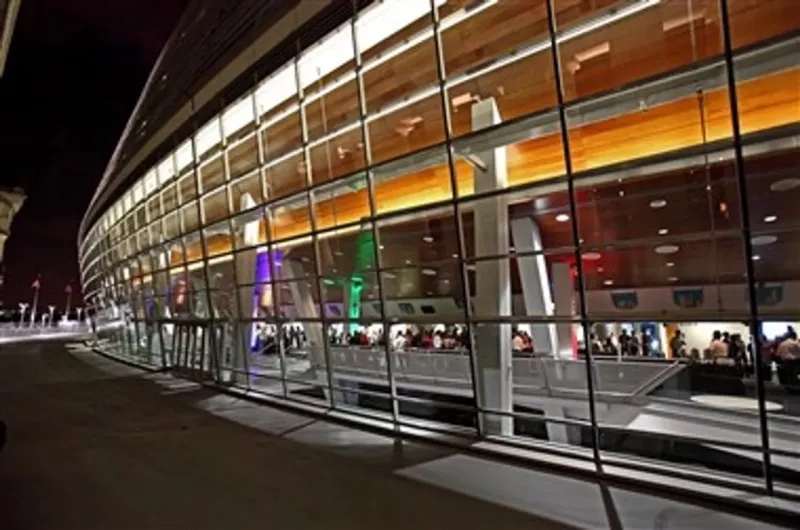
On the Museum Campus, Soldier Field offers something few convention spaces can match: a two-story club with unobstructed views of Lake Michigan, the skyline, and the field itself. Opened in 1924 and reimagined in 2003, its United Club spans about 47,000 square feet and can host anything from a 100-person dinner to a 5,000-person corporate event. Neighbors like the Field Museum and Shedd Aquarium make it easy to build a themed evening on the lakefront. It's also one of the greener anchors in the city.
- About 50,000 square feet of total meeting space, with a 48,000-square-foot main club room.
- Standing capacity around 2,000, plus roughly 400,000 square feet of outdoor space.
- Holds a Green Key Global Eco-Rating at the four-key level for sustainability.
United Center
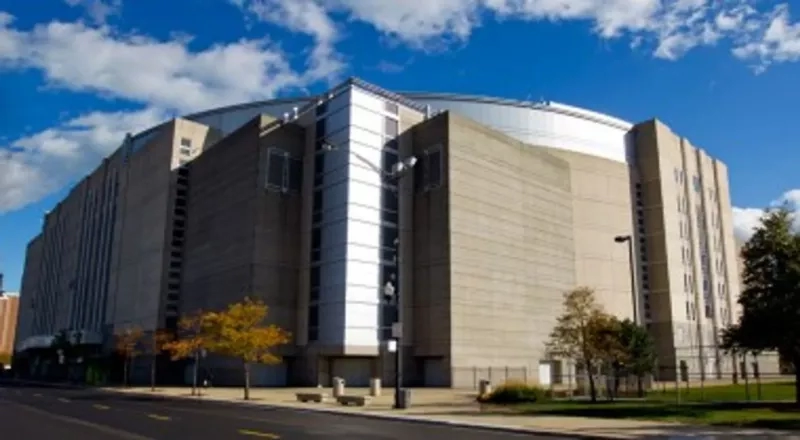
On the Near West Side, the United Center is the largest arena in the country and home to the Bulls and Blackhawks. A 960,000-square-foot entertainment facility that hosted the 1996 Democratic National Convention, it lands well with incentive groups who want a marquee name and a floor- or suite-level experience. Its bookable meeting footprint is modest, so think of it less as a breakout venue and more as a premium reception or hospitality play. A 2025 renovation keeps the suites and clubs current.
- A 960,000-square-foot multi-use arena, recently renovated in 2025.
- Club and suite spaces, including a 1,400-square-foot Super Suite, for hosted receptions.
- Best suited to VIP buyouts and floor-level experiences rather than large breakouts.
- About 9.1 miles from the airport, with onsite catering and A/V support.
A neighborhood-by-neighborhood planning map
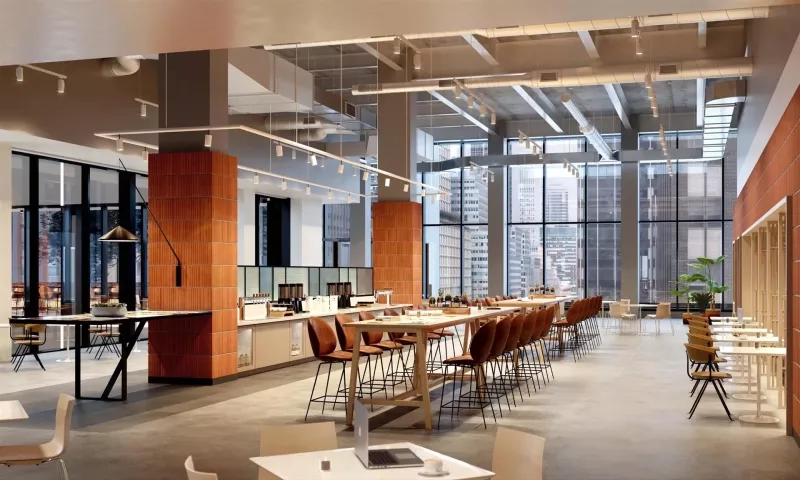
The practical rule is to cluster your event program geographically and use transit or rideshare to jump between clusters, rather than treating downtown as one walkable blob.
The Loop is the easy default for first-timers and mixed corporate agendas. You get central hotels, theaters, the pedestrian-only Riverwalk, and Millennium Park within a tight radius. It's also home to the Chicago Cultural Center, whose Tiffany-domed Preston Bradley Hall is one of the best value receptions in the city, and Convene at Willis Tower for polished meeting space with full production support.
River North is your nightlife and dining engine. It's dense with restaurant buyouts, private dining, and riverfront tables, which makes it ideal for hosted dinners and after-parties. Chicago Cut Steakhouse is a reliable riverfront steak option for larger groups, and City Winery Chicago Riverwalk puts a casual, on-the-water reception right in the middle of an evening stroll.
West Loop and Fulton Market are where Chicago's food reputation lives now. A former meatpacking district turned restaurant, gallery, and rooftop corridor, it's a natural home for brand activations and contemporary corporate dinners. Avec West Loop and Beatrix Fulton Market are dependable group restaurants, and Galleria Marchetti offers an indoor-outdoor event space when you want a private buyout with its own courtyard.
Streeterville and the Magnificent Mile give you walkable luxury retail, hotels, and lakefront attractions in one stretch, which is convenient for spouse programs and free-time blocks. And Hyde Park has quietly become a full cultural extension of a downtown agenda, now anchored by the Obama Presidential Center, the Griffin Museum of Science and Industry, and the University of Chicago's David Rubenstein Forum, a striking high-rise conference space with skyline views.
Once you have chosen a district, look for an event venue that gives the program its own character. These less-obvious spaces can make a dinner, reception, or smaller meeting feel distinctly Chicago.
Under-the-radar venues that make an event feel different
The nine venues below offer three distinct character types: industrial settings, outdoor spaces, and memorable experiences.
Bold spaces with an industrial edge
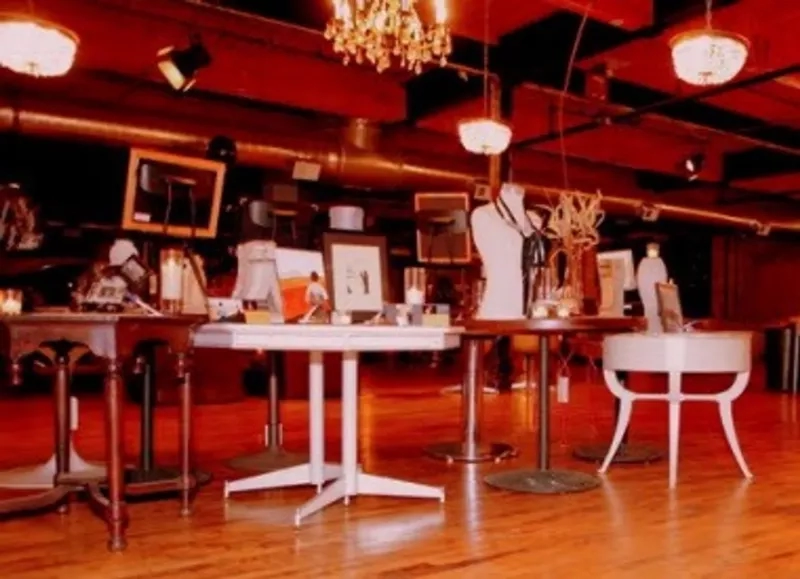
The Salt Shed is a former Morton Salt factory on the river that opened as an event space in 2022. It mixes raw industrial style with skyline views. You can use it for a small lounge party or a big indoor-outdoor buyout.
- Holds up to 4,000 people standing or 500 seated, across 5 meeting rooms.
- Has outdoor space, onsite catering, and sits about 12.3 miles from the airport.
Salvage One puts your event inside a working warehouse full of antiques and salvaged pieces. The team resets the space for every event, so no two look the same. It feels styled from the start, even on a small décor budget.
- About 60,000 square feet over two floors, plus a courtyard in the warmer months.
- Holds up to 650 standing or 250 seated and allows outside caterers.
Wrightwood 659 is a gallery in Lincoln Park designed by the famous architect Tadao Ando. The building itself is the main attraction, which turns a simple cocktail hour into a design story. It suits art-focused and design-minded groups.
- A gallery setting that allows outside caterers, ideal for receptions.
- Best for smaller, high-end gatherings rather than large meetings.
Outdoor and garden spaces for warm weather
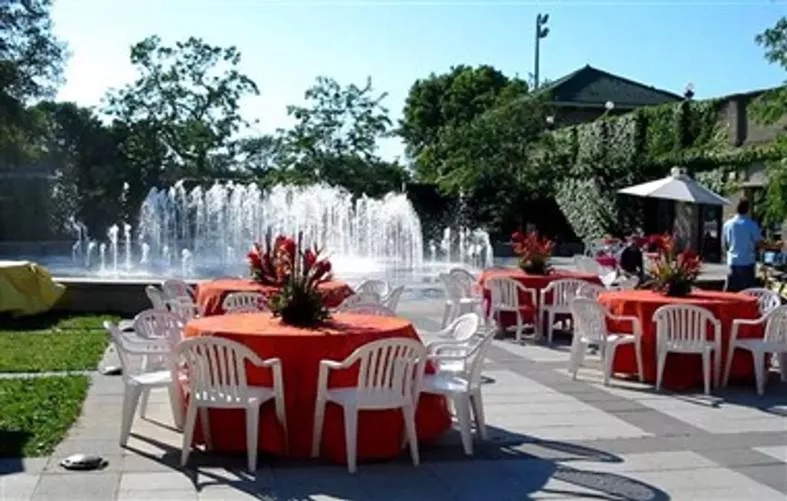
Chicago's outdoor venues shine from late spring through early fall. These three give you fresh air, greenery, and strong photos.
1. 63rd Street Beach House is a restored 1919 landmark that sits right on the sand in South Shore. It has open-air porticos, balconies, and two courtyards facing Lake Michigan. It works well for warm-weather receptions and dinners. Three event spaces, about 19,125 square feet total, and room for up to 1,600 guests.
2. Garfield Park Conservatory is a historic greenhouse from 1908 that stays green all year. Plants and glass make a lush, calm backdrop no matter the season. It's a nice change from a standard indoor room. Holds up to 400 standing or 300 seated, across 4 spaces.
3. Lincoln Park Zoo is a free zoo with skyline views, and its Café Brauer building is a favorite for events. It's a fun, easy pick that both teams and families enjoy. Summer buyouts are especially popular. On-site catering and kitchen, about 13.3 miles from the airport.
Spaces built for a memorable evening
1. Chicago Magic Lounge opened in 2018 and is built around close-up magic in an Art Deco setting. The show gives your guests a shared experience, not just a room to stand in. It's a strong choice for a smaller group.
- About 7,200 square feet, with room for up to 194 guests.
- Has an on-site restaurant and kitchen, plus 4 event spaces.
2. Glessner House Museum is a National Historic Landmark in the Prairie Avenue Historic District, close to McCormick Place. It offers courtyard, conservatory, and coach-house spaces that feel warm and personal. It's a good fit for small, upscale dinners.
- Holds up to 200 standing or 120 seated, across 4 spaces.
3. Steppenwolf Theatre Company is a well-known theatre that opened in 1974 and was renovated in 2021. It rents its lobbies and gathering spaces for private events, adding a bit of stage drama to a downtown reception. It handles both meetings and social nights.
- About 50,000 square feet across 16 event spaces, plus an outdoor room.
- Holds up to 515 standing, and allows outside caterers.
Getting around: airports, transit, and walkability
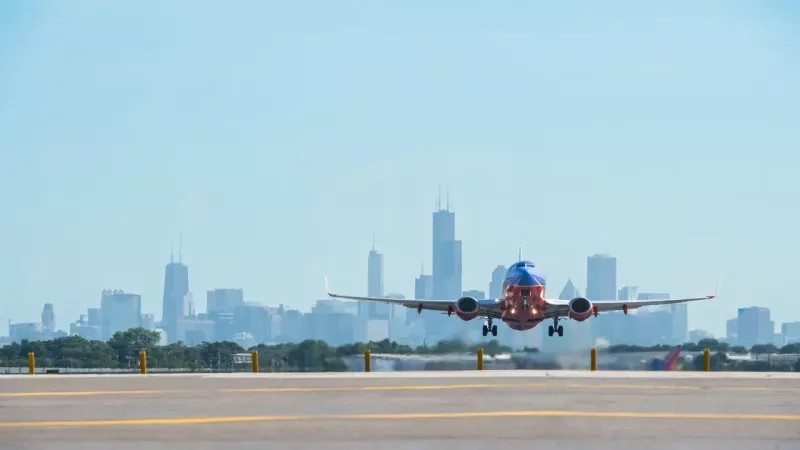
Access is one of Chicago's quiet advantages. Two airports, a 24-hour train line, and a walkable downtown make it easy to move attendees around without a big transport budget. Start with the airport routes, then plan local trips around your venue locations.
From the airports
Chicago's trains connect both airports straight to downtown, so most attendees can skip a rental car or a pricey cab.
- From O'Hare, the Blue Line runs directly downtown, operates 24 hours, and takes about 40 to 45 minutes.
- From Midway, the Orange Line reaches the Loop in roughly 20 to 25 minutes.
Both are budget-friendly options you can recommend with confidence.
Getting around the city
Downtown rewards people on foot. The Loop and the Riverwalk are genuinely walkable, which is great for free time and short hops between hotels and venues. For anything farther out, though, plan real transport. For trips to McCormick Place, Hyde Park, or the North Side, plan shuttle or rideshare options rather than assuming attendees will walk.
One caution for your attendee comms
Skip airport-to-airport routing on transit. Getting between O'Hare and Midway by train means a downtown transfer and can take up to two hours, so it's a poor fit for tight connections. Flag this early if your group is arriving through both airports.
Planning around Chicago's 2026 calendar and weather

Two things should shape your dates when visiting Chicago: the event calendar and the weather. Both affect hotel availability, pricing, and how easily attendees move around. The specific dates change every year, but the yearly rhythm stays fairly steady. Use the seasonal pattern to shortlist dates, then check the current event calendar before booking.
Read the calendar by season
Chicago's biggest shows drive hotel compression, so if your dates land near a major citywide event, lock your blocks early. The city follows a familiar pattern:
- Winter is the quieter stretch overall, though the Chicago Auto Show fills hotels for its run in February. It's often the best window for value.
- Spring brings a heavy run of medical, food, and association meetings at McCormick Place, so midweek hotel rates climb fast.
- Summer is peak season. Big festivals like Taste of Chicago, Lollapalooza, and the Air and Water Show pack hotels and restaurants, especially on weekends.
- Fall carries some of the largest trade shows of the year, plus the Chicago Marathon, which closes roads across the city for a full weekend.
- Late fall and December close out with major national conventions, so demand stays strong right up to the holidays.
Because the exact dates move each year, always check the latest conditions before you commit, and give citywide weekends a wide berth if your program depends on smooth transport.
Plan venues around the weather
The weather should shape your venue choices more than your choice of city. Chicago winters are cold, with average January highs around 32°F and a real chance of snow, while July highs sit in the mid-80s. A few simple rules keep you covered:
- From late fall through early spring, build indoor backups and add extra transfer time for cold and snow.
- For spring receptions, keep a covered option ready in case of rain.
- Save the rooftops, lakefront venues, and river cruises for summer and early fall, when they're at their best.
Final words
Whether you're planning a large conference or an intimate gathering, Chicago has the venues, hotels, and character to make it work. Use its major venues for scale, its unique spaces for memorable moments, and smart timing to avoid peak-season and weather surprises. When you're ready to host your next event in Chicago, browse event venues in Chicago on the Cvent Supplier Network, where you can compare venue profiles and meeting space details, then send them straight to an RFP.


