


Most people arrive in Los Angeles with the same short list: the Hollywood Sign, the Walk of Fame, a stretch of beach. It's a fine start. It's also a tiny slice of a city that runs on neighborhoods, each with its own pace and its own reason to stick around.
Travelers clearly agree. Visitors to Los Angeles generated $42.6 billion in business sales and supported more than 530,000 jobs in 2025, and the region is heading into a rare stretch of global attention. Numbers like that tell you the obvious stops stay busy for a reason. They don't tell you where the city actually gets interesting.
That's what this guide is for. You'll get a few iconic places worth the hype, done right, alongside the quieter, stranger picks most itineraries miss: a bookstore built inside an old bank, a folk-art tower one man raised by hand over 33 years, a food market marking a milestone year, and a web of secret staircases hiding in the hills. Hours and prices change often here, so confirm the details before you go. Here are 14 unique things to do in Los Angeles right now.
Quick look at most unique things to do in Los Angeles
The most unique things to do here pair a few iconic landmarks with quieter, offbeat spots: standout film and car museums, secret hillside staircases, a folk-art monument, historic food halls, and calm canals just steps from the busy beach. Group them by area to cut down on driving, and confirm hours before you go. Here are the 14 unique things to do in Los Angeles:
- Academy Museum of Motion Pictures
- The Vault at the Petersen Automotive Museum
- The Museum of Jurassic Technology
- Descanso Gardens
- The secret stairs of Silver Lake
- The Innsdale Trail to the Hollywood Sign
- Smorgasburg LA
- Grand Central Market
- Watts Towers of Simon Rodia
- The Bradbury Building
- The Last Bookstore
- Griffith Observatory
- Venice Canals
- Olvera Street and El Pueblo
Now that you've got the overview, let's look at each spot in detail.
Academy Museum of Motion Pictures
If you love movies, this is the closest thing LA has to a home base for that obsession. The Academy Museum is the largest institution in the U.S. devoted entirely to the art and science of filmmaking, sitting on Miracle Mile at 6067 Wilshire Boulevard. Inside, the collection runs deep, with objects that turn film history into something you can stand next to, including one of the original pairs of ruby slippers from The Wizard of Oz.
What makes it worth a half day is the way it treats moviemaking as craft, not just celebrity. You move through galleries on sound, editing, costume, and production design, then step into rotating exhibitions that keep repeat visits fresh. It's usually closed on Tuesdays, so plan around that, and check current hours and ticket prices before you commit.
The Vault at the Petersen Automotive Museum

Plenty of visitors walk the Petersen's main galleries and leave impressed. Fewer know that the real prize sits below street level, and it's one of the easiest highlights to build into any trip visiting Los Angeles. The Petersen Automotive Museum, also on Miracle Mile, is regularly ranked among the best automotive museums in the world. It is underground Vault holds a rotating collection of rare cars, prototypes, and vehicles tied to history and celebrity that never make it upstairs.
Access to the Vault is a guided add-on rather than a walk-in, and it comes with rules: no photography, no food, and a minimum age for kids. That structure is part of the appeal. You get a curator's walk through machines most people only see in books, without a phone screen between you and the metal. Buy the Vault ticket ahead of time and verify the current price and age policy.
The Museum of Jurassic Technology
Culver City hides one of the most quietly baffling attractions in California. The Museum of Jurassic Technology is a modern cabinet of curiosities that deliberately blurs the line between fact, folklore, and invention. You wander dim rooms full of odd specimens and elaborate displays, never quite sure what's real, and that uncertainty is the entire point.
It rewards a slow, open-minded visit. Give yourself time to sit with the exhibits, then head up to the rooftop tea garden, a genuinely peaceful spot to decompress. The museum keeps intentionally limited hours, typically closed early in the week, which protects its strange, unhurried atmosphere. Check the schedule before you drive over, because it's not a place you can count on being open on a whim.
Descanso Gardens

About 20 minutes north of downtown in La Cañada Flintridge, Descanso Gardens is a 150-acre botanical retreat that feels a world away from LA traffic. It's known for one of the largest camellia collections in the country and a serene Japanese garden, with shaded oak woodland and chaparral trails threaded between the cultivated beds.
The gardens program changes with the seasons, so there's usually a reason to time your visit. In 2026, that includes a Japanese art installation exploring water and sound running through the winter, alongside a family-friendly summer railroad exhibit. It's an easy pick if you want green space and calm without a long drive, and a nice counterweight to a museum-heavy itinerary. Confirm current exhibition dates and admission before you go.
The secret stairs of Silver Lake
Long before the hillsides had reliable roads, Silver Lake residents used public staircases to reach the trolley lines below. Many of those 1920s-era stairs still exist, and walking them is one of the most rewarding free things to do in the city. You climb through quiet residential pockets past storybook cottages, tucked-away gardens, and view points that open onto the reservoir and skyline.
Treat it as a workout and an architecture tour at once. Several well-known routes string multiple staircases into a loop, so you can build a short outing or a longer, leg-burning circuit. Wear real shoes, bring water, and respect that people live here. It's the kind of experience that makes LA feel like a place to explore on foot, which surprises a lot of first-time visitors.
The Innsdale Trail to the Hollywood Sign
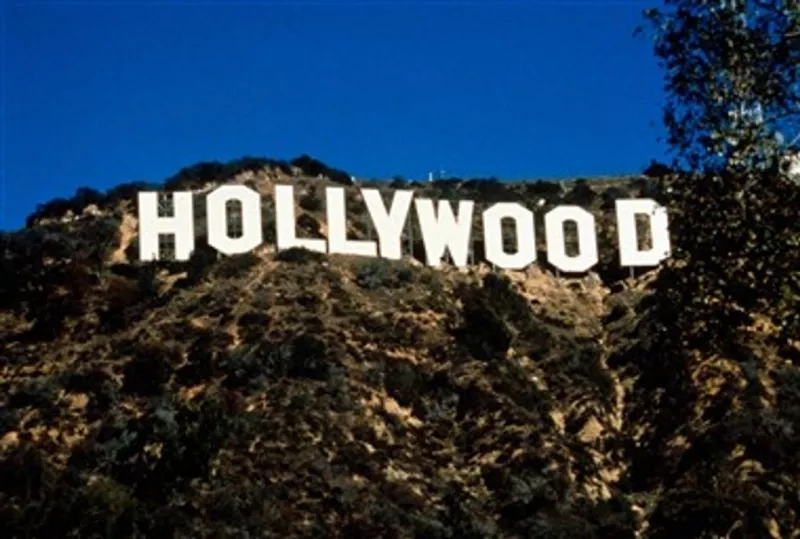
Everyone wants the Hollywood Sign photo, and most people fight crowds to get it. There's a calmer way. The Innsdale Trail in the Hollywood Hills offers a quieter, scenic route toward Mount Lee, with clean sightlines to the sign and sweeping views over the basin, without the congestion of the busiest Griffith Park paths.
Go early to beat both heat and traffic, and check trail and parking conditions before heading up, since access rules in the hills can change. This is the version of the classic LA hike that actually feels like a hike: dirt underfoot, room to breathe, and a payoff shot you didn't have to elbow your way into. If you only do one outdoor activity tied to the sign, make it this one.
Smorgasburg LA
Every Sunday, ROW DTLA turns into the largest weekly open-air food market in the country. Smorgasburg LA gathers dozens of vendors under one roof of sky, and it functions as a living map of where the city's food scene is heading. You can graze across cuisines, chase whatever's trending, and discover small operators before they graduate to their own storefronts.
2026 is a notable year to go, since the market is marking a decade in LA with an expanded lineup of new vendors alongside longtime favorites. Come hungry, come with friends so you can split more dishes, and pace yourself. Entry is free and it runs on Sundays, but confirm current hours and parking details before you plan your afternoon around it.
Grand Central Market
Downtown's Grand Central Market has been feeding Angelenos since 1917, and it still captures the city's mix better than almost anywhere. Under one high-ceilinged hall you'll find heritage stalls slinging pupusas and tacos next to newer counters serving specialty coffee, breakfast sandwiches, and dishes from across the map. It's loud, busy, and completely LA.
The move is to skip the idea of a single meal and instead build a shared spread from several vendors. Go slightly off-peak if you can, since weekday afternoons are far easier than weekend lunch rushes. Pair it with a walk around the historic core, because some of the next entries on this list sit within a few blocks, which makes it a natural anchor for a downtown day. Spaces like this also double as event settings, so if you're weighing how to select an event venue in Los Angeles, start by matching the neighborhood's energy and your guest count to the room before anything else.
Watts Towers of Simon Rodia
In South LA stands one of the great feats of self-taught art anywhere. The Watts Towers are 17 interconnected sculptural structures built from steel, wire, and mortar, then covered in mosaics of glass, tile, and shells. What stops people is the backstory: Italian immigrant Simon Rodia built the whole thing by hand, alone, over roughly 33 years, with no formal training and no crew.
Access inside the gates is limited to short guided tours on select days, which keeps the fragile structures protected and the experience intimate. Tickets are inexpensive, though payment methods and tour times can be restrictive, so check the current schedule and rules before making the trip. Seeing it in person reframes what one determined person can create, and it's unlike anything else on this list.
The Bradbury Building
From the outside, the Bradbury Building looks like an ordinary downtown block. Step inside and it becomes one of the most photographed interiors in the city. Completed in 1893, it's the oldest commercial building left in the central core, built around a skylit atrium with wrought-iron railings, warm brick, marble stairs, and open-cage elevators that glow in the afternoon light.
Film fans will recognize it from Blade Runner and other productions that used its layered, cinematic space. Public access is limited to the lobby and lower landing, so this is a short visit rather than a long one, but it pairs perfectly with Grand Central Market across the street. Give it 15 minutes, look up, and appreciate a piece of Victorian LA that still feels futuristic.
The Last Bookstore
California's largest used and new bookstore lives inside a former bank on Spring Street, and it has leaned fully into the drama of that setting. Downstairs you'll find rare books shelved inside the old vaults. Upstairs, the store turns playful, with a tunnel built from books and sculptures of pages caught mid-flight overhead.
It's a browsing destination as much as a shopping one, the sort of place where you lose track of time and leave with something you didn't plan to buy. The labyrinth layout makes it endlessly photogenic, but the deep, well-curated stock is what keeps locals coming back. If you're already downtown for the market and the Bradbury, this rounds out an easy, walkable cultural loop.
Griffith Observatory
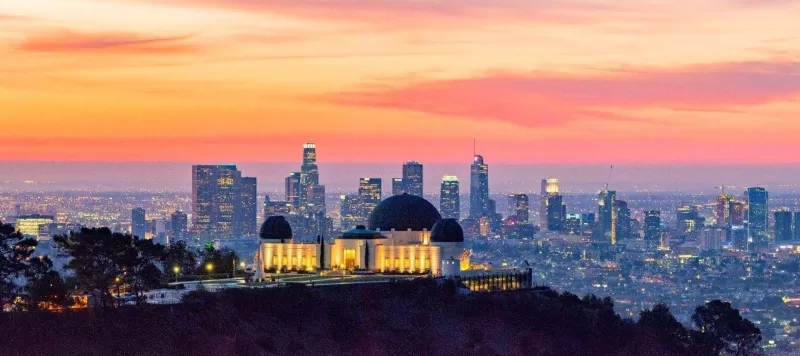
Some famous places earn the crowds, and Griffith Observatory is one of them. Perched on the south slope of Mount Hollywood, it's one of the most visited public observatories in the world, and general admission to the building and grounds is free. The views alone justify the trip, with the LA basin spread out below, the Hollywood Sign to the north, and the ocean on clear days.
Come for sunset and stay into the evening, when the city lights switch on and the free public telescopes open on clear nights. Inside, the exhibits on the solar system, space, and the history of astronomy are genuinely well done. Parking fills fast, so arrive early or plan an alternative, and check current telescope and show schedules before you go.
Venice Canals
Most people know Venice for its boardwalk and its noise. A few blocks inland sits a quieter surprise. The Venice Canals were dug in 1905 by developer Abbot Kinney to echo Venice, Italy, and today they form a peaceful pedestrian neighborhood of narrow waterways, arched footbridges, and eclectic homes with gardens spilling toward the water.
It's a walking experience, not an attraction with a ticket, and golden hour is the time to do it. Stroll the footpaths slowly, admire the architecture, and enjoy the contrast with the busier beach scene nearby. Because people live along the canals, keep it low-key and respectful. It's one of the most photogenic and underrated pockets in the entire city, and it costs nothing to enjoy.
Olvera Street and El Pueblo
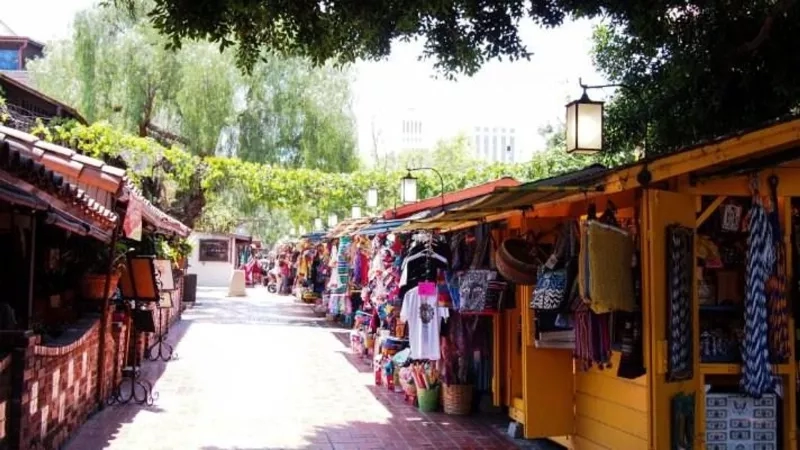
Los Angeles was founded in 1781, and Olvera Street is where that history is still tangible. Part of the El Pueblo de Los Angeles historic district downtown, this vibrant Mexican marketplace is lined with stalls selling crafts, folk art, and traditional food, often set to live mariachi music and folklórico dancing. It's the birthplace of the city, wearing its heritage openly.
Come hungry and try the taquitos, then look for the Avila Adobe, considered the oldest surviving residence in LA. It's a compact, atmospheric stop that fits neatly into a downtown itinerary and grounds the whole trip in the city's origins. For visitors who want to understand where LA actually started, this is the most direct answer on the list.
Compare things to do in Los Angeles at a glance
| Attraction | Neighborhood | Type | Cost |
|---|---|---|---|
| Academy Museum of Motion Pictures | Miracle Mile | Museum | Paid |
| The Vault at the Petersen | Miracle Mile | Museum tour | Paid (add-on) |
| Museum of Jurassic Technology | Culver City | Museum | Paid |
| Descanso Gardens | La Cañada Flintridge | Gardens | Paid |
| Silver Lake secret stairs | Silver Lake | Outdoor walk | Free |
| Innsdale Trail | Hollywood Hills | Hike | Free |
| Smorgasburg LA | Downtown (ROW DTLA) | Food market | Free entry |
| Grand Central Market | Downtown | Food hall | Free entry |
| Watts Towers | Watts (South LA) | Art / guided tour | Paid |
| The Bradbury Building | Downtown | Architecture | Free (lobby) |
| The Last Bookstore | Downtown | Bookstore | Free entry |
| Griffith Observatory | Griffith Park | Observatory | Free |
| Venice Canals | Venice | Neighborhood walk | Free |
| Olvera Street / El Pueblo | Downtown | Historic marketplace | Free entry |
Free things to do in Los Angeles
You don't need a big budget to have a great day in LA. Several of the city's best-known institutions cost nothing to enter, and some of its finest views are open to everyone. These free options all sit outside the main list above. Costs like parking, plus reservation and timed-entry rules, change often, so confirm the current details before you go.
The Getty Center
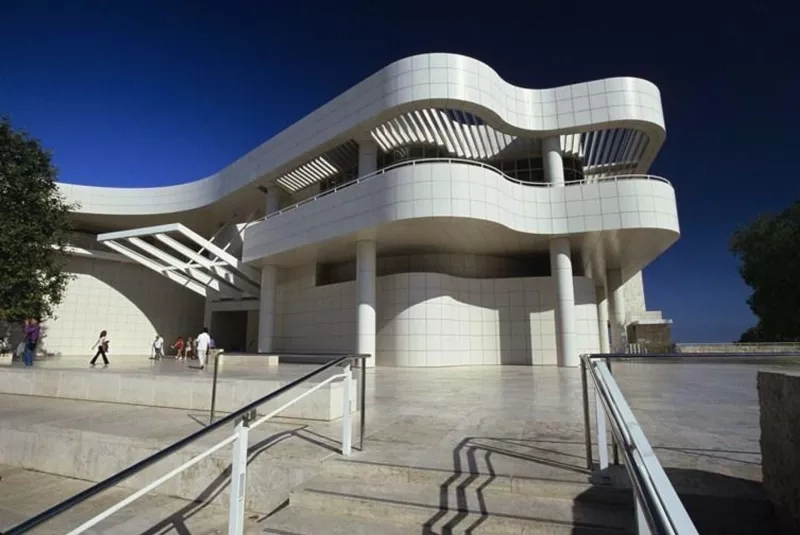
Perched on a hilltop in Brentwood, the Getty Center pairs a major art collection with gardens and architecture that would be worth the trip on their own. General admission is free, and a tram carries you from the parking structure up to the galleries. The views over the city and ocean are some of the best you'll find anywhere in LA.
- Free general admission to all galleries and gardens
- European paintings, sculpture, and photography, plus rotating exhibitions
- A tram ride up the hill and sweeping skyline and coastal views
- Parking carries a fee, so budget for that and arrive early on weekends
The Broad
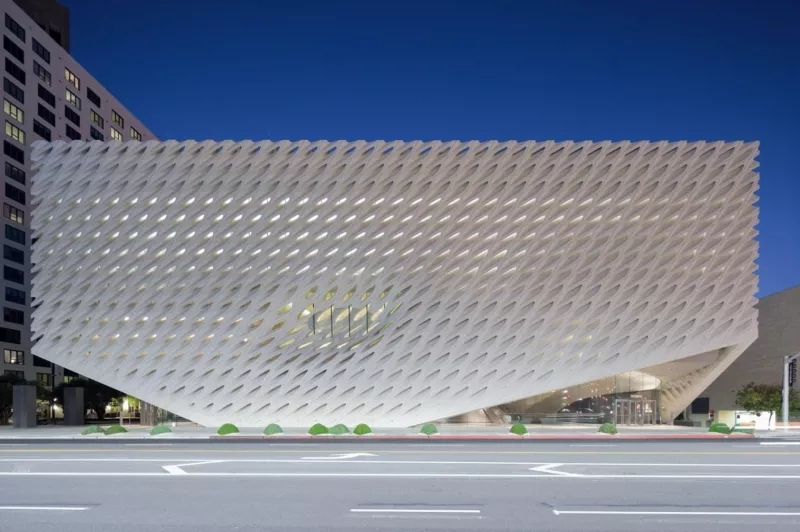
Downtown on Grand Avenue, The Broad is one of the city's leading contemporary art museums, and general admission costs nothing. Its collection features major postwar and contemporary names, and it's best known for its immersive installations. Timed tickets go fast, so reserve online before you visit.
- Free general admission to the main contemporary collection
- Popular immersive installations, including a Yayoi Kusama Infinity Mirror Room
- Timed-entry reservations recommended, especially for the most in-demand pieces
- A short walk from Grand Central Market and the Downtown arts core
Santa Monica Pier
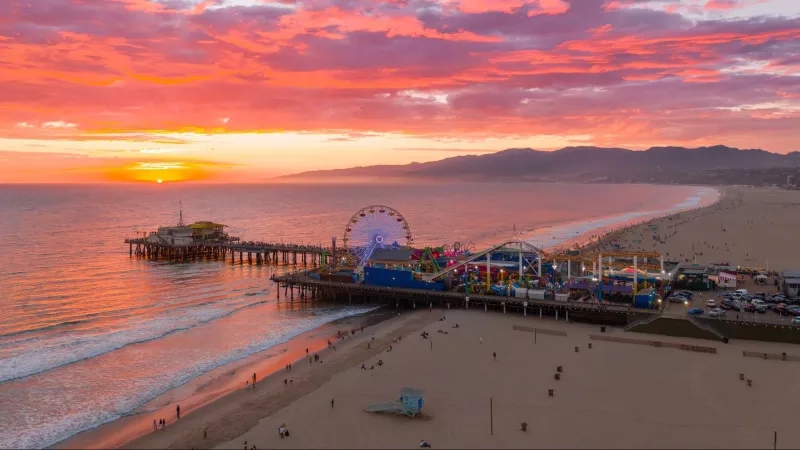
The Santa Monica Pier is free to walk and one of the most recognizable stretches of the California coast. It marks the western end of Route 66 and offers classic ocean views, street performers, and a lively boardwalk feel. Rides and games cost extra, but the stroll itself doesn't.
- Free to walk the pier and take in the ocean and beach views
- The historic end of Route 66 and a classic LA photo spot
- Pacific Park rides and games are paid, so bring cash if you want them
- Pair it with a walk or bike ride along the beachfront path
Urban Light at LACMA
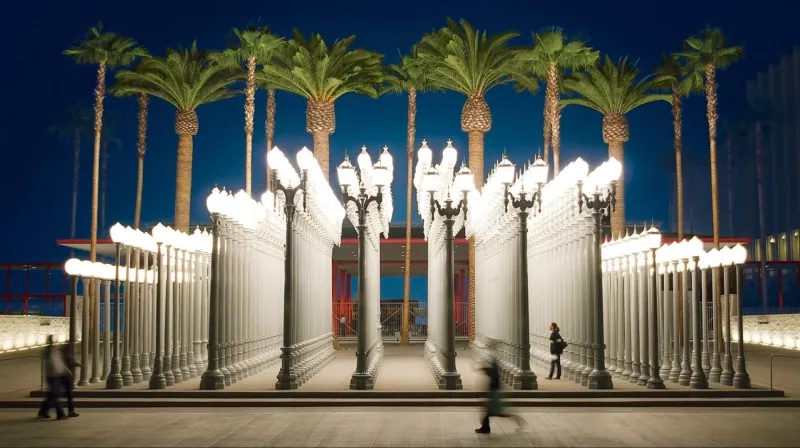
You don't need a museum ticket to enjoy one of LA's most photographed artworks. Urban Light, Chris Burden's installation of 202 restored vintage street lamps, sits outside LACMA on Wilshire Boulevard and is free to view. It's especially striking at dusk when the lamps switch on.
- Free to see and photograph from the public plaza outside LACMA
- 202 restored antique street lamps arranged in a grid
- Best at dusk or after dark when the lamps are lit
- An easy add-on to a Miracle Mile day near the museums above
Runyon Canyon
For a free workout with a view, Runyon Canyon is a favorite in the Hollywood Hills. Its trails climb quickly to overlooks of the city, the Hollywood Sign, and the ocean on clear days. It's popular, dog-friendly, and easy to reach from central LA.
- Free entry with several trail options from easy to steep
- City, Hollywood Sign, and ocean views from the ridgeline
- Dog-friendly, with off-leash areas along parts of the trail
- Go early to beat heat, crowds, and limited street parking
The Original Farmers Market at The Grove
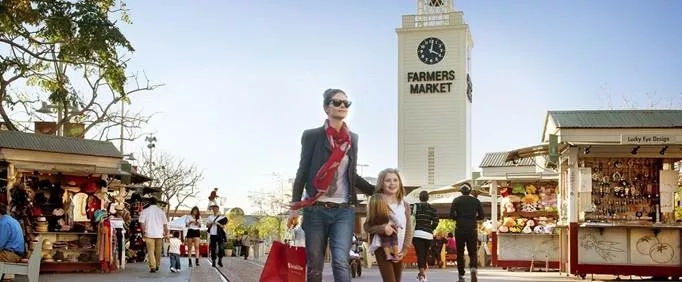
Open since 1934, the Original Farmers Market is free to wander and full of character. Dozens of food stalls and small shops sit under its open-air layout, and it's a relaxed spot to graze or people-watch. It also connects to The Grove shopping district next door.
- Free to browse the historic open-air market and its shops
- Dozens of food vendors covering a wide range of cuisines
- A relaxed, walkable stop with plenty of seating and atmosphere
- Connected to The Grove, so you can combine shopping and a bite
Final words
The best way to use this list is to stop thinking about LA as a single destination and start thinking in neighborhoods. Downtown alone can fill a day, with Grand Central Market, the Bradbury Building, The Last Bookstore, and Olvera Street within walking distance. Miracle Mile pairs two world-class museums a block apart. The east side gives you Silver Lake's stairs and the Griffith views, while the west side has the canals and the beach.
Group your picks by area to cut down on driving, build in flexibility for LA traffic, and always confirm hours, tickets, and access rules the week you visit, since they change often. Do that, and 14 ideas turn into a handful of genuinely great days that feel a lot more like the real Los Angeles than any highlight reel.
If you're planning a group trip, an offsite, or a corporate event around any of these neighborhoods, it also helps to scout the surrounding meeting and event spaces early, since the best areas book up fast. When you start comparing event venues in Los Angeles, or looking specifically for restaurant venues in Los Angeles for a private dinner, browse and shortlist options on the Cvent Supplier Network to check capacity, amenities, and availability in one place.
FAQs
Several top experiences in LA cost nothing, including visiting the Griffith Observatory, walking the Venice Canals, viewing Urban Light outside LACMA, and hiking Runyon Canyon. The Getty Center and The Broad also offer free general admission, though parking fees may apply.
The Venice Canals are one of the most underrated spots in the city, offering a quiet, photogenic neighborhood of waterways and footbridges just a few blocks from the busy boardwalk. The secret staircases of Silver Lake are another overlooked highlight, threading through hillside residential streets with reservoir and skyline views.
Downtown LA is one of the most walkable areas, with Grand Central Market, the Bradbury Building, The Last Bookstore, and Olvera Street all within easy reach of each other. Miracle Mile is another strong base, placing the Academy Museum and the Petersen Automotive Museum just a block apart.
The Innsdale Trail in the Hollywood Hills offers a quieter, less congested route toward Mount Lee with clear sightlines to the sign and sweeping views over the basin. Going early in the morning helps you avoid both heat and crowds.
The Watts Towers are 17 interconnected sculptural structures built entirely by hand by Italian immigrant Simon Rodia over roughly 33 years, using steel, wire, mortar, and mosaics of glass, tile, and shells. Access is limited to guided tours on select days, so checking the current schedule before visiting is recommended.
Grouping attractions by neighborhood rather than treating LA as a single destination helps reduce driving time significantly. Building in flexibility for traffic and confirming hours, ticket availability, and access rules the week of your visit is also recommended, since details change often.

Prashant Pal
You may also like


