


Corporate travel managers face rising costs and tight scrutiny, so they favor hotels that actively help save money without hurting the traveler experience. This piece shows how flexible rates, clear bundles, fair policies, clean data, and smart packaging make your property a partner, not just a cost. It also covers how technology and transparency on sourcing platforms can set you apart in bids.
1. Offer flexible corporate pricing, bundled essentials, and visible deals that cut surprises.
2. Reward frequent corporate guests with perks that save time and stress, not just points.
3. Simplify booking, billing, changes, and reporting so managers see you as an easy choice.
4. Use data, safety practices, longer‑stay offers, and transport deals to prove real savings over time.
When every dollar counts, your hotel should be part of the solution, not the problem. Corporate travel managers sit at the center of enormous pressure.
They’re expected to deliver trips that run smoothly, satisfy traveling employees, and stay within budget at a time when travel costs are climbing. Every decision they make is under the microscope, and every supplier relationship must prove its value.
Hotels that step forward with smart cost-saving solutions stand out immediately. By offering transparent pricing, flexible packages, and value-rich perks, your property can transform from “just another line item” into a trusted partner who makes the travel manager’s job easier. In this blog, we’ll explore practical ways your hotel can deliver real corporate travel savings and position yourself as the first choice for budget-conscious buyers.
Why corporate travel savings matter and how big the cost challenge is
Business travel is big money. In fact, global spending is projected to reach USD 1.57 trillion in 2025. That scale means even small shifts in costs ripple across entire programs.
No wonder travel managers scrutinize every hotel quote. And they expect the squeeze to tighten: 71% say costs will rise in 2025 according to the most recent Global Cvent Travel Manager Report.
The numbers speak for themselves. A single business trip in the U.S. averages around USD 1,293, according to ITILITE, with international travel often far higher.
Multiply that by thousands of travelers over a year, and the pressure to find savings becomes relentless. Hotels that ignore this reality risk being seen as tone-deaf to the buyer’s top challenge.
Why travel managers feel squeezed
It’s not just that costs are high. It’s that the ground keeps shifting. While some companies plan to raise travel budgets, 27% of travel managers still expect cuts of up to 20% in 2025. That means every trip approved has to deliver more for less. And hotels sit right at the heart of the problem: 56% of travel managers cite rooms as a top cost driver.
Add in tougher negotiations and the frustration is clear. Nearly half (49%) say inflexible pricing models block them from creating real savings. To complicate matters further, the lines between travel and meetings are blurring. 91% of travel managers also source event venues, which multiplies the complexity of what they need from hotel partners.
For hotels, this paints a clear picture: your buyers feel under constant financial pressure. Show them you get it, and you immediately become part of their solution.
19 ways hotels can help deliver corporate travel savings
Corporate travel managers want hotel partners who understand the full picture: budgets, employee needs, and the pressure to prove savings at every turn. That’s where hotels have a chance to shine. Here are 19 practical ways to do it.
1. Offer flexible corporate rates
Rigid pricing doesn’t work in today’s volatile market. By pairing fixed negotiated discounts with dynamic pricing, hotels give travel managers confidence they’re not overpaying when demand dips, while still capturing revenue during high-demand periods. Flexibility shows buyers you’re tuned into their financial pressures rather than hiding behind inflexible rate cards.
This approach not only appeals to cost-conscious travel managers but also future-proofs your hotel against rate objections. When market conditions shift (and they always do) dynamic pricing tied to negotiated baselines ensures both sides share in the upside.
Download the 2025 Global Cvent Travel Managers Report to find out about travel manager priorities, challenges, and predictions for the coming months.
2. Bundle essentials
Travel managers dislike seeing “surprise” fees pop up after they’ve calculated costs. By bundling high-demand essentials like Wi-Fi, breakfast, parking, or even small meeting credits into corporate packages, hotels eliminate budgetary guesswork and make trips more predictable for both companies and employees.
Bundles also save managers the headache of negotiating each line item separately. A single, comprehensive offer is easier to sell internally and creates the perception of added value, even if the base room rate is higher. This transparency builds loyalty, because managers know exactly what to expect.
3. Promote corporate deals clearly
Corporate buyers don’t have time to hunt for discounts buried in small print. Highlight your offers in RFP responses, on your website, and in every conversation with travel managers. If they see the savings immediately, you’ll stand out against competitors who hide behind generic rate proposals.
Visibility is especially critical in today’s sourcing environment, where buyers shortlist quickly and often based on digital content alone. If your value proposition isn’t obvious at first glance, you may never make it to the final negotiation round.
4. Reward loyalty with practical perks
Many corporate travelers couldn’t care less about abstract points systems. What they do care about is speed, convenience, and comfort. Offering frequent travelers benefits like automatic upgrades, guaranteed late checkout, or credit toward future bookings has more tangible value than slowly accumulating reward points.
When managers know their teams will feel appreciated and supported, they’re more likely to push your hotel into preferred programs. It’s a simple equation: if you make their employees happy, you make them look good.
5. Simplify booking and billing
Time is money for travel managers. A hotel that offers centralized booking portals, consolidated invoicing, and automated expense reports is worth more than one that forces buyers to chase down paperwork. Removing friction from the process creates long-term loyalty.
Think of it as selling not just rooms but efficiency. A streamlined back-office experience could be the deciding factor between two otherwise similar properties.
6. Stay flexible on cancellations
Corporate buyers often plan travel months ahead, but last-minute changes are inevitable. Strict cancellation policies create risk and risk drives buyers elsewhere. Offering flexibility on changes and cancellations reduces that burden and makes your hotel a safer bet.
Yes, flexibility might mean short-term revenue loss, but it generates long-term trust.
7. Pitch meetings + stays together
The line between business travel and meetings is blurring, with 91% of travel managers now sourcing both. Hotels that combine lodging and meeting proposals in one package reduce administrative headaches and provide instant savings through bundled negotiations.
This dual pitch also positions your property as a one-stop solution. Travel managers love vendors who simplify their workload, and a bundled offer gets noticed faster than piecemeal proposals.
8. Offer shoulder-night incentives
Most corporate travel peaks midweek. By incentivizing travelers to stay through weekends or shoulder nights with discounted rates, you capture additional nights without undercutting peak demand. Travel managers appreciate the extra savings, especially when employees tack leisure time onto business trips.
For the hotel, it fills lower-demand nights with incremental revenue that might otherwise go unclaimed. Both sides win when shoulder nights are priced strategically.
9. Be upfront about extras
Hidden fees (whether for Wi-Fi, resort access, or parking) are guaranteed deal-killers. Travel managers view these as budget landmines. Being transparent about every possible add-on builds trust, speeds up approvals, and makes you stand out against competitors who bury fees in the fine print.
Clarity also saves time in negotiations. When managers know the “all-in” cost from the start, they can sign off faster and push business your way.
10. Invest in digital content
Before travel managers ever pick up the phone, they scrutinize your online presence. Clear floorplans, diagrams, room specs, and high-quality photos let them pre-qualify your hotel quickly, reducing the back-and-forth that bogs down RFPs. Cvent data shows buyers rely heavily on digital assets in their shortlisting process.
The more comprehensive and transparent your online content, the easier it is for buyers to justify putting you forward. Think of your website and sourcing platform profiles as your silent sales team.
11. Highlight sustainability savings
Sustainability is a cost lever. Hotels that reduce energy, water, and waste often pass savings back to corporate clients, while also aligning with their environmental goals. A property that can prove green initiatives save money becomes doubly attractive.
Travel managers are under pressure to report both costs and carbon. Help them check both boxes and you’ll earn preferred status in RFPs.
12. Use data to prove ROI
Show travel managers not just your rates, but how you help them reduce total trip costs. Provide reporting that tracks savings over time or benchmarks rates against local averages. Concrete data turns a negotiation into a partnership.
When you can demonstrate savings with hard numbers, you shift the conversation from price alone to measurable value. That’s powerful leverage.
13. Offer traveler safety guarantees
Unexpected incidents (like delays, insurance claims, or emergency bookings) add hidden costs. Hotels that offer clear safety protocols, reliable 24/7 support, and strong local partnerships reduce those risks for companies. Lower risk equals lower overall spend.
Making safety part of your pitch helps buyers justify higher base rates, since it offsets potential costs elsewhere.
14. Support duty of care reporting
Companies need to know where their people are at any time. Hotels that integrate with traveler tracking systems or provide custom reporting help buyers fulfill legal and ethical responsibilities. That’s a hidden form of cost-saving, since noncompliance risks fines and liability.
By leaning into duty of care, you show that your value extends well beyond the nightly rate.
15. Provide extended-stay options
Some corporate trips last weeks, not nights. Hotels that offer extended-stay pricing, in-room kitchens, or laundry credits can drastically cut costs for managers who might otherwise book serviced apartments.
Extended-stay packages also reduce churn, keeping rooms occupied longer with less sales effort. That’s stability managers and hotels both appreciate.
16. Add airport transfer deals
Transport costs stack up quickly. By offering bundled or discounted airport transfers, hotels help corporate clients reduce ground travel expenses while streamlining logistics. This creates savings without touching the room rate.
Travel managers value any partner who can shave friction off the journey. Airport transfer deals tick both the cost and convenience boxes.
18. Support group consolidation
If a company books multiple trips or small group events, consolidate those into volume-based deals. The more business you aggregate, the more savings you unlock for buyers, and the stickier your relationship becomes.
Travel managers are always looking for ways to show “year-over-year savings.” Help them prove it, and they’ll keep rewarding you with larger shares of wallet.
19. Train your sales teams on buyer pain points
Savings aren’t always about rate. Sometimes it’s about communication. A sales team trained to listen for travel managers’ real concerns (like invoicing headaches or lack of flexibility) can proactively position solutions. That stops negotiations from stalling.
This consultative approach makes your hotel look like a partner, not just a vendor. Managers remember salespeople who understand their challenges and offer solutions.
20. Share success stories
Showcase case studies where you helped companies reduce travel spend or improve efficiency. Real-world examples resonate more than generic promises. They help buyers imagine the same success for their own program. A strong story cuts through skepticism.
How technology supports business travel savings
Travel managers increasingly rely on platforms that give them real-time visibility into costs, policy compliance, and supplier performance. For hotels, being visible and transparent in these channels is crucial.
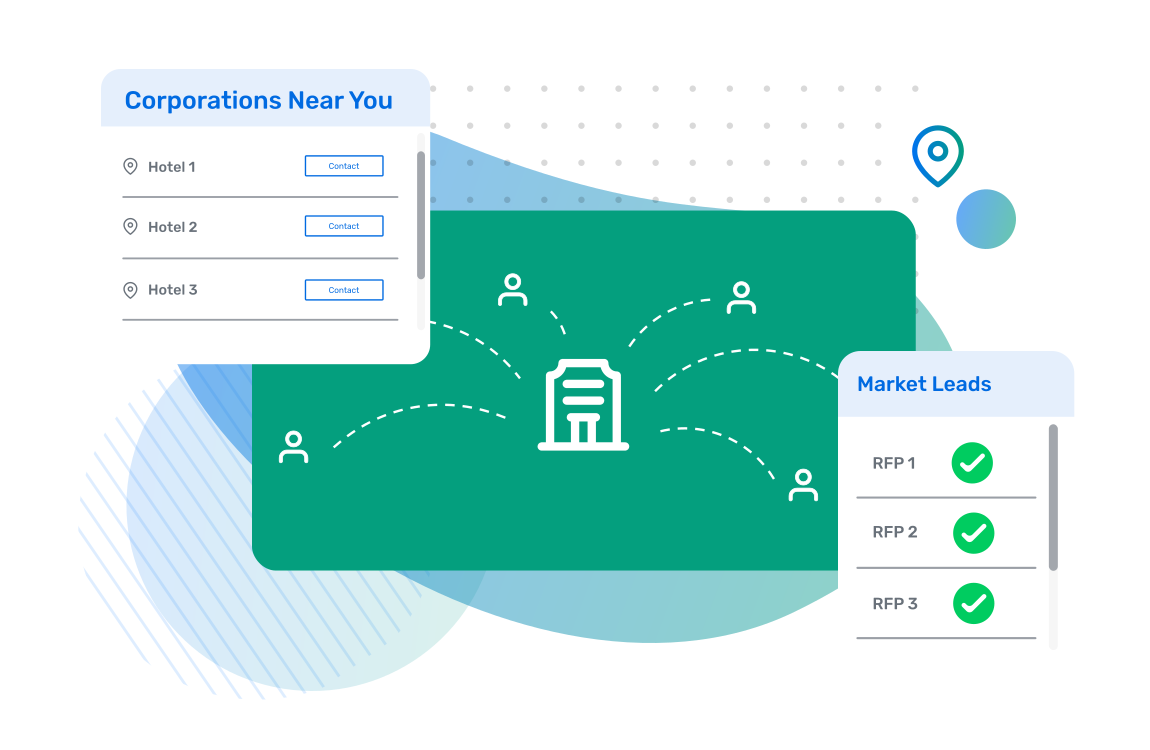
Centralized sourcing: Platforms like Cvent Transient and others let buyers compare rates, terms, and amenities in one place. If your property is well-represented there (with up-to-date rates, detailed content, and flexible contract terms) you’re more likely to be shortlisted.
Data-driven negotiations: Buyers use reporting dashboards to track spend and compliance. Hotels that supply clean data and clear rate structures gain credibility.
Integrated travel + meetings. With travel and meetings sourcing converging, hotels that showcase both capabilities in one digital presence stand out.
Now you know how to win over cost-conscious travel managers
Corporate travel savings are a must for hotels that want to stand out with cost-conscious buyers. Every flexible rate, bundled package, and transparent perk makes a travel manager’s job easier and positions your property as a trusted partner rather than just another option.
By understanding the pressures your corporate clients face and offering smart, practical solutions, you turn budget challenges into opportunities. Hotels that get this right win loyalty and repeat business. Start small or go big, but make sure your approach to corporate travel savings is clear, visible, and tangible.
Download the 2025 Global Cvent Travel Managers Report to find out about travel manager priorities, challenges, and predictions for the coming months.

Mansi Soni
More Reading


Why Cvent?


