


Imagine yourself entering an event. When you’re ready to connect with another attendee, what are you looking for on someone else’s badge? Is it the company they work for, their first name, or maybe their role? The truth is that different event types demand different badge designs.
Event badges are not just functional—they are strategic. They silently shape how people move, connect, and engage onsite. But despite their impact, badge design is often treated as an afterthought, using outdated templates that default to “big first name, tiny everything else.”
That approach might work at a "happy hour," or at larger conferences with thousands of attendees.
But sometimes, it fails in a boardroom. In this post, we'll dig a little deeper into the nuances that make badge design not just a set it and forget it approach.
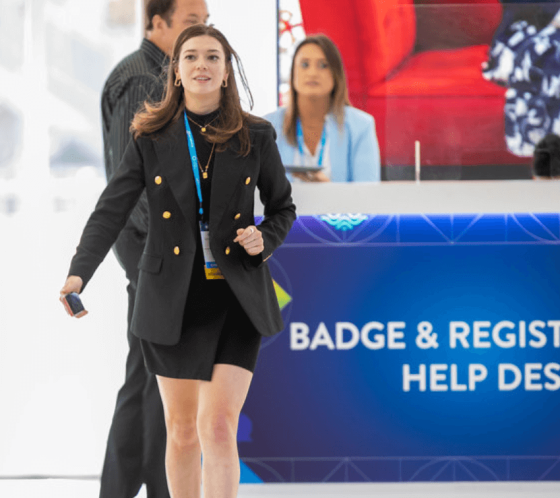
Event badges: The missed opportunity
Today’s event badge guidance falls short in a critical way:
It assumes that all attendees are equal and that all events are the same.
Most “best-practice” articles focus on general legibility (font size, contrast, layout), but none go deep on tailoring badge hierarchy to the goals of specific event types or attendee personas. They don’t ask:
- Who are your VIPs?
- What information do they actually need to see at a glance?
- How should badge design shift based on the outcomes you want?
This is an industry blind spot. Let's use, as an example, a leadership forum for a select group of attendees during the evening of a major conference. Traditional designs may not work for a President or CEO meeting fellow leaders for the first time. Learning a first name can be accomplished with a handshake and an introduction, but if a name badge doesn’t tell them the title and company first, it fails their filter.
Badges that highlight a first name in 72-point type while burying the company or title may look friendly, but they undermine strategic networking and waste the attention of your highest-value attendees.
The gap in current industry guidance
Here’s what the leading “badge design best practice” articles get right:
✅ Font size minimums
✅ Legibility tips
✅ General dos and don’ts for layout
But here’s what they consistently miss:
❌ No differentiation by audience segment (C-suite vs mid-level vs staff)
❌ No guidance based on event type (executive summit vs expo vs internal kickoff)
❌ No link between badge design and event goals (deal acceleration, networking ROI, media exposure)
❌ No voice of the attendee (especially senior stakeholders)
A Smarter Framework: Design for Intent, Not Just Identity
Cvent is uniquely positioned to lead a shift from generic badge layouts to outcome-aligned badge design because we understand that great events aren’t just about who attends, but who connects.
Shift from:
“What looks good on a badge?”
To:
“What gets the right people talking to each other—fast?”
A framework for outcome-aligned badge design
| Event Type | Target Attendees | Layout Priority |
| Executive Summit | C-suite, investors | Company name bold, Title second, First name smaller |
| User Conference | Customers, prospects | First name large, Company mid-size |
| Trade Show | Sales reps, exhibitors | Name + Booth # prominent, Company below |
| Internal Event | Employees, departments | Team/Role large, Name secondary |
| Media Briefing | Analysts, journalists | Outlet first, Role second, Name smallest |
This isn’t just a visual choice—it’s a strategic tool for aligning badge design with business outcomes.
Why it matters
Strategic badge design leads to:
- Faster identification of high-value targets
- Better use of senior stakeholders’ time
- Stronger networking outcomes
- Higher ROI for sponsors, exhibitors, and execs
- A better on-site experience, especially for those who expect more
With Cvent’s Badge Designer, planners can create tailored badge experiences that reflect their event's true goals.
What’s next
We’re building a guide to help planners evolve:
“Badge Design Aligned to Event Outcomes”, including:
- Persona-based badge layouts
- Font and visibility guidelines
- Event-type-specific layout templates
- A checklist to audit your current badge strategy
- C-suite insights that inform what really matters on a badge
It’s time to stop designing for familiarity and start designing for impact.
Let’s make badges that work as hard as your event strategy.
The final verdict: The critical role of marketers and planners
Too often, badge decisions are handed off entirely to design or technical teams, without clear direction from the people who actually understand the event’s goals. The result? Badges that look polished but fail in practice.
Planners and marketers should own this moment. Think about the event’s purpose and what your attendees need to see at a glance to connect faster. Is it a C-suite mixer? A department offsite? A public-facing meet-and-greet?
- At a networking reception, the first name might be most important.
- At a C-level forum, title and role help busy execs scan for relevant peers.
- At an internal kickoff, department or team name often matters more than a company logo.
- And for security teams, clearly visible codes or color bands may be essential for maintaining safe, controlled access.
Every detail on that badge either accelerates or obstructs connections. When you design without intention, you leave opportunity on the table. Badges are strategic assets. Protect their purpose, and they’ll return the favor.
Frequently asked questions
Should my company use the same badge style for all our events?
If your organization holds and plans a variety of events, you should probably consider your badge design more strategically. While the "go-to" format has endured for decades, no two meeting types are alike. Areas to focus on include differentiation by audience segment (C-suite vs mid-level vs staff), guidance based on event type (executive summit vs expo vs internal kickoff), the link between badge design and your own event goals (deal acceleration, networking ROI, media exposure), and voice of the attendee (especially senior stakeholders).
How can adopting a more strategic approach benefit my organization?
There are several reasons why implementing strategic badge design pays off for organizations of all sizes. It leads to faster identification of high-value targets, better use of senior stakeholders’ time, stronger networking outcomes, higher ROI for sponsors, exhibitors, and execs, and a better on-site experience, especially for those who expect more.
How can technology help me build a strategic badge design strategy?
It's simple: technology like Cvent’s Badge Designer offers a seamless interface, the ability to add graphics, and quick editing capabilities. Our customers and internal support teams want to be more hands-on with their badge design so they can quickly lay out and share designs across their organization, speed up the design process, and reduce costs. With the right tech that can handle any design challenge, this kind of agility can better serve your overall badge design strategy.


