


There’s no denying the power of webinars. They offer pivotal opportunities for digital engagement, allowing for real-time connection with prospects, customers, and partners.
Of course, reaping the benefits of webinars also means contending with some pretty significant challenges, from competing with all the other content out there and attracting attendees to proving ROI to the powers that be.
A webinar’s success hinges on a well-positioned strategy that not only maximizes impact but does so efficiently.
So, let’s talk about how you can create a webinar strategy that allows you to plan and scale your webinars effectively, create engaging webinar experiences, and make the most of your efforts with a follow-up strategy that drives measurable (and provable) results.
Planning your webinar strategy
Before doing anything else, you should first consider whether a webinar is the right channel for your messaging and goals. Here are a few questions you should ask yourself before greenlighting a webinar:
What are my objectives for this webinar?
Webinars can serve several purposes, and it’s up to you to determine your objectives for each one you host. Examples include:
- Generating leads
- Nurturing existing leads or relationships to facilitate sales
- Increasing brand awareness
- Promoting a new product, service, or business line
- Cementing your standing as an industry thought leader
What measurable goals and KPIs can I set to prove I’ve met my objectives?
Once you’ve determined your objectives, you’ll need to set measurable goals and KPIs to help you track and prove your success. Here are just a few examples of how you might set measurable goals for your webinars:
Example Goal 1: Increase lead generation by 20%
Objective: Lead generation
KPIs:
- Number of qualified leads captured during and after the webinar
- Conversion rate from registration to attendance
- Engagement rate (polls, Q&A participation) indicating lead score
Example Goal 2: Educate 100 existing customers on new product features
Objective: Product education and promotion
KPIs:
- Number of existing customers in attendance
- Customer satisfaction feedback from post-webinar surveys
- Follow-up actions, such as demos, product trials, or upsells
Example Goal 3: Establish role as thought leader by achieving 500 unique views
Objective: Thought leadership
KPIs:
- Number of live attendees and recorded on-demand webinar views
- Engagement metrics (Q&A, polling, chat, survey feedback) during and after the webinar
- Positive feedback and endorsement from attendees across social media following webinar
Example Goal: Increase sales pipeline by 15% through webinar-driven leads
Objective: Sales enablement
KPIs:
- Number of qualified leads generated
- Conversion rate from webinar leads to sales opportunities
- Revenue generated from webinar-driven sales within a specified timeframe
Who is my target audience, and at which stage of the buying journey are they?
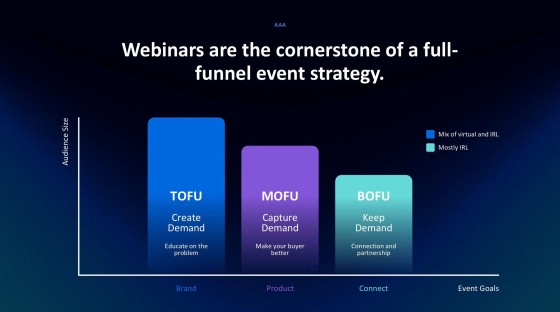
Your objectives for each webinar should closely align with your target audience and where they are in the buying journey. For instance, webinars geared toward the early stage of the buyer journey might focus on brand awareness and thought leadership, while mid-stage webinars would be better suited to product demos, case study testimonials, and market research.
Finally, for an audience in the late stage of the buyer journey, you’ll want heavy-hitting content that can help drive sales, such as product comparison webinars or educational webinars that highlight key brand differentiators.
What resources are needed to execute the webinar effectively?
Establishing your resource needs goes beyond having someone to run your webinar—you’ll need to establish what webinar platform you’ll be using; whether your webinar will be hosted live, on-demand, or both; and which webinar features you want to leverage, such as polling, surveys, Q&A, and chat.
You’ll also need to consider your ability to promote your webinar and follow up afterward. If you don’t have the marketing resources necessary to pull in your audience or engage with them after your webinar wraps, the effort required to host the webinar will mean very little.
How to drive registration and attendance
The stage is set. You’ve answered all critical questions, and you know it’s the right time for a webinar. Now comes the challenging part: getting people to attend.
With so many webinars out there vying for attention, you can’t expect to simply send out invitations and have the registrations come flowing in. Your webinar needs to stand out, not only in the content it offers, but also in the way it’s promoted.
Key promotional channels
You’ll need to leverage a mix of promotional channels to effectively get the word out about your webinar. You should carefully consider your target audience when building your promotion strategy, as you’ll need to know where you’re most likely to reach them and how you should speak to them to pique their interest.
Key promotional channels might include:
- Email marketing: Ideally, emails should be sent to targeted lists in your contacts and curated for customers, prospects, and partners.
- Social media: Platforms like LinkedIn, X, Facebook, and Instagram are all great for getting the word out, engaging with your audience, and even allowing others to help spread the word for you. There are so many ways to engage, including using brand or industry hashtags, sharing teaser content like short video reels, sharing speaker bios, and more.
- Paid advertising: Pay-per-click ads and social media ads can be an effective way to reach a broader audience outside your known network.
- Website promotion: Your webinar should have its own landing page, both to facilitate registration and to describe what attendees can expect from attending. Promote the link to your webinar landing page wherever you can, including across your own website.
- Partner promotion: If you’re collaborating with partners to host your webinar or are working with a prominent speaker, leverage all opportunities for cross-promotion within their networks and across their websites and social media.
- Online communities and forums: Does your organization have an online community or forum for customers? Is there an online forum for your industry where you can share details about your webinar? Do it!
- Webinars: That’s right! You should use every webinar you host as an opportunity to promote future webinars. Once you have attendees in front of you, let them know about the other amazing webinars they can attend in the future.

How to make sure people actually attend
How many times have you signed up for a webinar only to bail at the last minute? We all know webinars can be an immensely valuable use of our time, which is why we register in the first place, but showing interest and signing up doesn’t mean we’ll show up on the day.
So, how can you ensure the registrants to your webinar actually convert to attendees? Here are a few tips to help:
Don’t promote too early (or late)
While you’re focused on promoting your webinar for weeks, it’s a small blip on the radar of your prospective attendees. Once you begin promoting your webinar, you’ll keep your audience’s attention for a short time, so make sure you’re not reaching out too soon. And, of course, you’ll also need to be sure your target audience still has room on their calendars, so don’t begin promotion too late, either. Three or four weeks in advance is optimal.
Send reminders
We’re all guilty of simply forgetting we have plans—webinars are no different. Remind your registrants about the webinar a few days in advance and again on the day to give them every opportunity to plan around it.
Make your webinar a can’t-miss event
There are a lot of webinars out there. What makes yours special? A popular speaker? Groundbreaking data? Insights into new trends or popular issues? Let your audience know exactly what they’ll be missing if they fail to attend.
Emphasize the live elements of your webinar
If you’re hosting a live webinar, make that known! There’s a lot to be said for the differences between live and pre-recorded webinars, and that can be a selling point for many attendees. Stress the live elements of your webinar and opportunities for engagement during the event to create a sense of urgency and exclusivity (and a healthy amount of FOMO).
Offer incentives for attending
What’s better than freebies and discounts? Your attendees appreciate a bargain as much as the next person, so consider offering them something they can’t say no to—for the low, low price of simply attending your webinar!
Incentives like access to post-webinar resources, discounts on products, or other exclusive offers can help boost attendance.
How to deliver a great live webinar experience
Live webinars offer one key benefit that makes them the preferred choice over simulive or pre-recorded formats: real-time interactions. A live webinar hinges on the ability to engage attendees and keep them actively involved in the proceedings.
So, how do you deliver a great live webinar experience?
Use interactive webinar tools
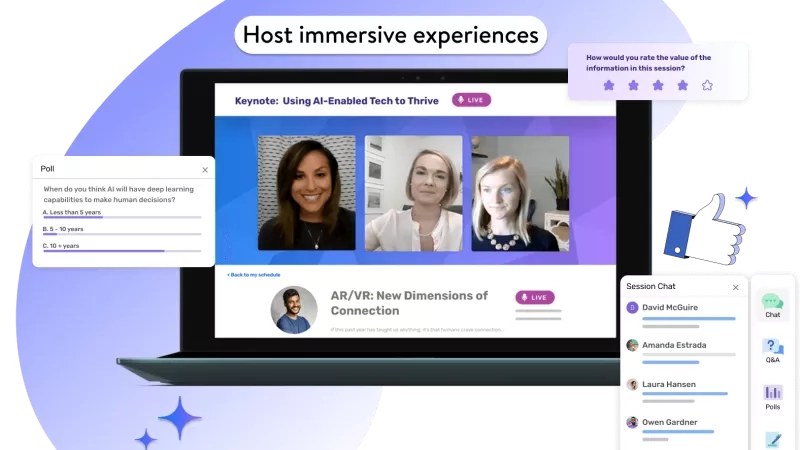
Attendees want to feel like they’re part of the experience. That means it’s up to you to make sure your webinar platform has all the right engagement tools, like:
- Interactive polls
- Live chat
- Q&A
- Live feedback and surveys
Invite compelling speakers
Not all webinar presenters are created equal. Make sure your speakers are prepared not just to present but to captivate. This means not only choosing speakers who are enjoyable to listen to but also arming them with the tools they need to succeed. Offer your speakers the following tips:
- Skip the long intros—dive right into the content attendees came for
- Be conversational—this isn’t a lecture or a sales pitch
- Plan interactive moments—know when polls, Q&As and other interactive elements will occur, and make the most of them
- Prep for everything—know the webinar platform inside and out, including what to do when experiencing technical difficulties
- Engage with visuals—when visuals are being used, speakers should connect their talk track to what attendees are seeing
Get creative with your webinar formats
Webinars come in all shapes and sizes. Which format will help you best encourage attendees to engage with your content? Common formats include:
- Panel discussions
- Lecture-style presentations
- Q&A
- Workshops
- Demonstrations, such as product demos
Provide access to exclusive resources
One of the perks of attending a webinar live is being offered access to exclusive resources that those attending on-demand won’t have access to. This can be a selling point for attendees and a means of keeping them engaged throughout your webinar until you get to the “freebie” content.
How to follow up after the webinar
Once your webinar has wrapped, there’s more work to be done. An effective follow-up strategy is just as important as your pre-planning and live engagement techniques. It’s time to nurture the leads you gained, build on relationships, and provide access to any post-webinar materials.
As you plan your follow-up strategy, keep the following in mind:
Audience segmentation is key
Segmenting your audience (i.e., grouping your audience based on their level of engagement) is a critical piece of an effective follow-up strategy. Differentiating between attendees, no-shows, and handraisers allows you to create a targeted nurture strategy for each group so that your follow-up communications are relevant to each individual.
Use engagement signals to inform your nurture campaigns
Similar to audience segments, engagement signals help you determine which type of content will be of interest to individual attendees. During your webinar, you can collect data about attendees’ interactions with your platform, including activity in the chat, questions posed in the Q&A, polling answers, survey responses, etc.
All of this data can and should be used to inform your follow-up strategy as you determine what content would be of interest to your different audiences.
Integrate your sales and marketing platforms with your webinar platform
Having access to all this great event data is meaningless if you can’t integrate your webinar platform with your marketing and sales tools. After all, your CRM and marketing automation platforms (MAP) rely on this audience data to effectively nurture those fresh leads you’ve attracted.
How to measure the success of your webinar
Now is the time to revisit those goals you set at the beginning of your planning process and determine how well those goals were met. As you evaluate the success of your webinar, ask yourself how well you met your objectives, which KPIs offered the most value, and which metrics might be worth measuring next time.
Metrics you might use to measure success include:
- Registration metrics: total registrations; percentage of people who registered after viewing the event landing page
- Attendance metrics: total attendees; percentage of people who attended versus registered; no-show rate
- Engagement metrics: average viewing time; interaction with polls, surveys, chat, and other features; questions asked during the event
- Conversion metrics: lead conversion rate for actions taken during and after the webinar
- Satisfaction metrics: attendee feedback scores based on survey results; net promoter score (NPS) based on attendees’ likelihood to recommend your webinar, brand, etc.
- Post-event engagement metrics: engagement rates with follow-up communications; number of views of on-demand content
- Future event metrics: registrations for future events—particularly those promoted during the webinar
- Cost metrics: associated cost of acquiring each lead through the webinar; attribution and return on investment (ROI) tracking to determine the overall return from the webinar’s costs
Repurpose your webinar content for ongoing engagement
Plans to repurpose your webinar content should be a given. There’s so much amazing content, from golden nuggets of information that can inform other content to click-worthy video snippets pulled directly from the recording.
Why not make the most of all the great content generated during your webinar and repurpose it across your other marketing channels? After all, you’ve invested so much time and resources into your webinar, and there’s no reason you can’t keep reaping the benefits once the webinar ends.
Ways you might repurpose your webinar content include:
- Blog posts based on snippets or conversations from your webinar
- Email campaigns centered around talking points from your webinar
- Additional webinars—pull content or discussion points from one webinar to inform future webinar topics
- Attendee/customer testimonials pulled from your webinar or gathered afterward from attendees
- Video clips—full-length informative videos or snippets from the webinar are great for drawing eyes to your content
- eBooks—a great way to expand on one or two topics discussed in your webinar
- Infographics offer a visual way to present easily digestible information pulled from your webinar
- Social media posts about your webinar—highlight who attended, popular speakers, and fresh insights to entice your audience to attend future webinars or view the on-demand content
With all these ways to take a fresh angle on your content, you’ll be able to reach broader audiences across all your marketing channels, which means your webinars aren’t just helping you reach those who attend—they’re helping you reach everyone who interacts with your repurposed content.
? Check out this post for more tips on how to repurpose your content.
Getting started with your webinar strategy
Webinars can be an immensely valuable engagement touchpoint, but their success hinges on building a strategic plan that encompasses thoughtful goals, an engaging delivery, and intentional follow-up.
By addressing the key challenges of driving registration and attendance, delivering engaging content, and measuring impact, you can create a webinar program that is both scalable and repeatable and that allows you to create meaningful connections with your audience.


