


Another RFP rolls in and once again, it’s being handled with a templated response that could’ve come from any of your hotels. Sound familiar?
When you’re managing a whole portfolio, it’s easy to fall into the trap of “just get it out the door.” But planners are savvy, and they can tell. They’re selective, and they’re swimming in options. If your group sales pitch feels like it was written for anyone, they’ll move on to someone who makes them feel like someone.
Personalization, powered by smart data, clear segmentation, and artificial intelligence (AI), is the key capturing planners’ attention. In this blog, we’ll break down exactly how to make personalization in group sales work across your portfolio, how AI-driven group sales strategies are changing the game, and how to create better planner experiences that actually lead to booked business.
What personalization in group sales really means
Personalization isn’t just swapping in a planner’s first name and calling it a day. And it’s definitely not sending the same PDF deck to every lead with a few lines tweaked at the top.
Personalization in group sales means shaping the entire sales experience around what the planner cares about, not what you want to push. It’s about relevance, context, and timing, and making your offer feel less like a pitch and more like a solution.
That could look like:
Proposals that highlight features a planner has asked about in previous events
Emails that reference their industry, event type, or preferred booking window
Dynamic content on landing pages that shifts based on their behavior or profile
Follow-ups that feel human, instead of robotic or recycled
For portfolio and brand-level teams, this also means making sure your properties aren’t all sending the same message. Personalization has to account for what makes each hotel unique (its space, staff, location, or vibe) and how that connects with a group's specific needs. With the right tools and a bit of strategy, a lot of personalization can be automated without feeling robotic.
Find out more about personalizing your group sales strategy here.
Why group sales need a personal touch (now more than ever)
There was a time when sending a generic proposal with a rate sheet and a ballroom photo might’ve been enough. That time is over.
Planners today expect more and they can spot a copy-paste job from a mile away. They’re doing their homework, using sourcing platforms, reading reviews, comparing offers, and shortlisting properties long before your team gets a chance to pitch. If your response doesn’t speak directly to what they’re looking for, you’re out.
But these planners are also comparing experiences and assessing how easy you are to work with. They’re looking at how much effort you put into understanding their event and how responsive and relevant your communication is.
For hotel brands and management groups juggling multiple properties, this is about setting a consistent standard across the portfolio. A planner should feel that your team “gets it,” whether they’re talking to a resort in Scottsdale or a conference hotel in London.
10 effective group sales personalization tools and strategies
Personalization may sound time-consuming, but if you’ve got the right tools in your corner, then you’re all set. AI and data-driven tech have taken what used to be a manual grind and turned it into a streamlined, scalable strategy across your entire portfolio. In fact, 50% of planners are using AI to plan and execute events, and 70% of meeting professionals report daily AI use.
Here’s how top-performing hotel groups are using data and AI-driven group sales strategies and tools to personalize group sales and close more of them:
1. Lead scoring that tells you who’s actually serious
Not every RFP is worth the same amount of time and attention. Lead scoring tools help your team quickly identify the most qualified, high-fit leads, so your best proposals go to the planners most likely to convert. This means getting rid of guesswork and wasted effort, which is always a plus in group sales.
2. Automated responses that don’t feel robotic
AI-powered response automation helps your teams send fast, accurate proposals without losing the personal touch. Think branded templates that still reflect each property’s personality, plus dynamic sections that adjust based on the planner’s profile or needs. Response automation is fast for you and relevant for your properties’ clients.
“Response Automation has been a real game changer for us. The biggest benefit of it is the amount of time it saves for the team. The clients are happy because they’re getting a quicker response from us.” - Amy Russell, Groups, Meetings and Events Distribution Manager, Park Plaza Hotel Group
3. Planner Navigator: Know who you're talking to
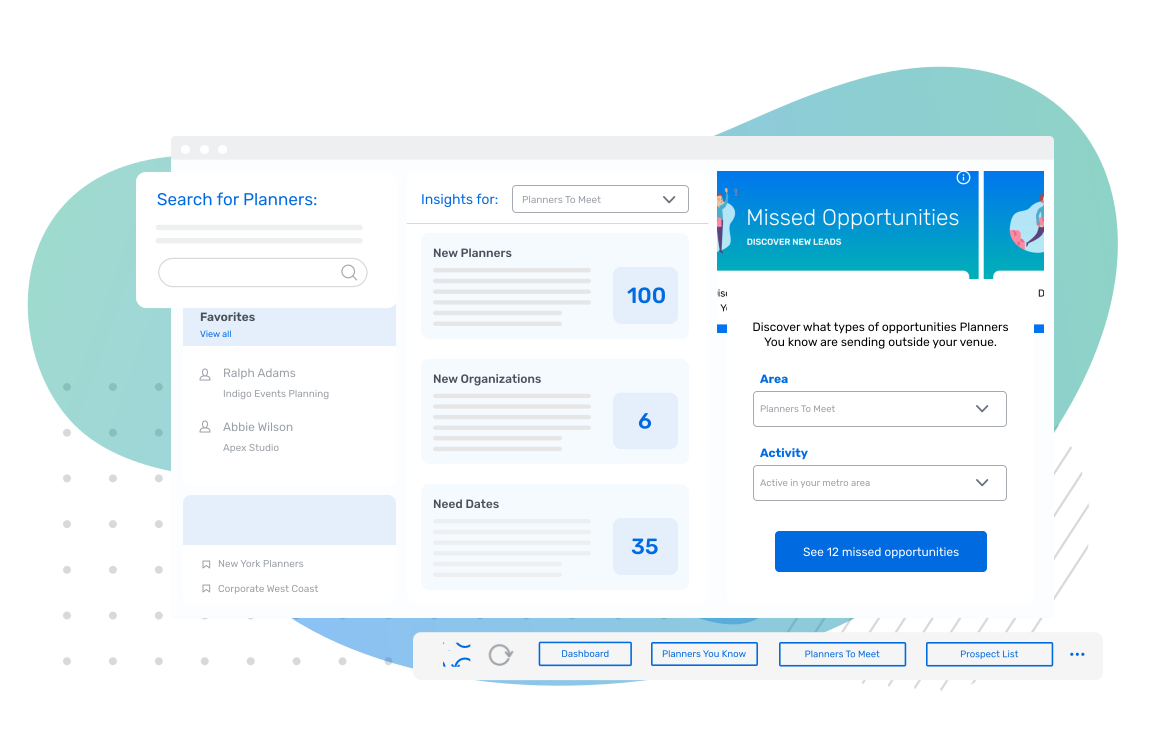
With Planner Navigator, your sales teams get insight into the planner behind the RFP (such as past events, preferences, industry, and more). It’s like a cheat sheet for relevance. Instead of shooting in the dark, you’re speaking directly to what they care about. Planner Navigator:
Connects your properties to the right planners based on preferences like location, venue type, capacity, and amenities.
Captures leads across all venues in one place, no matter which hotel or region the planner is browsing.
Gives you insight into what planners are looking for with engagement and search data that inform your sales strategy.
“Planner Navigator has brought me closer to clients, and it has taken so much of the work out of trying to find the right planner.” - Jeff Howell, Director of Sales and Marketing, The Lodge at Flying Horse
4. Room block tools that actually block smarter
Juggling room blocks across multiple hotels gets chaotic fast. Maybe one group’s block is filling up way ahead of schedule while another’s barely moving, and you’re stuck trying to track it all down with spreadsheets and email threads.
Room blocking tech makes that process easier. Use it to set up simple, branded booking sites for each group, see how pick-up is pacing in real time, and make quick adjustments if things start to stall. It cuts down on the back-and-forth with planners and keeps everyone in the loop.
5. Event diagramming that sells space before the site visit
Square footage is great. But planners want to know how their event is actually going to work in your space. Event diagramming software does that for you.
Instead of sending over static floor plans and hoping they can picture it, let your hotel sales teams quickly build out custom layouts that show seating, staging, flow, and even AV setups. It helps planners visualize their events and gets everyone aligned before they even do a site visit.
It’s also a huge time-saver and delivers clear, detailed diagrams that help your team deliver exactly what the planner had in mind.
“[The] meeting planners will custom tailor diagrams, send them back to us, and then all of a sudden the national team, the onsite team, the sales and ops- everyone's now connected and aligned.” - Nick Kopach. Director, National Events and Programs, TopGolf

6. CRM platforms that actually help you sell smarter
Modern CRMs (like the ones from Salesforce or Cendyn) use AI to surface hot leads, suggest next steps, and flag which planners are most likely to book again.
A CRM keeps track of every planner interaction like what kind of events they’ve booked before, which properties they’ve shown interest in, what they care about most (like flexible spaces, luxury touches, or fast Wi-Fi). So when they reach out again, you’re not starting from scratch. That means less guesswork and more time building real relationships.
Bonus: When your CRM connects with other tools (like email, website tracking, or your RFP platform), you get a full picture of every planner’s journey, making personalization even easier.
7. Predictive insights you can act on
Want to know which planners are likely to come back? Or which markets are heating up for association business? Predictive analytics and business intelligence platforms tap into booking behavior, demand trends, and competitive data to help your sales and marketing teams stay a step ahead.
“It’s an amazing way to understand the business, and it’s timesaving...The BI tool tells you where to go after, where most of your leads are coming from for the year. You can just be more proactive.” - Chagrin Olivo, Director of Sales and Marketing, Royal Sonesta San Juan
8. Customer segmentation that actually works
Customer segmentation is just a fancy way of saying: not every planner is the same, so don’t treat them like they are.
Instead of blasting out one-size-fits-all messaging, break your planner audience into smaller groups based on shared traits so your outreach resonates. This is especially powerful for multi-property brands, where different hotels serve different types of group business. These buckets might include industry type, booking history, or event size.
Customer data platforms (CDPs) like BlueConic or Segment help you centralize and sort planner data from multiple sources. Or, email marketing platforms like HubSpot, Mailchimp, or Cendyn offer list segmentation and dynamic content blocks.
9. Emails that change based on who’s reading
Dynamic content means that parts of your email change automatically based on who’s receiving it. Instead of sending 10 different emails to 10 different planner segments, you send one smart email that adapts to each reader in real time.
Use dynamic content in your email marketing platform (like HubSpot or MailChimp) to build one message that looks totally different based on who's opening it. That means a planner hosting tech conferences sees something different than one booking weddings without extra work for your team.
Plus, planners themselves say that personalization in email campaigns works. According to Gitnux, personalization in event marketing can increase attendee engagement rates by 40%.
10. Chat that doesn’t feel robotic
Instead of having planners fill out a long contact form and wait two days for a reply, smart chat tools like Drift or LivePerson ask your clients a few quick questions (like what type of event, when, how many people) and point them to the right sales manager or property. It keeps momentum going and makes a great first impression.
Personalization isn’t optional anymore
If your outreach looks and sounds just like everyone else’s, it will get buried. But when you use the data you already have, smart tech, and a little bit of strategic segmentation, that’s when things click.
Personalization in group sales is about being relevant and sending the right message to the right person, showing the right property, and solving the right problem without making the planner dig for it.
And for hotel groups juggling multiple properties, this tailored approach turns interest into action and leads to long-term partnerships.
Want to know more about how AI helps you personalize group sales? Read our new guide Mastering AI for Group Business in 2025.

Mansi Soni
More Reading


Why Cvent?


