


Trade shows can be a game-changer… or a headache. Anyone who’s wandered through a poorly planned floor knows the pain: cramped aisles, blocked booths, and confused attendees circling like they’re lost in a hedge maze. For hotels hosting these events, the layout of the trade show floor plan makes or breaks the experience.
And the stakes are high. The B2B trade show market is projected to hit $15.78 billion in 2024. That’s billions flowing through events where every booth, every pathway, and every square foot counts. A hotel that nails its trade show layout keeps exhibitors happy and proves itself as a serious player in the events world.
Creating a smart exhibition floor plan means guiding people, keeping energy up, and making the event feel effortless. With the right design and a little help from event diagramming tools you’ll deliver a trade show experience that planners and attendees won’t forget.
Why a trade show floor plan matters
A trade show floor plan is the backbone of the entire event. When it’s done well, everything feels smooth and professional. When it’s not, the whole experience unravels fast.
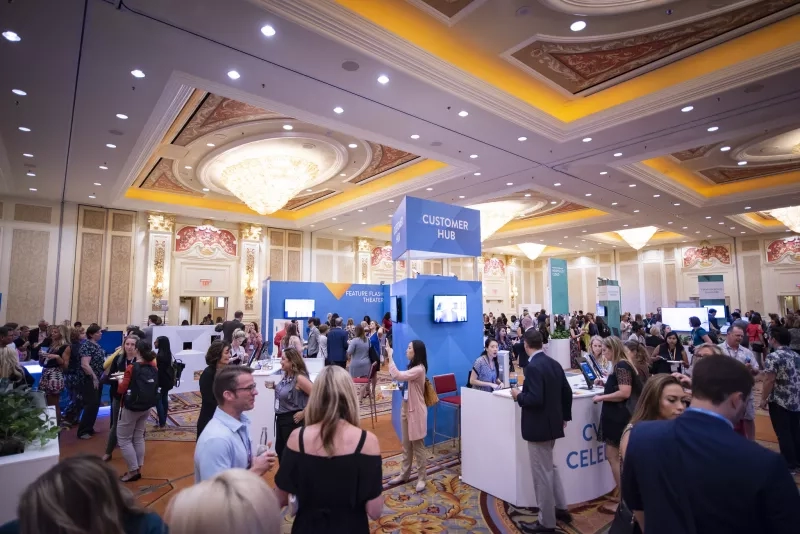
It keeps foot traffic moving
Nobody enjoys a traffic jam, least of all inside a buzzing trade show. A smart layout prevents bottlenecks by creating clear pathways and natural routes around the room. Attendees can move from booth to booth without feeling rushed or crowded, which keeps the energy up and encourages them to stay longer.
It gives every booth fair visibility
Exhibitors don’t want to be hidden behind a competitor’s giant display. They pay for the chance to be seen. A well-planned booth layout ensures that smaller vendors get fair exposure, while anchor exhibitors still get the spotlight. This balance creates a level playing field and makes the show feel worth it for everyone involved.
It shapes the overall experience.
From check-in to closing time, the design of the exhibition floor plan influences how attendees feel. A layout that’s easy to follow makes people comfortable and confident. They know where to go, they discover what they came for, and they leave with a positive impression of the event and your hotel.
It makes your hotel look like a pro venue.
For hotels, the floor plan is a silent ambassador of your venue’s capabilities. A seamless trade show layout shows planners that your team can handle large-scale, complex events without breaking a sweat. It builds trust, boosts your reputation, and makes your property a go-to choice for future business.
How to create a trade show floor plan
Creating a trade show layout is like solving a giant puzzle. Every piece (booths, aisles, food stations, restrooms) has to fit together in a way that feels natural and functional. Done right, the space flows but done wrong, and people get lost or frustrated. Here’s how to approach it.
Start with the basics: Before you dive into design, map out the essentials: where attendees will enter and exit, where registration desks will sit, and where restrooms and food stations belong. These elements set the foundation for everything else.
Think about flow: Attendees should be able to move through the exhibition floor plan without doubling back or feeling like they’ve missed half the room. Main aisles should guide people smoothly through the space, with smaller paths branching off to booths and features.
Build in flexibility: Every trade show is different. A solid trade show booth layout works whether you’ve got 20 exhibitors or 200. This means planning a design that can scale up or down without feeling either empty or overcrowded.
Creating a trade show floor plan manually
Traditionally, teams would sketch layouts on paper or drag shapes around in a basic computer program. While it works, it’s slow, clunky, and prone to mistakes. If you suddenly need to adjust booth sizes or shift the location of a lounge, the entire plan can unravel.
And because there’s no easy way to visualize how people will actually move through the space, you often only spot problems once the show is being set up. By then, fixing them is stressful and costly.
Using event diagramming technology
Event diagramming software flips the process on its head. Instead of wrestling with a static drawing, drag and drop booths, stages, and lounges onto a digital map of your hotel space. Say you need to adjust an aisle or resize a booth, event diagramming tech takes seconds instead of hours.
These tools make it easy for planners, exhibitors, and your hotel team to collaborate in real time, so everyone stays on the same page. They also let you see the layout in 3D, making it easy to spot flow issues before anyone sets foot on site. This means a smarter trade show floor plan and a lot less stress.

15 things to consider when creating a trade show layout
Every choice you make, from where the entrance sits to how wide the aisles are, shapes how attendees experience the event. The right exhibition floor plan keeps energy high, helps exhibitors shine, and makes your hotel look like it was built for hosting big shows. Here are the key elements to think about when planning a trade show layout:
1. Entrance impact
First impressions matter, especially at a trade show. The entrance sets the tone for the entire event. A crowded or confusing doorway makes attendees feel stressed before they’ve even started exploring.
Design a welcoming entry with clear signage, an open feel, and easy access to registration. This is where you can make people feel like they’re stepping into something exciting rather than bracing for chaos.
2. Registration flow
Check-in should be quick and painless. Place registration desks near the entrance so they’re easy to find, but don’t let them block doors or create a bottleneck. Think about where the line will form, and make sure attendees won’t be spilling into aisles or blocking traffic. A smooth check-in process sets the pace for the whole day.
3. Main aisles
Wide, straight aisles are the highways of your trade show. They keep people moving and make the space feel open instead of cramped. When aisles are too narrow, traffic slows and booths get overlooked.
When they’re too winding, attendees get lost. Designing strong main routes helps guide foot traffic naturally from one end of the floor to the other.
4. Booth variety
Variety keeps things interesting. Anchor booths (usually bigger or more elaborate setups) can act as landmarks, while smaller booths fill in the rhythm of the floor. Mixing them strategically avoids dead zones and keeps energy evenly distributed across the space. Attendees feel encouraged to explore rather than cluster in one area.
Discover trade show booth ideas that’ll wow the crowd.
5. Premium placement
Every trade show has its star exhibitors, but you don’t want their popularity to choke the flow. Put big-name booths in spots that draw crowds but still allow for movement, like at the end of a main aisle or near a corner. That way, their foot traffic benefits surrounding vendors without overwhelming the space.
6. Networking spots
Trade shows are also about people connecting. Adding lounges, cafés, or casual seating throughout the floor gives attendees places to recharge and talk shop without leaving the event. These spots also encourage longer stays and create organic opportunities for networking.
7. Charging stations
With phones, tablets, and laptops constantly in use, attendees will be on the lookout for power. Strategically placed charging stations keep people happy and keep them on the floor rather than heading back to their hotel room. Treat these zones as small hubs of activity.
8. Food and beverage areas
Nobody wants to trek across the entire venue for a coffee. Place snack and drink areas where they’re easy to reach, but not in high-traffic aisles where lines could block booths. Spread them out if possible to avoid creating one single congested zone. A well-fed attendee is an engaged attendee.
9. Stage and demo zones
Live demos and presentations bring energy, but they also bring crowds. Position stages or demo spaces in areas where people can gather without blocking nearby booths. Consider sound too. You don’t want a booming mic drowning out conversations in the rest of the hall.
10. Restrooms
Restrooms are basic, but when they’re hard to find, frustration sets in quickly. Signpost them clearly and make sure they’re accessible from all parts of the floor. Nothing disrupts an attendee’s focus more than a bathroom hunt.
11. Accessibility
Trade shows should feel easy for everyone to navigate. Wide aisles, smooth pathways, and thoughtful booth placement help attendees using wheelchairs or mobility devices, but they also make the experience better for everyone.
12. Signage and wayfinding
Even the best layout falls flat if attendees can’t figure out where they are. Use bold, visible signage to guide people, and include floor maps at key points. Clear wayfinding builds confidence, making attendees feel like they’re in control of their experience.
13. Lighting
Lighting shapes the atmosphere. Bright, even lighting makes booths look professional and inviting, while dim or patchy areas can feel neglected. Make sure the entire floor is well-lit so every exhibitor gets their moment to shine.
14. Storage and back-of-house
Exhibitors need places to stash supplies, giveaways, or personal items. Building in discreet storage or easy access to back-of-house areas keeps booths tidy and professional. It also cuts down on clutter spilling into aisles, which keeps the whole floor looking sharp.
15. Safety first
Finally, safety can’t be an afterthought. Mark emergency exits clearly, keep evacuation routes unobstructed, and design pathways that remain accessible even when the floor is packed. A safe environment protects people and reassures planners that your hotel is a reliable venue for large events.
How event design technology helps
Planning a trade show floor plan by hand feels like trying to solve a giant puzzle with pieces that keep changing shape. Event diagramming software takes the guesswork out of the process by letting you see the layout before a single booth is built.
Use digital floor plans to experiment with different designs, move booths around, and immediately see how changes affect traffic flow and visibility. Drag-and-drop tools make it simple to test ideas quickly. Want to swap a lounge with a demo area? Move a few booths to open up a main aisle? It takes seconds instead of hours of redrawing and recalculating.
This flexibility not only saves time but also helps identify potential problems before setup day, so you’re not scrambling to fix issues on the spot.
Your floor plan is the backbone of your trade show
The way you place entrances, aisles, booths, and amenities shapes how people feel from the moment they arrive until the moment they leave. For hotels, getting it right means more than just a smooth event. It shows planners that your property can handle complex shows with ease, making you a top choice for repeat business.


