The Power of Inclusion: Transforming Events Through Accessibility


Episode description
Accessibility plays a key role in ensuring an event can be enjoyed by everyone. Learning how to make your experience as inclusive as possible is important, but where should you start?
In this episode, Ryan Curtis-Johnson, Director of Communications at The Valuable 500, dives into why accessibility should be a priority. Making sure everyone can enjoy the same experience, regardless of whether their disability is visible, is simply the right thing to do. Being conscious of graphic readability, using venues that don’t hinder mobility, and starting internal dialogues are great starting places towards making sure everyone can be accommodated for. He also explains the importance behind making accessibility seamless. An event should strive to include everyone in the same experience, rather than segregate those who need accommodations.
Show notes
- The importance of providing accessibility options for the right reasons
- How to make sure people with non-visible disabilities are accounted for
- How companies like Airbnb are implementing accessibility
Things to listen for:
[02:10] The importance of accessibility
[04:55] Asking the right questions about accessibility
[09:35] Achieving inclusivity for the right reasons
[11:56] How Airbnb is implementing accessibility
[14:55] Closing the gap in the customer experience
[20:09] Inclusivity for non-visual disabilities
[25:12] Ryan’s gold standard for accessibility
Meet your host
Rachel Andrews, Senior Director of Global Meetings & Events at Cvent
Paulina Giusti, Senior Manager of Meetings & Events at Cvent
Felicia Asiedu, Senior Marketing Manager at Cvent
Meet your guest speakers
Ryan Curtis-Johnson, Director of Communications at The Valuable 50
Intro: Great events create great brands, and it takes a village to put on an event that engages, excites and connects audiences to your brand. And we're that village. I'm Alyssa. I'm Paulina. And I'm Rachel. And you're listening to great events, the podcast for all people interested in events and marketing.
Rachel: Hello everybody and what is going on in this wide wide world of events? My name is Rachel and welcome to this week's episode of Great Events. We have a stacked show today with my fellow co-host, Paulina Giusti and Felicia Asiedu, and a very special guest. This week I'm excited to announce our guest speaker Ryan Curtis Johnson, who is the Director of Communications with The Valuable 500. Ryan, welcome to the show.
Ryan: Thank you, and thank you for having me. It's a pleasure to be here. If you're happy, I'd like to just give a quick, audio description of myself. So I'm a white male. I'm wearing a cream top. I've got my gold glasses on. I've got brown eyes, and behind me is a green AstroTurf wall, and a sign that says All you need is love, which is not lit up at the moment.
Rachel: That's awesome. Thank you for that. That's really on topic for what we're just doing today and talking about accessibility. Ryan, why don't you just introduce yourself and what you do at The Valuable 500 and give our listeners a little bit of background about you.
Ryan: Yeah, absolutely. I'm obviously Director of Communications at The Valuable 500, but The Valuable 500 is a global collective of 500 CEOs and their companies who are innovating together for disability inclusion. Disability inclusion includes everything from representation, C-suite storytelling, inclusive reporting, and also part of that inclusive reporting is digital accessibility as well. So the full spectrum of looking at disability inclusion within the workplace.
Rachel: Okay, awesome. Actually, that's a great segue to our kind of first question here and opening up the conversation, so obviously accessibility is very important, but, a lot of times it's not discussed as broadly as it should be. Let's talk about the importance of that and why our listeners should be concerned with that and be taking accessibility to the next level at their events, their marketing programs, you know, not just in person but digitally as well.
Ryan: Yeah, absolutely. It's so important. I think that the really simple way of looking at this is it's the right thing to do, you know, consciously it's the right thing to do. So often a lot of things will come through in the sense that it costs too much money. You know, there's no budget to be able to provide this.
And so just a caveat to how I think we drive change and support that. One of the things that The Valuable 500 does is we say no to any event, any speaking opportunity that is not fully accessible. And fully accessible for us means that if it is a live event, regardless of whether the delegate or the person who may attend, if they're registered or not, depending if it's a public or a closed event, If the person turns up and they do have a disability, they are able to be able to attend that event because it is fully accessible.
And that's really important to have that opportunity and those facilities and requirements and accommodations in place. And I think anyone that's sort of saying we don't have the budget is pretty much penalizing an individual because of the fact of they have a disability and it's the same as really looking at it in the fact of if you didn't provide tea and coffee, it's the same as if you didn't provide a description as to what your product is you're trying to sell from a marketing perspective.
If you decided to take all of those things away, that is pretty much what you are then doing if you're not making it fully accessible. And digital accessibility is everything. So it's making sure your website, making sure your content, texts, and its documentation is remediated. It's looking at the coloring, the font of texts.
The list goes on. There are checklists. You can see them all on different websites. If I named them all, I'm not going just name one, but there are plenty of places that you can check and there are websites that you can go and you can actually insert your website link if it is a registration or something like that.
That then allows you to tell you how accessible it is, and you know, in some cases if it isn't accessible, there are lawsuits against that because of the fact that it isn't fitting with data protection.
Felicia: Yeah. Ryan, you touched on when you are talking about how my mind was thinking as you were talking, you know, there will be lots of organizers and marketers that are kind of like, but how do I do it? And they're so worried about falling foul that they just almost clam up and they say, okay, well I did this, and you know, what do you think about asking questions as to how can I do this?
Ryan: Yeah, I think the key to this is making sure that you ask the questions in the sense of if you do not understand or fully believe that you are doing everything accessible. There are experts out there that do this day in and day out, so it's really important to understand that these places are, or these individuals know this inside out. So actually don't be afraid. And that's where, again, costs will come into play, into that scenario regarding this in the sense of people would say, oh, well we don't have the budget to then go and pay for that professional to come in and support us with that.
Well, that's where you need to really be smart with your budgets because you know, as event managers or as creatives or as any good procurement person would be able to do, there are ways to find money or cut back on other things, and if that means, I don't know, being pedantic, one less brownie, one less croissant. But it means that actually your event is fully accessible or it means one less motion graphic that's probably not going to really do much on your website, but actually it means your website is fully accessible that all readers, you know, and website readers that people may be utilizing are able to use your website completely.
Why wouldn't you do that? Because, you know, morally, again, to go back to what I said, it's the right thing to do. So I don't know why we wouldn't do that. So it's, I think a lot, there's a lot of nervousness around it, but also there's a lot of nervousness for, you know, people with disabilities in being willing to come forward and talk about their disability because one, they see a lack of representation within their organization.
They don't see it in the materiality. So when they're looking at the promotions or when they're trying to apply for jobs or they just don't see them talking about it, but then they see it talk being talked about on Mental Awareness Week or you know, global Accessibility Day, or you know, IDPD, which is the International Day of People with Disabilities.
They might see all that activity, but that's only on one day. And we need to see this continuously. And I think the key to it, which is, which is another thing to kind of go again. So I know we are talking about people with disabilities here, but it's accessibility for all, you know. We never know at some point with an aging population and the amount, disability can affect anybody at any time, and it's visible and it's non-visible disability. So we can't just constantly think about the event and the sense of is access into the venue okay. And everything like that. Because a person with a non-visible disability that you wouldn't see on the offsite doesn't need those elements maybe, but needs other elements in making sure that the text and the communications has been fully accessible for them to see. And that's the key to it really.
Paulina: I love that. I have a quick question. Well, Follow up question to it. So I think there's something about this, and Felicia and Rachel and I have talked about this countless times as we look at our event design process for programs, whether they're internal or or customer facing. But there's this kind of approach of a universal event design process, right?
Including it into, you know, just that same checklist that you would approach for your food and beverage considerations or your content considerations or production experience. There is this sort of mentality. I'm sure many people who are listening are saying, gosh, I wish I just had a checklist to start so that I could create a foundation and then be able to iterate off of that and get better and better with each event or each year.
And I think a number of us are thinking, okay, I've started with the onsite experience and thinking about the ADA offerings. I've thought about the digital experience and having, you know, alt text for images and, applicable fonts and color schemes. What else beyond that? And I think part of where I'm going with this is I'm thinking about all of these things.
I'm doing all of these things. How am I meant to communicate that this is being done without appearing, like I'm doing it to check a box? I think that's something that a lot of people who are listening may be thinking, I don't want it to look like I'm promoting that I'm doing it for the wrong reasons, but I want to be doing this.
Ryan: Yeah, and I think that's, you know, when we come back to, it's a really interesting point because it's that kind of tippy toe scenario again. But I think if we go back to, you know, something that I often give example to the Black Lives Matter movement in the sense of this process is very similar in the sense of, people communicated that they did support the Black Lives Matter movement.
And then actually when people were investigated or looked into their organization, they hadn't been. And so it was talking a talk, but actually the action was very different. And I think it's really hard because do you want to over communicate? Do you not want to over communicate? But if people don't know, they're not going to tell you whether you are overcommunicating or not.
And so I think it's one of those things where you need to test the water. Most organizations, I would hope, have different committees or groups within, if they're a large organization. So I think it's stepping out to those, to speak to those individuals and say, we're doing this. We're driving this.
How is the best ways to do this? It's also pulling on the professionals within the organization. Your internal comms people, if you've got them in your organization, should be able to tell you what's the best way to communicate. And sometimes one model does not fit all. So it might feel like you've gotta repeat it a couple of times before it finally sticks.
And does that mean we need to put it on our Yammer, which is our internal sort of intranet? Do we put it in an email? Do we also push out some video content as well? But again, thinking about it when you're pushing it out, do it by setting an example as well. So if you're putting your video out, put your live captions on the bottom, not auto human generated caption, so it's word for word, making sure that your text is correct and it's not too condensed together because you are trying to cram everything in.
Its good spacing within it, clear text, not lots of fussiness around it with coloring and everything like that. So in some ways it's about keeping it simple. Keeping it simple, but making sure it does. And I think it's like anything, you could have a checklist and you could have, we've got 500 companies, they're all going to do it really differently, but it's sort of setting the parameters of this is what good looks like. And so by learning from what good looks like, that helps to push it out. And there's so many organizations that are doing it that are really, really kind of excelling on it. You know, a really good example at the moment that I can tell you about is AirBnB. So AirBnB put together a new category on their website.
So on their website, it's all pretty much online. And the website that they have. Obviously, if anyone isn't aware, AirBnB is an online platform that allows you to find accommodation that you can stay in. They created their category, which was an adaptive accommodation, which supports for digital, for people with disabilities and these homes are homes that are basically where people live who have a disability. So it would meet the needs of many other people who would like to travel. And some of the biggest barriers for people with disabilities is travel and the travel industry and accommodation and what accessibility really looks like.
Cause let's be honest, for some places, accessibility can be one thing and then they'll have a room, but they've only got two of those rooms out of all of those other areas. And actually the wheelchair doesn't fit. Or actually it doesn't accommodate the needs of that individual when they're utilizing it.
So AirBnB have created this category and they have seen an influx of people that have been utilizing this skill. And bear with me while I just get the figure for you because it's too impressive not for me to get it wrong. So I need to make sure I get it right for you. But it's really impressive in the sense of, in the space of, I think the first, they, they only launched it sort of at the end of last year.
And basically the way in which it's worked, they launched the adaptive category and now homes over 1,100 listings around the world. And it says, with hosts earning over 5.5 million since the launch. Now, for me, if that doesn't show as a business or a brand that if you tap into this demographic, in this market, there is financial benefits for you as a business.
So if you are not considering or even thinking about it and you are not even showing that representation or delivering within that internal element, Paulina, what you were saying, then you're really missing a trick. Because there is an expenditure of this income that is out there where people are willing to pay and there are, you know, whisperings of where some brands are considering, luckily to say they're not part of The Valuable 500 where they're considering reducing the amount of people with disabilities they may have on any of their services because of the fines that they are gaining due to the fact that they're not meeting good requirements. That says a lot, but it says a lot really that the fact that people understand that they know what good looks like and why it is needed and that they are even fined on that basis, but to hear of these stories is quite, you know, is quite sad.
And I think the key ideology, or if I was going to say, what is the magic solution to this? I don't believe there is a magic solution, but sometimes it feels like it's really simple. It's a workflow and you know, I would probably say I'm not the most digital person in the world, but I understand that when you are building a digital platform or a website, you have workflows of the way in which you want that individual to go through and that sort of customer experience or delegate experience, if it's an event registration, and the same happens in real time. So in a face-to-face scenario, you understand the way in which you want this conversation or that journey for that customer experience.
And there is a huge gap in the way in which that customer experience happens for a person with a disability and that is what we need to close and it feels really sort of simple when I say this. I have many conversations with different brands where I've sort of said it feels really easy, like there's just a knowledge gap here.
Where staff and individuals, who may be delivering on whether it's front of house in an accommodation, a person turns out they don't tell you that they're disabled. Does that mean that that's the person's fault? No. They should be able to just turn up and gain the same experience as a person who doesn't possibly have a visible disability.
It's the shock factor that sometimes causes the individual to not deliver on the same customer experience as someone who turns up, who doesn't have a visible disability, would then experience something very differently. And I, it's understanding that workflow and really providing better training, better accommodation in the sense of how we then speak and deliver and communicate with individuals and having the assets, collateral, whatever it might be, guidebook, whatever you might need to, to deliver on this, to close that gap, and then that makes it accessible for all. That doesn't just make it accessible for people with disabilities. That just makes it accessible for all because someone could break their, their foot or their leg.
That means that you are disabled for that period of time when you cannot use your leg. During that period, and people with disabilities, they're just asking to be treated as everyone should be treated and have the privilege that everybody has the privileges and the opportunities to experience and why would we penalize anyone for that?
Felicia: Yeah, and I hear you mentioned knowledge gaps, communication, like Paulina and you were asking about, you know, do I over communicate because then I might be treated as a ah, typical saying you're doing it. Not really. I just happened to Google whilst we were, you know, chatting, accessible, what I put in was “accessible events checklist.”
Here's what's really funny. Obviously I'm based in the UK. I got University College London, University of Glasgow University and College Union. I got Cornell University. What's this about? It's like every single checklist that's come up as my first results are universities that are trying to educate people as to like, could you just consider this?
There's some pretty good checklists in there as well, but I was actually shocked to find it wasn't the Association of Event Organizers or event organizations themselves that were putting out knowledgeable information about what should we do about this. So sounds to me like there is a healthy gap, you know?
Ryan: But also as well, what's really interesting when you say that is, we've all been there where we've seen everyone talk about sustainability, environmental, they're following the sustainability sustainable development goals, which is the union ones. I'm just going to break it down for you.
The SDG 10, which is one of the sustainable data, which most companies, most agencies are saying “We are affiliating. We are learning by this. We have this plastered on our website. We follow this as our guidelines to do good.” One of them is about inequalities, which is SDG 10. So if you are not thinking about accessibility, and I think that's where we get really kind of bogged down with the idea that sustainability is all about environmental.
It is, don't get me wrong, but it also is about inequalities, which means that if you are not delivering on the accessibility elements or showing clear representation or really supporting inequalities in anything you are doing, you are not actually following those goals that you've plastered all across your website to say that as a business, you align yourself to these.
Rachel: Or the goals are antiquated, right? Like they are only focused on people with wheelchairs, for example, and, and not the non-visible. I keep going back to your non-visible disabilities comment, because I think that that's where the gap is of the checklists that we have. You know, all event planners and event designers have this duty of care that we follow.
But we need to update it. We need to update it with these other non-visible disabilities. Like I've seen a lot of events lately, post signs outside of general session for epilepsy, and warnings of strobe lights and things like that, like more things like that on site. I think we need to think through.
Ryan: And also for neurodivergent people, quiet rooms, taking in, you know, time to reflect event. We’ll do a lot of that, which is great. Where they provide spaces, quiet spaces where people can come and they can go away just so that they can take some time. And in there, also in the quiet room is a live stream to the main room.
So, they're, they're still not missing out. They're still able to be part of it because what you don't want to do is you don't want to isolate and you don't want to segregate because what we're trying to do is we're trying to make it inclusive. We're not trying to sort of say, right, this is where you go and this is where everyone else goes.
Because that's where segregation comes into it. And if we really want it to be inclusive, which is what we're after here, then we need to make sure that it's, it's transparent. And that's where I think there was a lot of battle with virtual against live when we had the pandemic. And actually virtual is a really great opportunity, an option to make it fully accessible for those that have, you know, immune deficiencies, that being in a large space can cause huge implications, but they may completely appear to have a non-visible disability. So it would be like, well, why are you asking for that? I've seen you on calls. You, you look fine. And it's that pre-perception, that preconception.
And you know, we also have that preconception that people should tell us, you know, why? Why can't we just make it accessible like the lead by example? Rather than trying to sort of put the onus again on the person with a disability.
Felicia: I was going to say to that Ryan, though. I've been very grateful when people have offered information, and I wonder if there's a way that we can think about making it a safe space for people to offer information. So if there's a way that we can deliver, our planner side to kind of say, you know, and we can accommodate for a variety of, you know, disabilities or, you know, differences with people so that the person says, oh, fantastic. Glad to see you accommodating. I'm going to need this because some of the speakers that we've had, even at Connect last year, I had a speaker that asked us for the specs of the main stage, both from an audio perspective, a visual perspective, what would the lighting be like, how big would the screen be? Because she happened to have a neuro divergence, we were more than happy to provide her with that information. But I'm happy that she was able to ask and I was really grateful that maybe she felt. That we were providing a space enough for her to say, can I just get those details? And we said, yeah, sure. Here you go. You know?
Ryan: You've got to create that culture. You've got to create that space where people feel like they are being valued and they're actually going to be, you know, accommodated and seen. I think it's really hard to get it right. I don't know, again, I don't know what the solution is to that, but if you create a culture, you know, and I would definitely say the younger generation, you know, they get very much given a bad rep for being, you know, disruptors and being challenging towards certain, the status quo. Actually, they're the ones that are really kind of coming forward and owning the word disability because for a very long time it was a negative connotation. And actually what people, what we're seeing now with disability pride and the International Day of People With Disabilities and GAD is they're owning disability and they want to own disability and they are not afraid to own disability.
And that is where they will come forward and we'll see that. But I just don’t know whether the working, you know, corporate world is still playing catch up. And that could be legacy because of comments. It could be, I feel like I've not been seen within my organization in the sense of representation, but I've also not heard the language used.
So one of the things is like at The Valuable 500, we've just pushed the five KPIs, which is part of our white paper and it's important for us to, get businesses to look at that and look at workforce representation, goals, training employee resource groups, which is the ERGs, but also digital accessibilities, and include them in their AGMs, include them in their sustainability reports in their end of month, end of year financial reports so the wording is seen, and I believe that that then trickles to make it feel like it's a safer space for people to come and express that. But I get what you mean. It's really hard. How do you plan an event, but to a certain extent, to set a good example, just do it. Just have live captions that are human generated.
Make sure, yeah, just like do good, like do you not want to do good? You know, it's morally right, like, I can't say it anymore. It's a really hard one.
Rachel: What is the gold standard? What are your dream accessibility features like if in a perfect world at an event, I know we could talk at the business level, but for an event specifically, like what are your dream features?
Ryan: I think it's just that it's really been thought through. So like it's the translation and the live captioning or having sign language in there. It's the use of the fact that it's recorded. So then obviously people who may not be able to digest all that information all in one go, they can come.
It's the fact that they're not segregated. So it's the fact that it's mixed in as an inclusive event. So it doesn't feel like, well, we've just put them all over here, people with disabilities, because they need to be separate. It's the fact that it feels like it's just part of the event. What I like is I like going when I feel like I look at things and, I think I recently went to Rome and I've learned so much in this space since working in it, and I wouldn't have probably thought twice about, accessibility or digital accessibility because of the space that I've worked in. And to go into the Colosseum, which is a very old building, let's be honest, but look at it and then get around this corner as we went in to go into the center of the Colosseum and see a lift. And the lift allows you to, so it's fully accessible to get out to the main area on the ground, but the lift allows you to go up to the next tier level. That to me is what it's all about because it's about the fact that anybody can now come and experience this. And yes, it's, these buildings were not made to be accessible because they are so old. It's like the Great Wall of China. It's not something that really should be walked on because it's crumbling and it's up.
But at the moment, there isn't a way for you to get on there if you did have any physical or visible disabilities or like if you needed wheelchair access, but also as well, you could be, you know, it's easier for you to access through a lift. So that to me is what, where, where it, it warms my heart because I just think, well, this is fully inclusive, it's accessible for all and that's what it's looks like.
And that's what I love about an event. You know, the moments I love is like when you've seen sort of the larger concerts and they've considered it with having a sign language person, and that person is living their best life, the way in which they're providing that commentary to those individuals.
And yes, they are to an area so that they can see it, but it feels like they're part of the experience. And you also feel like it, because if you are a scene in that vicinity, that person is showing that. So it just is so, it seems streamlined and it doesn't feel like an afterthought or a consideration or that you've actually gone and asked.
It's like everything has been thought through to make this fully accessible and make everyone feel like they're part of it. And it's probably, I would also say back to the point that you made, that the questions were asked, you know, is there anything I can feel? So that individual that you had on your panel, they will go away feeling like the person you genuinely cared. You cared about me being there and me being there and bringing my whole self and making sure I felt comfortable. And that's so important.
Felicia: I saw the most amazing TikTok. I know. You've just, that thing of it warms my heart. I know it's different cause it's more commercial, but Louis Capaldi on stage, so Louis Capaldi, big singer from I think Glasgow, he's probably going to be like, no. And just discovered he's got Tourettes. Which is not helpful when you're a singer on stage and you have to be able to get through your lines.
And he was singing and suddenly his ticks started to kick in and the entire audience just went with it. They just started singing his song for him like nothing had happened. It was just seamless and then when, as soon as his ticks finished, he's like, oh, okay, fair enough. Let's crack on. You know, it wasn't like, oh, let's stop the show everybody, because this is not supposed to happen. It's uncomfortable. And what you were saying about young people and that seamless experience, I don't think anyone would bat an eyelid now. Cause it's like, yeah, it's fine. He's got Tourettes. Great. Whatever.
Ryan: And that's what we need to see more of. We need to see things and brands that are on this wider stage, like L'Oreal recently launched the accessible packaging, which has got a qr code, so it describes everything. They also released a device where it allows you to be able to apply makeup, if you suffer with hand tremors, so it allows you to have, and so you can apply makeup, why wouldn't we allow someone to have that opportunity to do that?
We've got things like Sony creating cameras where it's a new retinal projection camera kit that helps people with visual impairments to see and capture the world around them so that they can do it. So it works with them. I mean, the list goes on with the various different things and places where people and brands of what they're doing with innovation. And that's what it is. It's innovation. But what's also interesting is where we are seeing in partnership with the World Federation of Advertisers, media owners and TV sales houses and other key industry partners. So like Proctor and Gamble, are doing a reset bar in advertising and accessibility, which is basically hoping to progress where a hundred percent of advertising will be accessible with advertising accessibility across Europe, by 2025. I mean, that is huge and great, but we don't want to just see it in Europe. We want to see that across the globe. And I understand baby steps, baby steps, but you know, it's so important. It's a really important factor.
Paulina: I think something to this baby steps concept and for, you know, our respective audience listening, many of whom are event professionals, organizers, marketers right? Kind of going back to this, where do I start concept is, events is where it can start for your organization, right? If you are not in perhaps a really progressive organization or association or company, you can lead the charge with how you design these experiences, which ultimately will reflect back to your corporate or company culture.
And so I think we're at a unique opportunity with our peers listening in to kind of take the reins, and take those steps to perhaps, you know, injecting some change at the company level. And I think a lot of it can, like I said, start with these events that we design and execute.
Felicia: Yeah. And Paulina, to that extent, I was going to say one thing. I absolutely love. I always say I love the fact that I work at Cvent because I get to use our tech. I'm very lucky other people have to pay for it. But I know that our developers are developing accessibility into the technology, which is so helpful, for me, for Paulina, for Rachel, and all of our customers because it means that there are certain things that we will have to, we will not stop thinking about. But you won't have to really think, okay, well, is that color on that color going to work? Because the tool will just tell you, this is not good, you know? And I think developing it into technology is a really great way to get a big change to happen quickly, because that way you're not relying on every single event planner to think about colors, which they don't necessarily know, you know?
Ryan: Or have the time. You know it, it's a lot to think about. But what I think is really interesting is that it's there, it's integrated from the offset. It's not an afterthought. The technology is there to support it and to help drive it. And that's what's really important. And that's what a lot of brands, I think are starting to wake up to now, to see that.
And I think going back to what you were saying, Paulina, in the sense of it's actually experience here. That's what events are all about. Events are about creating a great experience. Everyone should have and has the entitlement and should be allowed to experience it. So why would you not allow them to?
So it's about thinking again, the experience. That's what events are all about. But does everyone experience it? Because if not everyone is experiencing it, then really it's not. And I think that's where we're as an industry or where the events industry is so good because they're so good at creating those euphoria moments, that moment, that experience where it elevates, it makes people feel good.
And there's a great opportunity to sometimes send messages out as well. You get the world sometimes looking, you know, we've just had the coronation. We've had some big events happening here. The same happens over in the US. It happens across the globe at various different things. There is great opportunities to have woven that in without even thinking.
And yeah, it may feel like a tick process. Make sure that. Isn't that where we've had to come to with diversity to get that change? Isn't that where we've had to come to get women seen within various things? So when you go back to all of these different demographics, it's just a shame that it takes a crisis or an issue to get it sorted. So is there not an opportunity now where we can just go for it?
Rachel: Yeah. Well, wow, Ryan, thank you so much for coming on the podcast today. We've learned a great deal. I think I even learned some stuff that we probably need to do for our events as well. I think you mentioned a lot of resources that people should educate themselves with. We'll make sure that any of those types of links will be available to our listeners. Where can our listeners find you if they want to learn more?
Ryan: Yeah, so, another great way to find us is through our website. So, it's www.thevaluable500.com, and on there you can see all our members. So I always like to say to the events industry, if anyone is pushing back and they're a member of The Valuable 500, it's always good to see that when they're asking for certain things not to occur.
So yeah, that's where there's lots of news, there's some resources on there, which allow you to also, you know, find out bits and pieces that are going on.
Rachel: Very good. Well, I think we can all do a better job of making sure our events are accessible, and thinking through all aspects of the event design. We want to make sure we're considering all attendees. But thanks again, Ryan, for joining us today. For our listeners, if you have any other topics or people you'd like us to add, throughout the rest of the season, please send us a note on LinkedIn or at greatevents@cvent.com.
Thanks for tuning in to great events

Event Planning for Accessibility: Tips and Best Practices


Accessibility and inclusion have always been core values, but they are also vital for business success.
Accessible events signal that your organization values all people. This builds brand trust, strengthens reputation, and demonstrates social responsibility, which matters to attendees, sponsors, and partners alike.
Whether you stage small meetings or large conferences, careful consideration of accessibility, both online and in-person, will ensure that all your attendees have a positive and inclusive experience.
Besides, the regulatory landscape is moving in only one direction, towards stricter inclusion requirements such as WCAG 3.0 and the new European Accessibility Act.Prioritizing accessibility now will help you stay ahead of legal and market shifts.
Read on to learn practical tips and best practices you can implement to ensure accessibility is at the heart of your event planning - before, during and after your event.
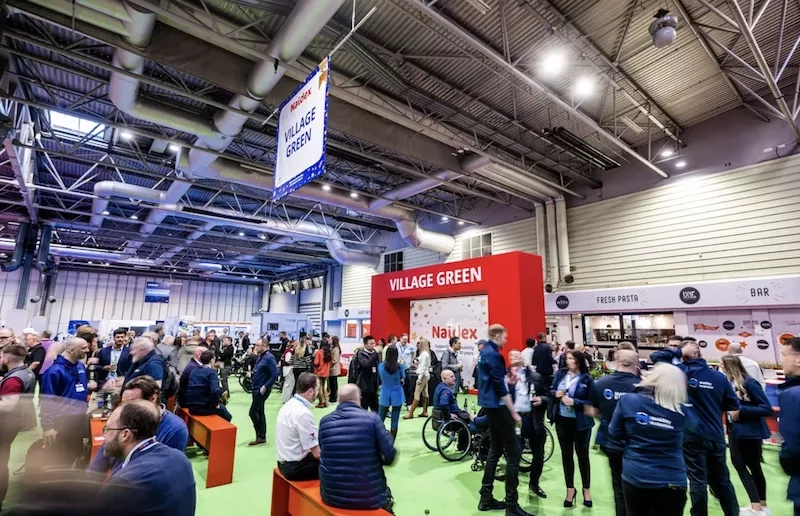
Why event accessibility matters
Some 16% of people worldwide have a disability according to the World Health Organization (WHO).
Across Europe, the average is higher. In 2023, 27% of the EU population (or 101 million people) over the age of 16 had some form of disability. In the UK, it’s almost 22% of the population (or 14.1 million people). In the US, it’s over 28% (or one in four adults).
The WHO says these numbers are increasing, due in part to ageing populations and a rise in neurodivergency diagnoses.
If your events aren’t accessible, you’re likely missing the chance to engage a much wider audience, including the spending power of individuals with disabilities (known as the purple pound), entire households, or even friendship groups in which at least one member has additional needs.
Put simply, creating an accessible event means designing it for everyone, regardless of disability, from the moment someone visits your website to when they leave your venue.
You’re also legally obligated to make your events fully accessible. In the UK, disability is one of nine ‘protected characteristics’ defined by the 2010 Equality Act, making it illegal for any business to discriminate against persons with disabilities (or PWDs). In the US, there is the Americans with Disabilities Act (ADA), which protects people with disabilities from discrimination.
Introducing the European Accessibility Act
If you operate within the European Union, attract EU-based attendees to your events, employ more than 10 people and have a turnover greater than €2 million, you will need to comply with the European Accessibility Act (EAA), which came into force on 28 June 2025.
The legislation applies to any business offering event websites, ticket sales, apps or other digital event services to residents of EU countries, regardless of where your business is based. Any new online product must comply straight away. For existing products and services, organisations have until 28 June 2030 to become fully compliant.
The EAA states that websites and mobile apps must comply with the current version of the Web Content Accessibility Guidelines(WCAG 2.2).
These WCAG guidelines are organized into four principles (POUR):
- Perceivable: Information should be presented in ways that all users can access, such as providing alternative text for images.
- Operable: Interfaces should be easy to navigate when using a variety of devices and assistive technologies.
- Understandable: Content should be clear and predictable.
- Robust: Websites and digital tools should work with a wide range of assistive technologies.
💡 Want to know more? Read How the European Accessibility Act Will Impact Your Events
Understanding accessibility needs
Accessibility needs can be divided into physical and non-visible disabilities. Physical disabilities refer to impairments affecting a person’s mobility, vision, or hearing, while non-visible disabilities refer to those that aren’t immediately apparent, such as neurodivergent states and mental health conditions.
Here are some examples to consider when planning for your event.
Mobility impairments
Visitors with restricted movement may use wheelchairs or mobility scooters. For them to get around your event comfortably and safely, accessibility solutions like ramps, lifts, wider aisles and allocated parking spaces should be provided.
Visual impairments
For the visually impaired, you should consider accessible solutions such as braille signage and audio description. Large print options also provide an additional layer of support so that everyone has equal access to information.
Hearing impairments
For those visitors who may struggle to hear and understand on-stage presentations, you’ll need to consider using sign language interpreters, captioning services, and audio amplification devices.
Cognitive disabilities
Visitors with cognitive disabilities may face difficulty understanding or interpreting information and sensory stimuli.
To make your content and design accessible for them, you should keep text-based language (e.g. signage, flyers and agendas) simple, and provide visual cues and sensory-friendly spaces.
Something as commonplace as color blindness can have a significant impact on a person’s decision whether to go to an event. So remember to keep visual design elements simple and never color-code your event features or agenda.
Neurodivergent conditions
Autism, ADHD, dyslexia and other neurodivergent conditions have a significant impact on a person’s ability to engage with traditional event design, such as crowded, noisy theatres or interactive networking.
To cater for people with neurodivergence, you should provide sensory-friendly environments, quiet areas of respite when needed, and prior notice of changes to schedules or routines.
Mental health conditions
Mental health conditions, like depression, PTSD, and anxiety, can greatly impact a person’s emotional or psychological state. To support individuals with mental health difficulties during your event, you could offer accessible mental health resources and allow emotional support animals.
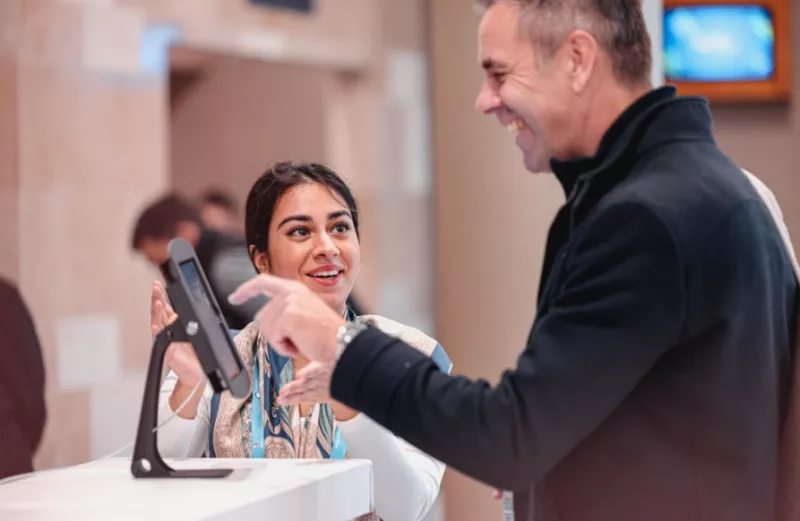
5 steps to planning accessible events
“Start planning your events from the beginning with accessibility in mind. You need to build in accessibility from the get-go. If you make your environments and products accessible and show that you are committed, it opens the door to more attendees, and word travels quickly. For us, it has been the marketing tool that you could use.”
Julia Santiago, Managing Director at Center on Disabilities (CSUN), speaking on Hot Take: What’s New and Trending in the World of Accessibility
Let’s now look at the various stages of event design to determine where accessible planning can come into play.
Registration
The registration page on your event website is the first opportunity to discover what additional needs your attendees may have. So, make sure the event platform used to design and host your site is accessible to all, and your registration asks the right questions with checkboxes.
These could include questions such as:
- Do you require captions?
- Do you require a sign language interpreter?
- Will you be accompanied by a service animal or a Personal Care Assistant (PCA)?
- Do you require wheelchair access?
By asking more detailed questions at the registration stage or by contacting anyone who has requested certain requirements, you’ll not only create a positive first impression of your event but also give yourself more planning time to incorporate additional accessible elements.
On-site experience
To improve the on-site experience, put yourself in the shoes of a disabled person and consider their entire attendee journey.
For example, to accommodate visitors using wheelchairs, consider widening the aisles or adding some lower poseur tables. Don’t forget to assign a dedicated wheelchair area in your conference hall or break-out rooms.
Other visitors with physical impairments may be accompanied by a care assistant, who is there to assist the attendee. You’ll need to ensure that:
- They’re given free entry
- They’re always able to sit next to the person they’re looking after
- You’ve factored them into catering numbers and room capacities
The same goes for service animals, such as a guide dog for a visually impaired attendee. You’ll need to ensure that:
- There’s a reserved space for them at the end of an aisle so that their dog can remain alongside
- You provide facilities such as drinking water and somewhere for a dog to go to the toilet
- Staff are made aware not to distract or fuss over a service animal
Quiet rooms and wellness spaces for anybody to take a break from the hustle and bustle of the show floor are a great addition to your event.
3. Virtual and hybrid events
Making your events accessible also extends to virtual and hybrid formats. Here are some tips:
- Ensure that online presentations meet certain color contrast ratios so that they’re accessible for the visually impaired or people with color blindness.
- Not everyone attending virtually will be able to see or interpret the presentation slides. So ask presenters to explain visual content.
- Attendees who have a hearing impairment may require online presentations to show more detail, offer live captions or have someone in the chat who can answer their questions in real-time.
4. Communication and information accessibility
Including accessibility information in the design of your pre-event communications is key.
- For instance, add a simple line at the base of posters or flyers written in black text on a light background that reads ‘Our theater is wheelchair accessible’ or ‘A sign language interpreter will be available.’
- Check if presentation fonts are large enough to be read from the back row of seats, images are of high quality, and messaging is clear.
- If you’re using a sign language interpreter, make sure that enough seats for visually impaired delegates are reserved in the front row. Having the correct lighting and background also ensures that the interpreter’s face and hands can be seen from the stage.
- If your event attracts a lot of attendees with additional needs, consider placing an “accessibility desk” by the entrance. Inform registered attendees that they may seek additional help from the desk attendant if they encounter any problems.
5. Staff training and awareness
Create a culture of inclusion by ensuring that everyone involved in the planning and execution of your event is given the same level of training.
For example, when an attendee arrives at your onsite registration desk, train staff to identify when a person needs additional time to respond or help with information, directions or the printing of their badge.
Your registration staff need to know the correct way to interact with a deaf attendee or a visually impaired person who arrives with a service animal, for example (e.g. don’t pet or fuss over the dog, don’t grab the attendee’s arm when giving directions).
Create a culture of inclusion by ensuring that everyone involved in the planning and execution of your event is given the same level of training.
Finding accessible venues and facilities
There are many ways your choice of venue can impact how easily different people can get involved in your event - from being able to move freely around the building, to feeling safe in an environment that won’t trigger a seizure or make them feel anxious or at risk.
When sourcing venues, consider both the accessibility within the venue and how your attendees may travel to your event.
Here are 10 venue-specific questions to reflect on:
- Can you reserve parking spaces for people who most need them?
- Is there ample space for mobility aids?
- Does the venue have an alternative accessible entrance? If so, will it remain unlocked during your event?
- Is the approach to the venue solid ground or will you need a temporary pathway? Soft mud and loose gravel can be problematic for many.
- Does the venue have step-free access throughout? Can lifts be accessed without having to ask for a key? Are the ramps of a gentle gradient (1:20), and do they have handrails on either side?
- What signage does the venue offer? Is the signage large and in high contrast? Embossed or in Braille? If not, can you put up your signs?
- Is there a loop system in your meeting room for hearing aid users? If so, is it working? Does anyone know how to switch it on or alter the volume? Will that person be there when you hold your event in the building?
- Does the venue offer ‘adapted’ toilets or gender-neutral toilets?
- Are there visual (flashing) fire alarms in private spaces like toilets, to alert deaf or hard-of-hearing delegates of a fire? If not, consider what you need to do in case of a fire alarm.
- 10. Is there a space available to use as a multi-faith prayer room?
💡Delve deeper with our Venue Accessibility Checklist: 17 Questions to Ask Your Venue
Using event and assistive technology
Use technology to improve the accessibility of your events. Here are two ways technology can keep you on the right track:
Accessible tools
Screen readers will convert text and other elements to speech or braille output for attendees with vision impairments or cognitive disorders.
If a site works with assistive technology, it mostly depends on the event platform, so please be sure to choose one that has been tested and verified to work with assistive technology, like screen readers.
To verify that an event platform meets accessibility standards, such as working with assistive technology, request a VPAT (Voluntary Product Accessibility Template) from the vendor. Cvent has VPATs for products such as our Event Registration, Attendee Hub, and others.
Ensure your event platform is compatible with third-party tools that allow audio content to be consumed in various languages for your global audiences.
Accessible design
When designing event or registration websites, use a platform like Cvent’s Attendee Hub, which lets you know when color combinations don’t meet accessibility guidelines to help you support attendees who may have visual impairments or be color vision deficient.
Add alternative text to images and make it easier for those using assistive technologies, such as screen readers and braille displays, to navigate your event website and registration process.
💡From screen readers to sign language interpretation, there’s a wealth of tools that can help ensure that all attendees have the same opportunity to participate and engage. Learn more about Cvent’s accessibility features.
Accessible events checklist
Before your event
- Invest the time and effort to find out what PWDs may need from you or your chosen venue.
- Everyone’s onsite experience should be equal so assess the content and layout of your event for accessibility, and ensure all staff are trained to provide customer support for all types of disabilities.
- Keep accessibility in mind when designing communications, online polls and feedback forms.
- Use technology to improve the accessibility of your website and virtual event elements, as well as the onsite experience for all.
During your event
- Work with your chosen venue to ensure that additional measures can be added and specific requests are supported.
After your event
- When your event is over, don’t forget to ask for, and act on, feedback from those attendees who had requested additional needs.
- Always acknowledge feedback and think carefully about what you can do differently to improve accessibility next time.
FAQs: Making events more accessible
1. What does accessibility mean in the context of events?
Accessibility refers to designing and delivering events so that everyone, regardless of ability, can participate fully. This includes physical access, communication access, digital access (like websites and apps), and inclusive content.
2. Why should accessibility be a priority for events?
Accessible events are more inclusive, reach wider audiences, and demonstrate social responsibility. They also reduce legal risk and often improve the overall experience for all attendees, not just those with disabilities.
3. How does the European Accessibility Act (EAA) impact event organizers?
The EAA, in effect from June 2025, requires that many products and services—especially digital ones like event platforms, ticketing, and websites—meet minimum accessibility standards across EU member states. Non-compliance could lead to legal and financial penalties.
4. Which parts of the event experience are covered by the EAA?
Under the EAA, areas like online ticket sales, mobile event apps, information terminals, and self-service kiosks must be accessible to people with disabilities. If your event uses digital systems in these areas, they need to comply.
5. Do the EAA rules apply to in-person events?
Yes, indirectly. While the EAA focuses on digital accessibility, many in-person event components (like wayfinding, registration kiosks, and information access) rely on digital tools that fall under the EAA. So it’s important to ensure that both digital and physical aspects align with accessibility requirements.
6. What other global legislation is there when it comes to accessibility in events?
In the United States, the Americans with Disabilities Act (ADA) requires that venues, websites, and event experiences be accessible to people with disabilities, and lawsuits for non-compliance have become increasingly common.
In Canada, the Accessible Canada Act (ACA) and the Accessibility for Ontarians with Disabilities Act (AODA) set out similar expectations, requiring proactive removal of barriers in public spaces and digital communications.
In the UK, disability is one of nine ‘protected characteristics’ defined by the2010EqualityAct
For virtual and hybrid events, many of these laws reference Web Content Accessibility Guidelines (WCAG) — the international standard for digital accessibility, which continues to evolve (with WCAG 3.0 on the horizon).
7. What are some quick wins for making a venue more accessible?
- Ensure step-free access to all main areas
- Provide accessible toilets with hoists
- Use clear signage and high-contrast visuals
- Offer reserved seating for attendees with mobility needs
- Train staff in disability awareness
8. How can I make my event communications more accessible?
Use plain language, provide captions or transcripts for video content, and ensure that websites and emails are screen-reader compatible. Use alt text for images and avoid relying on color alone to convey meaning.
9. What support can I offer to neurodivergent or autistic attendees?
Provide quiet zones, publish sensory-friendly schedules, and allow flexible arrival times. Familiarisation videos about the venue layout and what to expect can also be helpful.
10. Are there tools to test digital accessibility for events?
Yes. Tools like WAVE and Google Lighthouse can audit websites for WCAG compliance. You can also engage an accessibility consultant or tester with lived experience of disability for deeper insights.
11. What role can attendees play in helping events become more accessible?
Invite feedback before, during, and after the event. Include an accessibility section on your registration form where attendees can note specific requirements, and make sure those needs are addressed in advance.
Next steps
Accessibility in event planning is a must. With over a billion people, or 16% of the world’s population, experiencing some form of disability, making your events more accessible and inclusive is both a moral and legal obligation.
For a deeper understanding of accessibility and what it means for your event planning, check out the wealth of information available in our Accessibility Resource Hub.

Mike Fletcher
Mike has been writing about the meetings and events industry for almost 20 years as a former editor at Haymarket Media Group, and then as a freelance writer and editor.
He currently runs his own content agency, Slippy Media, catering for a wide-range of client requirements, including social strategy, long-form, event photography, event videography, reports, blogs and ghost-written material.
More Reading
Personal Branding: Transforming Event Participants into Community Advocates

{"preview_thumbnail":"/sites/default/files/styles/video_embed_wysiwyg_preview/public/video_thumbnails/k3QzbcmEH1g.jpg?itok=o2_Yx70N","video_url":"https://youtu.be/k3QzbcmEH1g","settings":{"responsive":false,"width":"854","height":"480","autoplay":false},"settings_summary":["Embedded Video (854x480)."]}
Episode description
HOT TAKE: An event without community is worthless.
Why?
Because community creates connection, and connection creates relationship.
In this episode, Katie Ray, Director of Community at Metadata, and Tiffany Sanford, Demand Gen at Cvent, discuss the contrast between audiences and communities and how, using that understanding, you can enhance events and conferences.
They also discuss strategic approaches to strengthen community bonds during events and integrate personal branding as a powerful tool in this process.
You won’t want to miss it.
In this episode, you’ll learn:
- The importance of personal branding
- Ways to improve the community at events
- Community building strategies
Things to listen for:
- [05:04] The difference between community and audience
- [07:23] Why collaboration between event planners and marketers is important for ongoing engagement and networking
- [14:40] How to engage, include, connect, and care for all individuals
- [17:42] Advice on getting started and being consistent with content creation
- [26:39] How to smart small then evolve your community within events
- [30:17] The importance of promoting community engagement in events through fun activities
Meet your host
Paulina Giusti, Senior Manager of Meetings and Events, Cvent
Meet your guest hosts
Katie Ray, Director of Community, Metadata
Tiffany Sanford, Assistant Team Lead, Demand Gen, Cvent
Tiffany Sanford: So, I'm just starting to kind of dive into this personal branding. I'm definitely late to the game, and I would like to blame it on the fact that I had a baby seven months ago. But I think it's more of this imposter syndrome that you hear a lot of, and it's like, okay, you know, I, you know, lead demand gen here at Cvent, but how is my content going to be different than anyone else's? Like, how do I get started? How am I going to be this me it's that competition of these well-known b, two b marketers that you hear of all the time. And I think it's really just getting started—one and then two, being consistent.
Alyssa Peltier: Great events create great brands. And it takes a village to put on an event that engages, excites, and connects audiences to your brand. And we're that village. I'm Alyssa.
Paulina Giusti: I'm Paulina.
Rachel Andrews: And I'm Rachel.
Alyssa Peltier: And you're listening to Great Events, the podcast for all people interested in events and marketing.
Paulina Giusti: What is going on in the wide, wide world of events. My name is Paulina Giusti, and I am excited to welcome you all to this week's episode of Great Events. We've got a stellar cast of guest speakers on today's episode, and we're going to be talking about some really awesome topics, including community building, the power of personal branding, and really how combining these two efforts can create a community powerhouse by way of word of mouth and credibility, effective partnerships, advocacy, retention, all of that great stuff.
And so, without further ado, I'd love to introduce two very talented marketers who are going to walk us through these two segments and how we're thinking about community and personal branding this year and into 2024. So I'd love to start with our guest, Katie Ray. She is the Director of Community at Metadata. Metadata is a company where she spends a lot of her time developing a truly member-first community. She's also focusing on events and partnerships and is now managing their SDR team.
Wow, you have a ton of free time, I can tell. And she's taking communities from 6000 members to 30,000 members in just a year's time. That is an epic stat. And I'd love to get into all of the amazing things that you've been talking about or shared with us pre today's podcast. But in addition to that, she spends her time learning new ways to grow communities, connecting with other community managers, and she's engaging with her own members. She recently received her MBA from Texas Tech University and she won…oh my gosh, I don't think I knew this...Cmxer of the Year in 2022. Massive snaps for this chicky here in her downtime when she's not living on all her dogs, who you all just missed out seeing. She loves to read and write and go on date nights with her husband, and play with their three adopted Huskies. So Katie, thank you so much for joining us on today's podcast.
Katie Ray: Welcome. Thank you. I'm excited. This is going to be such a good session, y'all. This is going to be great.
Paulina Giusti: Awesome. And our second guest she is a lady behind the scenes. She is what keeps this podcast running. She is the engine of Great Events. Her name is Tiffany Sanford. She leads Cvents demand gen marketing efforts. She is an absolute big believer in working smart, not hard. And a lot of that sentiment is around leveraging community-based marketing strategy.
She is a huge fangirl of Metadata where Katie Ray works, a big proponent in how Cvent has gotten involved with leveraging all of the key solutions that Metadata offers. And fun fact, this is her first time on the podcast, but I am willing to bet that it is not her last. So really, really excited to have you on the podcast today, Tiff. Welcome.
Tiffany Sanford: I'm excited. And actually, believe it or not, this is my second time on the podcast.
Paulina Giusti: I can't believe I misspoke. Was I on that episode? If so, it doesn’t count.
Tiffany Sanford: It was with Alyssa.
Paulina Giusti: Well fine. It doesn't count if I'm not on, right?
Tiffany Sanford: Yeah. First one was Katie. That's all that matters.
Paulina Giusti: That's true. This is the party. All right, well, let's get into the topic, right? The first segment that we wanted to chat about is really centered around community, and you know, as an event professional, community is at the epicenter of how I design events and experiences. And it's thinking about bringing together communities for an in person event experience, for virtual event experience. All of that is very similar to developing and marketing to and cultivating communities in sort of the marketing sphere. So I'm going to go to Katie first.
What is community building in the context of events, from your perspective?
Katie Ray: Yeah, absolutely. Well, I think one of the biggest things to highlight, kind of jumping into this conversation is the difference between community and audiences, right? So think about going to a concert. It's a big event and you're there, you're enjoying it, you're singing along, and that's great. But once you leave, you'll probably share some pics on social and that's kind of it. The biggest difference is with community, it's you're there, you're enjoying it, but you're also connecting. It's really the relational side, and you've got different activations at certain events that will really encourage and foster the relational aspect of the audience. And so I think that's one of the biggest defining factors. And so whenever we think through different ways to do community building, especially within events and conferences, as an example, specifically, it's really how do we convert people from just another person in the chair to a part of the relational building that comes through conferences or virtual events or smaller in person events as well? And so it's how do we think about engaging with them? How do we get our speakers engaged with each person that's in a chair? How do we get the attendees engaged with each other? How do we make sure that this isn't just a one off situation where a bunch of people came, they learned, they left, versus they came, they connected, they built relationships, they left, they continue to connect.
And so for me, that's really what is always top of mind whenever I'm planning out different types of events and the community aspect of them.
Paulina Giusti: I love that. I feel like we try to extend the life of an event by offering this sort of access to content or access to social, right? But there is this additional layer of beyond the constraints of the event, what are people doing? How are they continuing to talk? You work with me on a pretty daily basis, so I feel like you get sort of the event planner mindset, and you, being a marketer, how can others have as tight-knit of a relationship? How can marketers and event planners work together to build and foster communities? Like what Katie was just describing, are there certain tactics that we should be doing or things that we should be thinking about?
Tiffany Sanford: I'm definitely on the flip side, so I am actually like a community member. And I think I'll hit on Katie's point. It really does go beyond like a one-time event. And I think the goal is really to foster that ongoing engagement through the community, and it's where you share common interests or goals like related to the event or the audience. So I think that event planners and marketers can work really well together to build those networking opportunities, including anything on social media. How can we build the hype for this event? Who is maybe the face of an event marketer within Cvent? And is this person are they attending most of our events? Because if they're attending most of our events, they're going to kind of be that face of Cvent. So I think especially going into 2024, that's something that I'm hearing a lot of is like, you kind of have this advocate within your company that goes to the events and they build that relationship with other marketers or event planners. So I think that is probably going to be key going into 2024 is really honing in on personal branding and building those relationships and having that one or two kind of SWAT team that attends these trade shows just to build that familiarity. I can never say that word, so I think that's what's important.
Paulina Giusti: So I'm thinking about this from an event design perspective and only because it's super top of mind for our 2024 conference. But we're taking like a vertical approach, right? We're thinking about unique industries and fostering unique experiences for them. At the same time I'm designing an event for 4000 people, right? So there's a sense of balance.
Katie, any insight or suggestions for those thinking about, okay, we're looking at this from a 10,000 foot view, but I've also got to look at it from a ten foot view based on unique subsets of our communities that are interacting together.
Katie Ray: Yeah, absolutely. Well, I think the biggest thing is really understanding what the members in those subsets really care about and what's most important to them. I really think for any type of community building program, you have to understand who are these people, what is most important to them, what do they actually care about? And then really hone in on that. So whenever you're planning a big conference like that and you're thinking, how do I get these different types of people interacting with each other in that subsect? As well as crossing the borders as well into other types of industries, you need to be thinking about, okay, well, if I've got a group of engineers, for example, they're oftentimes a little bit more reserved, a little more shy. They may not enjoy being forced to go and do like a networking game. That may not be the best thing for that group, right? I mean, hey, you may get lucky and they're as bubbly and lively as I am, right? But not every engineer is going to be super excited to go and chat with random people, right? So trying to create different types of activations for them while also thinking about, let's say I've got a group of marketers, we're all there to go network, and we enjoy it most of the time, but then it's also figuring out how do we cross those verticals? And so whenever you're thinking about these big conferences and you're thinking about the micro activations that are a part of all these large events, you need to be thinking about, once again, who is this affecting? Is this something they would even care about? Have we even asked them? I mean, I'm a huge proponent of so many times we think that, oh, this is going to be the most amazing idea and it's not. And that's okay. You test it and you say, let's mix it for the next one.
But I always try and go to the community and say, what do you want to see more of? And give them options to fill in the blank, too. And same thing with different types of activations. One thing that we've done for our demand community events, whenever we do in person events that I am very happy that we get to is we always provide some type of an activity because once again, not every single person in the community is super comfortable just going up to a random person and having a conversation. So we've done activations at like a mini putt putt place or a ping pong bar and different types of activities where you don't have to be super vocal and loud to be able to participate. And it's really cool. One of the mini putt putt that we did in Denver last year, it was awesome because we did have folks that weren't super comfortable, but wanted to be there. And it was cool seeing them kind of come out of their shell because we ended up just grouping people and sending them down to golf. And they did better in smaller groups and they liked being able to focus on an activity if they didn't know how to participate in a conversation.
And I think that's something, especially when you're doing large activations. Now, you may not be able to send everyone on different micro events, but whenever you're planning, think about those people and think about how do they want to interact, ask them how they want to interact and really follow through with it too. Because then you're building loyalty at that point because you're listening and you're doing what they're asking. And if you can't make everyone happy, but you say, hey, we pulled X amount of people, this is where the biggest response was. So this is what we're doing. If you want to see something different, make sure you participate next time. And so I think that's what I would always recommend for people in that situation.
Paulina Giusti: I've got a quick follow up question to that because we've talked about designing experiences for extroverts, for introverts based off of personas or verticals, and thinking about sort of the grand scale in play. But when we think about some of the core KPIs of an event or of managing a community, one of them is largely growth. And when I was introducing you, you have this unbelievable stat of growing a community from 6000 to 30,000 and any event professional, ears are going to perk up and translate something of that nature to registration, right? Maybe they're promoting a cool new experience. And so that's activating that growth. Give us some context as to how you were able to grow so much so quickly.
Katie Ray: Yeah, well, I was very lucky. That was over at Sales Hacker, and at the time they were owned by Outreach. So of course the brand, and I know we'll probably talk about brand a little bit later, but the brand plays such a huge role in growing. I think that's one of the biggest things is you have to I don't even know a good way to say it, but it's tough if you don't have that well known brand, it's really tough to start growing. So if you don't, I'd say get out on social, get brand advocates, get people involved and excited and give them a reason to want to share it with other people.
Paulina Giusti: Would you say events?
Katie Ray: Yeah, get people excited, give accessible events too, really meet people where they're at, give other voices a platform where they may not have it in other ways. And so I think that was something at least with the DEMAND Community, whenever we got started that was really important for us, still continues to be very important for us. But at Sales Hacker, like I said, we had such a great brand recognition. But it was also and I just wrote about this in my newsletter one of the tactics I tried whenever I joined there was every day we'd get a whole new batch of people, hundreds of people, and I would spend hours individually messaging every single person in the platform. One, if they saw it in the platform, it brought them back into it. So I could count on some level of engagement in the platform. But I wanted them to feel welcome. And that's always something that's so important for me, is every single person I interact with, I want them to know like, hey, I genuinely care about you, I want you to be successful. I'm here to support in whatever that looks like.
And I think that same thing goes with events. And I will say outreach has always done a really good job. At their annual conference, they'll have a whole line of employees like, we're so excited you're here. And it's kind of like a tunnel you get to run in and it's just a cool experience. But they labeled the name tags in certain color coding that everyone on the outreach staff knew. And so you knew who was new, who was a first time person, who has come before.
So you can say, hey, looks like you're new. Are you by yourself? Did you come with the team? Oh, no, let me introduce you to someone. And I think that is like a huge part of it. And just by making people feel welcomed, they'll probably want to share it with others of, hey, I had such a great experience, let me get other people involved in this too. And I think that is what really skyrocketed that growth as well as providing value. They loved our webinars. We did two webinars a week on Tuesdays and Thursdays, every single week. And so the value that came from that content and access to speakers that they may not have access to before was such a game changer in how we grew. And I think the same thing with in person events as well. You have to have that listening to.
Paulina Giusti: Your personal outreach to the new members that very much sounds like you. That sounds very on brand for you. Someone who's going to be super proactive and engaged with their community.
Let's kind of switch gears here to personal branding. And admittedly so, I am at a complete crossroads of what my personal brand is. And I'm a host of a podcast and I feel like I do more events than a human typically should. So I feel like I should have a sense of what my personal brand is and how I should engage with the larger industry and community, but kind of at a crossroads, like I said. And so would love to hear how you've designed this for yourself, and Tiff jump in because you also are so intent on how you navigate your personal brand story and cultivating that for our own podcast host, minus yours truly.
Paulina Giusti: So would love to hear best practices from you both.
Tiffany Sanford: So I'm just starting to kind of dive into this personal branding. I'm definitely late to the game, and I would like to blame it on the fact that I had a baby seven months ago. But I think it's more of this imposter syndrome that you hear a lot of. And it's like, okay, I lead Demand Gen here at Cvent, but how is my content going to be different than anyone else's? How do I get started? How am I going to be this SME? It's this competition of these well known b2b marketers that you hear of all the time. And I think it's really just getting started. One, and then two, being consistent with it. Like, how Katie, you are all over my LinkedIn. So how did you approach that? For one, I mean, obviously you're a community pro, but how did you know what you were going to talk about? And then how are you staying consistent? How are you doing this on top of doing all the things that you do at Metadata? Give us some pointers.
Katie Ray: All the behind the scenes! So it's actually funny that we're talking about this. I literally right before hopping on here, of course, had some calls. But earlier this morning, I was like, man, I need to write a LinkedIn post. I haven't written anything since, like, Monday. And so I was just thinking like, wow, I'm really inconsistent with this.
But I think the biggest thing, I think a lot of people get caught up with, what is my brand? Kind of like what you're saying. For me, I have no idea. I don't know what my brand is. I just want to build in public. I want people to see it is what it is. This is what we're doing. Sometimes it works, sometimes it doesn't. Because I have spent so much time getting so frustrated with LinkedIn influencers and thought leaders. I'm like, you haven't done this job in so long. What are you doing? You're a consultant, you're not even on the battlefield anymore. What is this? And I get so frustrated.
And same thing. That's kind of why we chose a lot of speakers we did for DEMAND this year, is because there were so many amazing speakers. But a lot of them, it's the same stuff they say at every single conference. And I don't think that's fair. There's so many great frontline people that are doing the damn job that aren't getting that exposure because they're not building on LinkedIn as much as they probably should in order to get that. So for me, of course, I have imposter syndrome, right? Like, there's always going to be someone better than me out there. And I think that's amazing. But what I know today is probably more than some people know today, you know what I mean? And so that's how I just think about it is I just want to build in public and hopefully it helps someone else.
Hopefully it gives someone else a leg up so that they don't have to deal with all the crap I've had to or they don't have to test in certain ways than I've had to. And so for me, that's all I think about. So when we were planning demand, I tried so hard to put like week one, here's what we did. Week two, things are on fire. But I'm also very honest with it, and I think people appreciate that because it's not all rainbows and daisies all the time. I mean, it's tough and it can be incredibly defeating. I think for me, that's what I focus on. So maybe my brand is just trying to be real, but I'm never going to be the one.
Like, I'm just being real with you. I'm never going to do that. And that's just me. I want to share resources, ideas. I just started my newsletter and that's the same thing. It's the exact same stuff of, hey, here's what I learned, here's what I did. Some of it worked, some of it didn't. Good luck.
Take it with a grain of salt because it may not work for you either, but that's what I do so but it's also like, I mean, there's always going to be someone out there better than me doing things differently, and I hope that they're sharing as well so I can learn too. And I used to be whenever I was at Sales Hacker. Scott Barker and I had a conversation about building brand, and he was like, create a schedule. Every Monday you post about this, every Tuesday you post about this, every Wednesday is this, Thursday this and Friday that. And it was really good. And I actually had as my background on my computer, and I've definitely strayed away from that, but I probably should get back to it.
Paulina Giusti: I love that. I think a lot of people listen to this podcast for tangible information that they can say, okay, I'm going to take that and I'm going to do it. And for me, hearing you say, okay, create a routine with it or add it into something that's habitual in a way that to me is like what I needed to hear to say, you know what, it doesn't have to be every week. Maybe it's every event and start give yourself small milestones. I think what's also a little intimidating too, though, is, at least for me, event professionals are notoriously behind the scenes creatures, and so, as extroverted as I am, it doesn't feel natural for me to be promoting all of the learnings or the successes of something that I've been very much behind the scenes on the experience. So I think a lot of us event professionals kind of have to navigate that thought process a little bit.
Tiffany Sanford: But, event planners work their ass off and other people want to know how are they doing that? And I'm just going to call out, Paulina, that really awesome word of mouth event that happened at Cvent CONNECT last week.
Tiffany Sanford: If you want to tell that story, I think you should be the one to tell it. But I think the power of all of this is people do want to know. Like, you are the expert at Cvent and believe it or not, there are a ton of people that want to know. And I think for me, I see a ton of b2b marketers. I don't see a ton of event planners, like building their personal brand on LinkedIn. Maybe it's not in my algorithm, but I don't see that. And so I think that there's so many benefits, not just for yourself for personal branding, but also for the company that you're working. You know, Metadata, for example, I would not have joined the community had I not been following Katie.
I saw her post like, hey, we got this community for demand gen, folks. If you're in demand gen or marketing or brand, you should definitely join it. And I was like, I'm going to click on that link and I'm going to join it. And I'm a member now, so I think it's such a powerful tool for yourself, for your company success.
And Paulina, I really want you to share what you experienced last week because I think that speaks volume into people are listening to this podcast. They're listening to you, Paulina. They know your voice. Please share that story.
Paulina Giusti: Oh, gosh. Well, now in the hot seat, I can't remember his name, but he is going to email me and I do want him to join the podcast. So last week we hosted our European annual user conference in London and smashing success. Record number, registrations and attendance. And in addition to sort of planning the conference with the support of an amazing team, I had the luxury of speaking at it too. And in the throes of all of the planning, I think I forgot to upload my own speaker headshot bio description of who I am for the session. And so when I'm speaking in the session, people in the audience had no idea who I was. And at the end of the know, a couple people came up to ask a couple questions.
And one individual came up to me and said, I don't know who you are, but I recognize your voice. Are you Paulina from the podcast? And my jaw hit the ground. I was like, are you telling me that my dad isn't the only one who listens to this podcast? I was absolutely floored and Alyssa happened to be standing nearby, caught wind of the conversation, and we were like, have we gone global? It was a moment where we were in just awe and it was one person. But it certainly goes to show that one person listening in makes it absolutely worthwhile. We shared tons of feedback. He said he listens to our podcast on his runs or whatever. He loves the quick format, digestible format that we provide and that makes it all the worthwhile. But to your point, Tiffany, I don't see many event professionals kind of putting their personal brand out there.
And so I think this is for our listeners assigned to that should be maybe something we try next year. Doesn't have to be before the end of the year. I know we're all scrambling to finish out the year, but I think that is call it a New Year's resolution or a personal branding opportunity for growth. I think that would be amazing for us.
Tiffany Sanford: And I would just add, I know we're all so busy, so I would say just try it for maybe one event that's upcoming. Or try it for a webinar that you're going to be presenting on or a podcast. Try one post and just see where that goes and then you can continue to evolve from that. But I think that's the most important thing because we are just all trying to do so much at once. But I think really simplifying it and testing it before you just totally dive into it because I know starting it is going to be tough. Like I said, try it for one event that you have up and coming and see if you get responses like that word of mouth, like, hey, I saw your post, so that got me to register, or anything like that. Any kind of word of mouth feedback.
Paulina Giusti: Love it. I feel like we're at the point where we're able to really connect the dots of today's episode. And it's all about building community, designing experiences that obviously grow your community by way of events, by way of experiences, and other sort of traditional marketing channels. And it's all about all of these working together, right? Opportunities for collaboration and overlap.
And I kind of want to just leave with one sort of data point question that, Katie, maybe you can help us answer. But when it comes to measuring the impact of your community, we think about measuring the impact of an event, right? Return on investment, return on an event. How do you think about measuring and defining success for your community building efforts?
Katie Ray: Yeah, absolutely. Well, they're actually very similar. So for us, a lot of the KPIs that we track, I mean, some are kind of considered vanity metrics in the sense of engagement and growth, but I really like to go under the hood of all of that. And if I'm seeing, let's say on average we have about 41 posts in messages in the DEMAND community a day. So that's a great metric. Love that, good numbers. But what's most important to me is about 60% of that comes from personal messages with other people. Now, I can't see the messages, but that's just what the data is showing us is people are DMing each other. And I love that because they're building relationships, they're connecting with each other. That's huge. The other 40% or so are conversation posts in the actual channels and that's amazing as well. Same thing as with growth. We love seeing the community grow. I love seeing people recommend each other into the community. All that makes my heart so happy.
But it's also diving underneath. Is it referrals? Are people coming from word of mouth? And if so, what does that really look like? What are we doing that would encourage someone to want to invite someone else to the community? If we're not growing, what does that look like? And so that's really important for us. But similarly, I have to show how the community affects bottom line. And so for us, we see how the community affects opportunities. If the community is organically, bringing in business from people in the community through different conversations. And then my long term goal is to figure out how the community members affect retention internally with opportunities and such. It just hasn't been around that long to really track it.
It's only been like a year and a month or so. And so we're just starting to kind of get all that data in there to see how community actually affects our retention and reducing churn efforts as well. So that's super important for us. So just like events there's the bottom line. We all have to answer too.
Paulina Giusti: I love that and think about event organizers listening in. How are you activating your own community efforts at your annual user conference or within your total event program. This year at our Europe event that just wrapped was the first year we were really intentional on what our community activation looks like in the Innovation Pavilion, what our community programs look like, and it was all about having really fun and engaging activations onsite. I think we had like beanbag toss. There was like a painting, paint-by-numbers kind of activation there, where to your point, not everyone's an extrovert. And so someone who wanted to just sort of fill in a piece of a mural by painting, but someone stepped up next to them, it afforded them an organic opportunity. It's bringing that community, that digital space, to life on site. And I think that is exactly what we were hoping to get across today, that there's a lot of opportunity to dig into your existing communities or bring a community to your organization and activate it on site within your Total Event program.
So, thank you both so much for joining today's podcast. I absolutely loved it. We could talk for hours on this topic, and in fact, we just might. Maybe we have a part two in the new year. But you both were great, and I just want to thank you again for joining us today to our rockstar listeners, or I should say our global listeners. Thanks again for tuning in, and if you have any additional things you'd like to share with us, have questions, or just want to send us a DM, find us on LinkedIn, or you can send us a note at greatevents@cvent.com. Don't forget to subscribe and rate our podcast. And we can't wait to see you guys next time.
5 Things Still Broken in Events, According to 50 Industry Leaders

Episode description
Inconsistent data, limited executive buy-in, and cross-team misalignment are common challenges in the events industry. But at the latest Cvent CONNECT, these common struggles became the foundation for productive dialogue and real solutions.
In this solo mini-sode, Alyssa Peltier shares key insights from an open forum with senior event leaders from some of the world’s largest brands. She discusses the five most pressing issues facing enterprise event programs today and the steps leaders are taking to move forward.
In this episode, you’ll learn:
- How to build executive trust in your event strategy: Learn why storytelling with clean, consistent data is essential to gaining internal buy-in and budget approval.
- Creating a culture that supports strategic events: Shift your team’s mindset so strategy and execution work together to deliver real business outcomes.
- Evaluate tech that works: Get practical steps for auditing your current stack, reducing overlap, and aligning tools to real business needs.
Things to listen for:
(00:00) Introducing Alyssa Peltier
(02:11) Challenges in the events industry
(09:12) Solutions to reset your event program
Meet your host
Alyssa Peltier, Director, Market Strategy & Insights at Cvent Consulting
Alyssa Peltier (00:00):
We become stuck at measuring our events with attendee satisfaction. The only way we can justify or understand or make meaning of the events that we produce is through their lens but it would be an incredible opportunity for meetings and events leaders to be able to tie to more business outcomes in conjunction with the attendee experience as well.
Alyssa Peltier (00:22):
Great events create great brands. But pulling off an event that engages, excites and connects audiences, well, that takes a village and we're that village. My name is Alyssa.
Rachel Andrews (00:34):
I'm Rachel.
Felicia Asiedu (00:35):
And I'm Felicia.
Alyssa Peltier (00:36):
And you are listening to Great Events, the podcast for all event enthusiasts, creators and innovators in the world of events and marketing.
Alyssa Peltier (00:47):
Hello, everyone, and welcome to this week's episode of Great Events, a podcast by Cvent. I will be your sole host for this week's episode, we like to call these mini-sodes, where I just give you a hot take on what's going on in the meetings and events industry and what better time because we're coming right off of the heels of our Cvent Connect conference which just happened last week. So, I just wanted to talk about some of the things that we're noticing, some of the trends, some of the insights that we gleaned because what better place to understand the pulse of the industry than at a place that has over 4,000 meetings and events professionals all talking and speaking the same language, dissecting their pains and trying to figure out plans to move forward.
Alyssa Peltier (01:35):
One program that I helped facilitate is something that we call an open forum, it features maybe around 50 of our global leaders from some of the largest brands, most recognizable companies across the enterprise landscape. The insights that I'll share with you today are representative of that audience. Like I said, leaders, they're some of these largest brands grappling with some of the biggest problems and some of the grandest meetings and events programs under their belts. We're talking upwards of a thousand events annually within their programs.
Alyssa Peltier (02:11):
So, in our dialogue in the open forum, we facilitated some roundtable networking and so what came to light as a part of those conversations was five key common themes around areas of struggle and challenge that are happening within these spaces. So, I would just like to outline some of those. And then, fortunately, also as part of that roundtable exercise, we talked a little bit about solutioning for progress and moving forward. The individuals were able to share their problems with one another and then they were creatively thinking about how to go about moving the needle and breaking through some of the obstacles that they're facing.
Alyssa Peltier (02:49):
So, the first challenge that was agreed upon across all of this group was that there seems to be continued data chaos and inconsistency and some of those stem from disconnected systems, there was an acute focus on multiple CRM systems which leads to poor data hygiene, a lack of standardized fields or even definitions and really no centralized place to collect or view that event data. Even while these organizations are still using Cvent in many ways, that standardized, that centralized dream has yet to be realized and the impact on that is pretty vast. And most importantly, because of the climate that we're in and continue to be in year over year, is that executives are asking for these leaders to report on ROI.
Alyssa Peltier (03:36):
And without that data, it can lead to poor decision making, duplicative efforts and also difficulty connecting those events to the revenue objectives or the pipeline for those event programs. So, again, very difficult to drive those business objectives forward. Some of the things that we heard direct quotes under that challenge was we have no clear way to overlay data to demonstrate that value. We have poor hygiene and users don't necessarily enter that information on time or accurately. Theme number one, challenge number one that we still need to solve for in our space is fixing the data integrity and consistency problem.
Alyssa Peltier (04:15):
Our second thing that we talked about in this conversation was lack of alignment. And this is not just a strategic problem, it's a functional alignment and it's also regional alignment. So, there's three areas of the business where alignment is lacking. There's different departments, there's different regions, there's different stakeholders that operate with, oftentimes, competing goals, they have competing priorities and also complete operational inefficiencies, workflows can be completely different. So, you can see, within that matrix or lack thereof, there is no shared vision or accountability for what good looks like, what success looks like and how alignment could even be achieved. And so, the impact there oftentimes comes on misalignment of spend on budget, back to point number one, inconsistent of the measurement of success, what is it that we're actually even driving towards, how would we measure it and what data is important to capture and a consequence of all of this is a lack of buy-in for change. It's hard to mobilize and jockey for more resources or for more budgeting with higher ups when you don't have the benefit of numbers and people all working in the same stream in order to shift that narrative.
Alyssa Peltier (05:26):
The third theme that we saw was that there is technology sprawl and oftentimes an under investment. Despite there being technology all over the place, maybe it's inconsistent or there's purchasing happening in different pockets within those decentralized regions and functions like I mentioned prior, technology goes along with that. So, we heard from these leaders multiple tools oftentimes are doing the same job so we're overspending on the same function. Teams aren't always clear on what use or how to use it and there has oftentimes been an investment without enablement or without the path towards adoption of that investment and, a lot of times, this is stemming from that lack of centralized ownership of the technology implementation itself. And so, again, just to beat this drum, the impact here is on inefficiencies, data silos, the inability to scale, stuck at status quo and ballooning costs. And while you could be spending more strategically and investing in better tools, we're stuck with stagnant just to maintain what is.
Alyssa Peltier (06:34):
Let's talk about trend number four or challenge number four, we saw the measurement and proving value. So, again, pointing to point number one, the inability to measure and prove value often comes with a data strategy or lack thereof. Within this theme, there haven't been outlined clear or consistent KPIs for leaders of meetings and events, it has been difficult to tie event outcomes to pipeline or to business goals and there are fuzzy definitions of what is ROI for an event. Oftentimes we hear the term ROE, return on event or return on engagement, what are the true metrics that we need to organize around as an industry in order to provide the impact that the higher ups, the leaders above our meetings and events programs are seeking.
Alyssa Peltier (07:25):
And the impact here is there's doubt, consistent doubt on event effectiveness and budget justification year over year becomes harder. And so, we hear that time and time again from the leaders that we work with on a daily basis that we just can't justify the spend for a new program, a new event, even when ideas and creativity is still flowing, that budget justification is always there. And so, the inability to prove what's working, what isn't and to shift those resources elsewhere can be quite complicated in a climate that has all of these challenges in it.
Alyssa Peltier (07:58):
And then, lastly, execution gaps. Oftentimes there is a gap between the strategy and the delivery to the onsite experience due to more limited resources. No one has been spared from the budget cuts or you are very, very lucky if you have been spared from budget cuts over the last 24 months or so. Certainly, in this current macroeconomic climate, we see that quite often and, because of that, there are also unclear roles, throwing bodies at problems or new bodies at the same problems who aren't aware or capable or understanding of how to solve those and that results in last minute execution and an inconsistent delivery of the attendee experience overall. And really, I've said this in many different ways, the missed opportunity to align to those commercial opportunities. We come stuck at measuring our events with attendee satisfaction. It's the only way we can justify or understand or make meaning of the events that we produce is through their lens but it would be an incredible opportunity for meetings and events leaders to be able to tie to more business outcomes in conjunction with the attendee experience as well and it's still an area where there's opportunity for growth within our environment.
Alyssa Peltier (09:12):
Now, I know I just talked about a lot of pain and a lot of challenges and a lot of the things that seem like, ugh, doom and gloom because we're still here and we're still grappling with these things and I hope many of you that are listening right now are saying, "Yeah, I sympathize. I feel these pains deeply. This is exactly what I'm going through." Here's the good side. At Cvent Connect, we have this catalytic moment where minds come together and they can talk through a lot of these challenges but they can also ideate for plans for the future. And so, some of those recommendations and solution ideas that came from those discussions include the following. A plan for standardization and centralization, critical step number one. Things that came up as a part of this solution area number one. Starting to think about creating templates, new naming conventions, perhaps peeking behind the hood at your governance model or perhaps lack thereof, what does that look like and is it working with your modern business climate.
Alyssa Peltier (10:12):
There have been suggestions for mandating pre and post data collection that can be tied to your event briefs, your meet and request forms and to establish those KPIs under the same framework. Lastly, more mature but certainly something of opportunity here is to implement a data lake with ownership for integration within your meetings and events program or your meetings and events tech stack. Really establishing that as an extension of your meetings and events governance and your data strategy as a part of that is really critical towards overcoming that which we were talking about just earlier here.
Alyssa Peltier (10:48):
Second thing is building a shared accountability matrix. This sounds easier said than done but communicating cross-functionally and often from the top-down and bottom-up is really critical. So, communication here, whether it's clearly outlined or it's still murky, hard coding that and trying to figure out who you need to talk to, when you need to talk to them and be reoccurring in that communication plan. That paves the way for creating a shared vision, creating those shared success metrics and establishing feedback loops for what's working, what's not working, whether that's within stakeholder groups, different regions, different functional teams that support the meetings and events program. And within all of those different, what we would call decentralized pockets, identifying and empowering a strong leader that's going to champion the change. Because, really, we have to find the motivators within each of these areas in order to figure out and to navigate the actual change management plan.
Alyssa Peltier (11:47):
And a lot of times, that comes to number three recommended solution or ideas here, is a shift in the culture or the mindset of teams. Oftentimes, planners and event professionals get a bad rap for being tactical or to-do or list makers. So, I think the shift and the culture mindset really comes starting to demonstrate wins and the cost of inaction. The cost of not doing things differently, to not collect data in a more standardized way and the tool that is most powerful in that is one of storytelling and storytelling through data to secure that buy-in and to change the course of inaction. Really educating organizationally and also within your team the purpose behind the events, why it is that you do what you do, it's not just to produce a successful event. Yes, we all love a successful experience but it's not just the component, there is a business side of events that matters too. And so, fleshing out both sides of that equation, both the execution and the tactical and also the nuts and bolts or the monetization of events, if you will, the economics is equally as important and that's a shift in the culture and the mindset of those that have been producing and creating events career long.
Alyssa Peltier (13:08):
Now, I'll leave you with some insights that we left with and this is in listening to the conversations all of last week. Teams really do know what's broken, they just really need the support to fix it and a lot of those solutions do hinge on executive backing, those shared frameworks and a lot of that cultural alignment. So, that's the good news, that's the upside that we're not trying to figure out what it is that needs change. However, change itself is the struggle. Second, without those clear goals, success is subjective. Getting those stakeholders to define that success before planning can even begin is really, really critical to the success and proving that value which is what we're all really marching towards. The third thing is measurement isn't just about tools, it's also about trust. So, building that trust in your data strategy, in your data plan, how it's collected, who's inputting that data. Even your best dashboard. If it's faulty with data, it's not going to drive your decision-making behaviors.
Alyssa Peltier (14:15):
And lastly, growing your events and your event programs and leveraging these as a business solution is not going to scale without integration. So, we heard from many of these leaders we're not integrated, we need to integrate, we're struggling with the integrations, participants are so eager to make events more strategic, but that's only going to come if the systems and the people can support that shift. So, I really thank you all for joining me today. I hope this mini-sode gave you some ideas, maybe somewhat of a catharsis to bring back to your teams and start figuring out your plans for the second half of the year to move your programs forward. See you next week.
Thanks for hanging out with us on Great Events, a podcast by Cvent. If you've been enjoying our podcast, make sure to hit that subscribe button so you never miss an episode.
Rachel Andrews (15:10):
And you can help fellow event professionals and marketers just like you discover great events by leaving us a rating on Apple, Spotify or your preferred podcast platform.
Felicia Asiedu (15:19):
Stay connected with us on social media for behind the scenes content, updates and some extra doses of inspiration.
Rachel Andrews (15:27):
Got a great story or an event to share? We want to hear from you. Find us on LinkedIn, send us a DM or drop us a note at greatevents@cvent.com.
Felicia Asiedu (15:37):
Big thanks to our amazing listeners, our guest speakers and the incredible team behind the scenes. Remember, every great event begins with great people.
Alyssa Peltier (15:47):
And that's a wrap. Keep creating, keep innovating and keep joining us as we redefine how to make events great.