See how Cvent can solve your biggest event challenges.  Watch a 10-minute demo

Main navigation
  • BEFORE YOUR EVENTS
    • Registration & marketing
    • Venue sourcing
    • Event diagramming
    • Repeatable events
    • Hotel room blocks
    • Approvals & budgeting
    • Speaker management
    DURING YOUR EVENTS
    • Event app
    • Check-in & badging
    • Attendee engagement
    • Trade show lead capture
    • Trade show meetings
    • Virtual experience
    • Webinars
    AFTER YOUR EVENTS
    • Event & attendee insights
    • Integrations
    • Surveys
    • Lead retrieval
    • AI content repurposing
    See all products

    Featured

    Event management software icon

    Event management

    Manage your entire event lifecycle

    Megaphone icon

    Event marketing

    Turn events into your top marketing channel

    Cvent Essentials icon

    Cvent Essentials

    Simplify your repeatable in-person events

    CventIQ icon

    AI for events

    Make every event smarter with CventIQ™

    pricing icon

    Pricing

    Learn about our pricing structure

  • YOUR INDUSTRY
    • Agency
    • Association
    • Financial services
    • Higher education
    • Life sciences
    • Technology
    • See all industries
    YOUR FORMAT
    • In-person
    • Hybrid
    • Virtual
    • Webinar
    YOUR EVENT
    • Conference
    • Field marketing
    • Internal event
    • Networking
    • Sales kickoff
    • Trade show
    YOUR ROLE
    • Event planner
    • Marketing manager
    • Marketing operations
    • Demand generation
    • Travel manager
    A group of people standing at a desk with monitors and a cup of coffee.

    Event planning and marketing in one place

    Cvent's software helps you manage every stage of the event process.

    Learn more
  • EXPLORE
    • All resources
    • Blog
    • Case studies
    • Podcast
    • Upcoming events
    • Upcoming webinars
    LEARN
    • Community
    • Certification
    • Training
    GET HELP
    • Knowledge Base
    • Professional Services
    • Security
    • Support
    Interactive demo library UI

    Interactive demo library

    Take a self-guided tour to see how Cvent works.

    Take a tour
  • ABOUT
    • About Cvent
    • Newsroom
    • Accessibility
    • Pricing
    WORK WITH US
    • Careers
    • Cvent Partners
    • Diversity
    CONTACT
    • Contact sales
    • Contact support
    Three people wearing lanyards with "cvent" written on them stand together for a photo.

    Join 5,500+ employees around the world who power our technology

    See all positions
  • WIN GROUP BUSINESS
    ATTRACT MEETING PLANNERS
    • Digital ads
    • Prospect planners
    • Promote in person
    • Vendor marketplace
    CONVERT RFPs
    • Showcase meeting space
    • Customize proposals
    • Capture instant bookings
    • Manage group RFPs
    MANAGE EVENT BOOKINGS
    • 3D diagramming
    • Manage room blocks
    IMPROVE GROUP BUSINESS
    • Measure performance

    WIN CORPORATE TRAVEL
    • Grow corporate travel
    • Manage transient RFPs
    • Distribute rates
    • Evaluate performance
Utility Navigation (Mobile)
  • Request Demo
  • Find event venues
  • Log in
Utility navigation
  • Request demo
  • Find event venues
  • Log in
PODCAST

The Power of Inclusion: Transforming Events Through Accessibility

EBOOK

The Big Book of Event Accessibility

BLOG

Accessibility in University Events: Q&A with an Expert

BLOG

Event Planning for Accessibility: Tips and Best Practices

PODCAST

From orientation to alumni events: event strategies across the student lifecycle

WEBINAR

Transforming Higher Ed Event Data into Actionable Insights

PODCAST

From Classroom to Career: Event Education That Works with Carrie Davenport and Candace Fitch

Learn more
Podcast

The Power of Inclusion: Transforming Events Through Accessibility

Great Events Podcast cover for The Power of Inclusion: Transforming Events Through Accessibility.
Your browser does not support the audio element.
Play
Pause
00:00
Listen to this podcast via your favorite podcast player
Listen on Apple Podcasts
Listen on Spotify
Watch on YouTube

Episode description

Accessibility plays a key role in ensuring an event can be enjoyed by everyone. Learning how to make your experience as inclusive as possible is important, but where should you start?

In this episode, Ryan Curtis-Johnson, Director of Communications at The Valuable 500, dives into why accessibility should be a priority. Making sure everyone can enjoy the same experience, regardless of whether their disability is visible, is simply the right thing to do. Being conscious of graphic readability, using venues that don’t hinder mobility, and starting internal dialogues are great starting places towards making sure everyone can be accommodated for. He also explains the importance behind making accessibility seamless. An event should strive to include everyone in the same experience, rather than segregate those who need accommodations.

Show notes

  • The importance of providing accessibility options for the right reasons
  • How to make sure people with non-visible disabilities are accounted for
  • How companies like Airbnb are implementing accessibility

Things to listen for:

[02:10] The importance of accessibility
[04:55] Asking the right questions about accessibility
[09:35] Achieving inclusivity for the right reasons
[11:56] How Airbnb is implementing accessibility
[14:55] Closing the gap in the customer experience
[20:09] Inclusivity for non-visual disabilities
[25:12] Ryan’s gold standard for accessibility

Meet your host

Rachel Andrews, Senior Director of Global Meetings & Events at Cvent
Paulina Giusti, Senior Manager of Meetings & Events at Cvent
Felicia Asiedu, Senior Marketing Manager at Cvent

Meet your guest speakers

Ryan Curtis-Johnson, Director of Communications at The Valuable 50

Episode Transcript

Intro: Great events create great brands, and it takes a village to put on an event that engages, excites and connects audiences to your brand. And we're that village. I'm Alyssa. I'm Paulina. And I'm Rachel. And you're listening to great  events, the podcast for all people interested in events and marketing.

Rachel: Hello everybody and what is going on in this wide wide world of events? My name is Rachel and welcome to this week's episode of Great Events. We have a stacked show today with my fellow co-host, Paulina Giusti and Felicia Asiedu, and a very special guest. This week I'm excited to announce our guest speaker Ryan Curtis Johnson, who is the Director of Communications with The Valuable 500. Ryan, welcome to the show.

Ryan: Thank you, and thank you for having me. It's a pleasure to be here. If you're happy, I'd like to just give a quick, audio description of myself. So I'm a white male. I'm wearing a cream top. I've got my gold glasses on. I've got brown eyes, and behind me is a green AstroTurf wall, and a sign that says All you need is love, which is not lit up at the moment.

Rachel: That's awesome. Thank you for that. That's really on topic for what we're just doing today and talking about accessibility. Ryan, why don't you just introduce yourself and what you do at The Valuable 500 and give our listeners a little bit of background about you.

Ryan: Yeah, absolutely. I'm obviously Director of Communications at The Valuable 500, but The Valuable 500 is a global collective of 500 CEOs and their companies who are innovating together for disability inclusion. Disability inclusion includes everything from representation, C-suite storytelling, inclusive reporting, and also part of that inclusive reporting is digital accessibility as well. So the full spectrum of looking at disability inclusion within the workplace.

Rachel: Okay, awesome. Actually, that's a great segue to our kind of first question here and opening up the conversation, so obviously accessibility is very important, but, a lot of times it's not discussed as broadly as it should be. Let's talk about the importance of that  and why our listeners should be concerned with that and be taking accessibility to the next level at their events, their marketing programs, you know, not just in person but digitally as well.

Ryan: Yeah, absolutely. It's so important. I think that the really simple way of looking at this is it's the right thing to do, you know, consciously it's the right thing to do. So often a lot of things will come through in the sense that it costs too much money. You know, there's no budget to be able to provide this.

And so just a caveat to how I think we drive change and support that. One of the things that The Valuable 500 does is we say no to any event, any speaking opportunity that is not fully accessible. And fully accessible for us means that if it is a live event, regardless of whether the delegate or the person who may attend, if they're registered or not, depending if it's a public or a closed event, If the person turns up and they do have a disability, they are able to be able to attend that event because it is fully accessible.

And that's really important to have that opportunity and those facilities and requirements and accommodations in place. And I think anyone that's sort of saying we don't have the budget is pretty much penalizing an individual because of the fact of they have a disability and it's the same as really looking at it in the fact of if you didn't provide tea and coffee, it's the same as if you didn't provide a description as to what your product is you're trying to sell from a marketing perspective.

If you decided to take all of those things away, that is pretty much what you are then doing if you're not making it fully accessible. And digital accessibility is everything. So it's making sure your website, making sure your content, texts, and its documentation is remediated. It's looking at the coloring, the font of texts.

The list goes on. There are checklists. You can see them all on different websites. If I named them all, I'm not going just name one, but there are plenty of places that you can check and there are websites that you can go and you can actually insert your website link if it is a registration or something like that.

That then allows you to tell you how accessible it is, and you know, in some cases if it isn't accessible, there are lawsuits against that because of the fact that it isn't fitting with data protection.

Felicia: Yeah. Ryan, you touched on when you are talking about how my mind was thinking as you were talking, you know, there will be lots of organizers and marketers that are kind of like,  but how do I do it? And they're so worried about falling foul that they just almost clam up and they say, okay, well I did this, and you know, what do you think about asking questions as to how can I do this?

Ryan: Yeah, I think the key to this is making sure that you ask the questions in the sense of if you do not understand or fully believe that you are doing everything accessible. There are experts out there that do this day in and day out, so it's really important to understand that these places are, or these individuals know this inside out. So actually don't be afraid. And that's where, again, costs will come into play, into that scenario regarding this in the sense of people would say, oh, well we don't have the budget to then go and pay for that professional to come in and support us with that.

Well, that's where you need to really be smart with your budgets because you know, as event managers or as creatives or as any good procurement person would be able to do, there are ways to find money or cut back on other things, and if that means, I don't know, being pedantic, one less brownie, one less croissant. But it means that actually your event is fully accessible or it means one less motion graphic that's probably not going to really do much on your website, but actually it means your website is fully accessible that all readers, you know, and website readers that people may be utilizing are able to use your website completely.

Why wouldn't you do that? Because, you know, morally, again, to go back to what I said, it's the right thing to do. So I don't know why we wouldn't do that. So it's, I think a lot, there's a lot of nervousness around it, but also there's a lot of nervousness for, you know, people with disabilities in being willing to come forward and talk about their disability because one, they see a lack of representation within their organization.

They don't see it in the materiality. So when they're looking at the promotions or when they're trying to apply for jobs or they just don't see them talking about it, but then they see it talk being talked about on Mental Awareness Week or you know, global Accessibility Day, or you know, IDPD, which is the International Day of People with Disabilities.

They might see all that activity, but that's only on one day. And we need to see this continuously. And I think the key to it, which is, which is another thing to kind of go again. So I know we are talking about people with disabilities here, but it's accessibility for all, you know. We never know at some point with an aging population and the amount, disability can affect anybody at any time, and it's visible and it's non-visible disability. So we can't just constantly think about the event and the sense of is access into the venue okay. And everything like that. Because a person with a non-visible disability that you wouldn't see on the offsite doesn't need those elements maybe, but needs other elements in making sure that the text and the communications has been fully accessible for them to see. And that's the key to it really.

Paulina: I love that. I have a quick question. Well, Follow up question to it. So I think there's something about this, and Felicia and Rachel and I have talked about this countless times as we look at our event design process for programs, whether they're internal or or customer facing. But there's this kind of approach of a universal event design process, right?

Including it into, you know, just that same checklist that you would approach for your food and beverage considerations or your content considerations or production experience. There is this sort of mentality. I'm sure many people who are listening are saying, gosh, I wish I just had a checklist to start so that I could create a foundation and then be able to iterate off of that and get better and better with each event or each year.

And I think a number of us are thinking, okay, I've started with the onsite experience and thinking about the ADA offerings. I've thought about the digital experience and having,  you know, alt text for images and, applicable fonts and color schemes. What else beyond that? And I think part of where I'm going with this is I'm thinking about all of these things.

I'm doing all of these things. How am I meant to communicate that this is being done without appearing, like I'm doing it to check a box? I think that's something that a lot of people who are listening may be thinking, I don't want it to look like I'm promoting that I'm doing it for the wrong reasons, but I want to be doing this.

Ryan: Yeah, and I think that's, you know, when we come back to, it's a really interesting point because it's that kind of tippy toe scenario again. But I think if we go back to, you know, something that I often give example to the Black Lives Matter movement in the sense of this process is very similar in the sense of, people communicated that they did support the Black Lives Matter movement.

And then actually when people were investigated or looked into their organization, they hadn't been. And so it was talking a talk, but actually the action was very different. And I think it's really hard because do you want to over communicate? Do you not want to over communicate? But if people don't know, they're not going to tell you whether you are overcommunicating or not.

And so I think it's one of those things where you need to test the water. Most organizations, I would hope, have different committees or groups within, if they're a large organization. So I think it's stepping out to those, to speak to those individuals and say, we're doing this. We're driving this.

How is the best ways to do this? It's also pulling on the professionals within the organization. Your internal comms people, if you've got them in your organization, should be able to tell you what's the best way to communicate. And sometimes one model does not fit all. So it might feel like you've gotta repeat it a couple of times before it finally sticks.

And does that mean we need to put it on our Yammer, which is our internal sort of intranet? Do we put it in an email? Do we also push out some video content as well? But again, thinking about it when you're pushing it out, do it by setting an example as well. So if you're putting your video out, put your live captions on the bottom, not auto human generated caption, so it's word for word, making sure that your text is correct and it's not too condensed together because you are trying to cram everything in.

Its good spacing within it, clear text, not lots of fussiness around it with coloring and everything like that. So in some ways it's about keeping it simple. Keeping it simple, but making sure it does. And I think it's like anything, you could have a checklist and you could have, we've got 500 companies, they're all going to do it really differently, but it's sort of setting the parameters of this is what good looks like. And so by learning from what good looks like, that helps to push it out. And there's so many organizations that are doing it that are really, really kind of excelling on it. You know, a really good example at the moment that I can tell you about is AirBnB. So AirBnB put together a new category on their website.

So on their website, it's all pretty much online. And the website that they have. Obviously, if anyone isn't aware, AirBnB is an online platform that allows you to find accommodation that you can stay in. They created their category, which was an adaptive accommodation, which supports for digital, for people with disabilities and these homes are homes that are basically where people live who have a disability. So it would meet the needs of many other people who would like to travel. And some of the biggest barriers for people with disabilities is travel and the travel industry and accommodation and what accessibility really looks like.

Cause let's be honest, for some places, accessibility can be one thing and then they'll have a room, but they've only got two of those rooms out of all of those other areas. And actually the wheelchair doesn't fit. Or actually it doesn't accommodate the needs of that individual when they're utilizing it.

So AirBnB have created this category and they have seen an influx of people that have been utilizing this skill. And bear with me while I just get the figure for you because it's too impressive not for me to get it wrong. So I need to make sure I get it right for you.  But it's really impressive in the sense of, in the space of, I think the first, they, they only launched it sort of at the end of last year.

And basically the way in which it's worked, they launched the adaptive category and now homes over 1,100 listings around the world. And it says, with hosts earning over 5.5 million since the launch. Now, for me, if that doesn't show as a business or a brand that if you tap into this demographic, in this market, there is financial benefits for you as a business.

So if you are not considering or even thinking about it and you are not even showing that representation or delivering within that internal element,  Paulina, what you were saying, then you're really missing a trick. Because there is an expenditure of this income that is out there where people are willing to pay and there are, you know, whisperings of where some brands are considering, luckily to say they're not part of The Valuable 500 where they're considering reducing the amount of people with disabilities they may have on any of their services because of the fines that they are gaining due to the fact that they're not meeting good requirements. That says a lot, but it says a lot really that the fact that people understand that they know what good looks like and why it is needed and that they are even fined on that basis, but to hear of these stories is quite, you know, is quite sad.

And I think the key ideology, or if I was going to say, what is the magic solution to this? I don't believe there is a magic solution, but sometimes it feels like it's really simple. It's a workflow and you know, I would probably say I'm not the most digital person in the world, but I understand that when you are building a digital platform or a website, you have workflows of the way in which you want that individual to go through and that sort of customer experience or delegate experience, if it's an event registration, and the same happens in real time. So in a face-to-face scenario, you understand the way in which you want this conversation or that journey for that customer experience.

And there is a huge gap in the way in which that customer experience happens for a person with a disability and that is what we need to close and it feels really sort of simple when I say this. I have many conversations with different brands where I've sort of said it feels really easy, like there's just a knowledge gap here.

Where staff and individuals, who may be delivering on whether it's front of house in an accommodation, a person turns out they don't tell you that they're disabled. Does that mean that that's the person's fault? No. They should be able to just turn up and gain the same experience as a person who doesn't possibly have a visible disability.

It's the shock factor that sometimes causes the individual to not deliver on the same customer experience as someone who turns up, who doesn't have a visible disability, would then experience something very differently. And I, it's understanding that workflow and really providing better training, better accommodation in the sense of how we then speak and deliver and communicate with individuals and having the assets, collateral, whatever it might be, guidebook, whatever you might need to, to deliver on this, to close that gap, and then that makes it accessible for all. That doesn't just make it accessible for people with disabilities. That just makes it accessible for all because someone could break their, their foot or their leg.

That means that you are disabled for that period of time when you cannot use your leg. During that period, and people with disabilities, they're just asking to be treated as everyone should be treated and have the privilege that everybody has the privileges and the opportunities to experience and why would we penalize anyone for that?

Felicia: Yeah, and I hear you mentioned knowledge gaps, communication, like Paulina and you were asking about, you know, do I over communicate because then I might be treated as a ah, typical saying you're doing it. Not really. I just happened to Google whilst we were, you know, chatting, accessible, what I put in was “accessible events checklist.”

Here's what's really funny. Obviously I'm based in the UK. I got University College London, University of Glasgow University and College Union. I got Cornell University. What's this about? It's like every single checklist that's come up as my first results are universities that are trying to educate people as to like, could you just consider this?

There's some pretty good checklists in there as well, but I was actually shocked to find it wasn't the Association of Event Organizers or event organizations themselves that were putting out knowledgeable information about what should we do about this. So sounds to me like there is a healthy gap, you know?

Ryan: But also as well, what's really interesting when you say that is,  we've all been there where we've seen everyone talk about sustainability, environmental, they're following the sustainability sustainable development goals, which is the union ones. I'm just going to break it down for you.

The SDG 10, which is one of the sustainable data, which most companies, most agencies are saying “We are affiliating. We are learning by this. We have this plastered on our website. We follow this as our guidelines to do good.” One of them is about inequalities, which is SDG 10. So if you are not thinking about accessibility, and I think that's where we get really kind of bogged down with the idea that sustainability is all about environmental.

It is, don't get me wrong, but it also is about inequalities, which means that if you are not delivering on the accessibility elements or showing clear representation or really supporting inequalities in anything you are doing, you are not actually following those goals that you've plastered all across your website to say that as a business, you align yourself to these.

Rachel: Or the goals are antiquated, right? Like they are only focused on people with wheelchairs, for example, and, and not the non-visible. I keep going back to your non-visible disabilities comment, because I think that that's where the gap is of the checklists that we have. You know, all event planners and event designers have this duty of care that we follow.

But we need to update it. We need to update it with these other non-visible disabilities. Like I've seen a lot of events lately, post signs outside of general session for epilepsy, and warnings of strobe lights and things like that, like more things like that on site. I think we need to think through.

Ryan: And also for neurodivergent people, quiet rooms, taking in, you know, time to reflect event. We’ll do a lot of that, which is great. Where they provide spaces, quiet spaces where people can come and they can go away just so that they can take some time. And in there, also in the quiet room is a live stream to the main room.

So, they're, they're still not missing out. They're still able to be part of it because what you don't want to do is you don't want to isolate and you don't want to segregate because what we're trying to do is we're trying to make it inclusive. We're not trying to sort of say, right, this is where you go and this is where everyone else goes.

Because that's where segregation comes into it. And if we really want it to be inclusive, which is what we're after here, then we need to make sure that it's, it's transparent. And that's where I think there was a lot of battle with virtual against live when we had the pandemic. And actually virtual is a really great opportunity, an option to make it fully accessible for those that have, you know, immune deficiencies, that being in a large space can cause huge implications, but they may completely appear to have a non-visible disability. So it would be like, well, why are you asking for that? I've seen you on calls. You, you look fine. And it's that pre-perception, that preconception.

And you know, we also have that preconception that people should tell us, you know, why? Why can't we just make it accessible like the lead by example? Rather than trying to sort of put the onus again on the person with a disability.

Felicia: I was going to say to that Ryan, though. I've been very grateful when people have offered information, and I wonder if there's a way that we can think about making it a safe space for people to offer information. So if there's a way that we can deliver, our planner side to kind of say, you know, and we can accommodate for a variety of, you know, disabilities or, you know, differences with people so that the person says, oh, fantastic. Glad to see you accommodating. I'm going to need this because some of the speakers that we've had, even at Connect last year, I had a speaker that asked us for the specs of the main stage, both from an audio perspective, a visual perspective, what would the lighting be like, how big would the screen be? Because she happened to have a neuro divergence,  we were more than happy to provide her with that information. But I'm happy that she was able to ask and I was really grateful that maybe she felt. That we were providing a space enough for her to say, can I just get those details? And we said, yeah, sure. Here you go. You know?

Ryan: You've got to create that culture. You've got to create that space where people feel like they are being valued and they're actually going to be, you know, accommodated and seen. I think it's really hard to get it right. I don't know, again, I don't know what the solution is to that, but if you create a culture, you know, and I would definitely say the younger generation, you know, they get very much given a bad rep for being, you know,  disruptors and being challenging towards certain, the status quo. Actually, they're the ones that are really kind of coming forward and owning the word disability because for a very long time it was a negative connotation. And actually what people, what we're seeing now with disability pride and the International Day of People With Disabilities and GAD is they're owning disability and they want to own disability and they are not afraid to own disability.

And that is where they will come forward and we'll see that. But I just don’t know whether the working, you know, corporate world is still playing catch up. And that could be legacy because of comments. It could be, I feel like I've not been seen within my organization in the sense of representation, but I've also not heard the language used.

So one of the things is like at The Valuable 500, we've just pushed the five KPIs, which is part of our white paper and it's important for us to, get businesses to look at that and look at workforce representation, goals, training employee resource groups, which is the ERGs, but also digital accessibilities, and include them in their AGMs, include them in their sustainability reports in their end of month, end of year financial reports so the wording is seen, and I believe that that then trickles to make it feel like it's a safer space for people to come and express that. But I get what you mean. It's really hard. How do you plan an event, but to a certain extent, to set a good example, just do it. Just have live captions that are human generated.

Make sure, yeah, just like do good, like do you not want to do good? You know, it's morally right, like, I can't say it anymore. It's a really hard one.

Rachel: What is the gold standard? What are your dream accessibility features like if in a perfect world at an event, I know we could talk at the business level, but for an event specifically, like what are your dream features?

Ryan: I think it's just that it's really been thought through. So like it's the translation and the live captioning or having sign language in there. It's the use of the fact that it's recorded. So then obviously people who may not be able to digest all that information all in one go, they can come.

It's the fact that they're not segregated. So it's the fact that it's mixed in as an inclusive event. So it doesn't feel like, well, we've just put them all over here, people with disabilities, because they need to be separate. It's the fact that it feels like it's just part of the event. What I like is I like going when I feel like I look at things and, I think I recently went to Rome and I've learned so much in this space since working in it, and I wouldn't have probably thought twice about, accessibility or digital accessibility because of the space that I've worked in. And to go into the Colosseum, which is a very old building, let's be honest, but look at it and then get around this corner as we went in to go into the center of the Colosseum and see a lift. And the lift allows you to, so it's fully accessible to get out to the main area on the ground, but the lift allows you to go up to the next tier level. That to me is what it's all about because it's about the fact that anybody can now come and experience this. And yes, it's, these buildings were not made to be accessible because they are so old. It's like the Great Wall of China. It's not something that really should be walked on because it's crumbling and it's up.

But at the moment, there isn't a way for you to get on there if you did have any physical or visible disabilities or like if you needed wheelchair access, but also as well, you could be, you know, it's easier for you to access through a lift. So that to me is what, where, where it, it warms my heart because I just think, well, this is fully inclusive, it's accessible for all and that's what it's looks like.

And that's what I love about an event. You know, the moments I love is like when you've seen sort of the larger concerts and they've considered it with having a sign language person, and that person is living their best life, the way in which they're providing that commentary to those individuals.

And yes, they are to an area so that they can see it, but it feels like they're part of the experience. And you also feel like it, because if you are a scene in that vicinity, that person is showing that. So it just is so, it seems streamlined and it doesn't feel like an afterthought or a consideration or that you've actually gone and asked.

It's like everything has been thought through to make this fully accessible and make everyone feel like they're part of it. And it's probably, I would also say back to the point that you made, that the questions were asked, you know, is there anything I can feel? So that individual that you had on your panel, they will go away feeling like the person you genuinely cared. You cared about me being there and me being there and bringing my whole self and making sure I felt comfortable. And that's so important.

Felicia: I saw the most amazing TikTok. I know. You've just, that thing of it warms my heart. I know it's different cause it's more commercial, but Louis Capaldi on stage, so Louis Capaldi, big singer from I think Glasgow, he's probably going to be like, no. And just discovered he's got Tourettes. Which is not helpful when you're a singer on stage and you have to be able to get through your lines.

And he was singing and suddenly his ticks started to kick in and the entire audience just went with it. They just started singing his song for him like nothing had happened. It was just seamless and then when, as soon as his ticks finished, he's like, oh, okay, fair enough. Let's crack on. You know, it wasn't like, oh, let's stop the show everybody, because this is not supposed to happen. It's uncomfortable. And what you were saying about young people and that seamless experience, I don't think anyone would bat an eyelid now. Cause it's like, yeah, it's fine. He's got Tourettes. Great. Whatever.

Ryan: And that's what we need to see more of. We need to see things and brands that are on this wider stage, like L'Oreal recently launched the accessible packaging, which has got a qr code, so it describes everything. They also released a device where it allows you to be able to apply makeup, if you suffer with hand tremors, so it allows you to have, and so you can apply makeup, why wouldn't we allow someone to have that opportunity to do that?

We've got things like Sony creating cameras where it's a new retinal projection camera kit that helps people with visual impairments to see and capture the world around them so that they can do it. So it works with them. I mean, the list goes on with the various different things and places where people and brands of what they're doing with innovation. And that's what it is. It's innovation. But what's also interesting is where we are seeing in partnership with the World Federation of Advertisers, media owners and TV sales houses and other key industry partners. So like Proctor and Gamble, are doing a reset bar in advertising and accessibility, which is basically hoping to progress where a hundred percent of advertising will be accessible with advertising accessibility across Europe, by 2025. I mean, that is huge and great, but we don't want to just see it in Europe. We want to see that across the globe. And I understand baby steps, baby steps, but you know, it's so important. It's a really important factor.

Paulina: I think something to this baby steps concept and for, you know, our respective audience listening, many of whom are event professionals, organizers, marketers right? Kind of going back to this, where do I start concept is,  events is where it can start for your organization, right? If you are not in perhaps a really progressive organization or association or company, you can lead the charge with how you design these experiences, which ultimately will reflect back to your corporate or company culture.

And so I think we're at a unique opportunity with our peers listening in to kind of take the reins, and take those steps to perhaps, you know, injecting some change at the company level. And I think a lot of it can, like I said, start with these events that we design and execute.

Felicia: Yeah. And Paulina, to that extent, I was going to say one thing. I absolutely love. I always say I love the fact that I work at Cvent because I get to use our tech. I'm very lucky other people have to pay for it. But I know that our developers are developing accessibility into the technology, which is so helpful, for me, for Paulina, for Rachel, and all of our customers because it means that there are certain things that we will have to, we will not stop thinking about. But you won't have to really think, okay, well, is that color on that color going to work? Because the tool will just tell you, this is not good, you know? And I think developing it into technology is a really great way to get a big change to happen quickly, because that way you're not relying on every single event planner to think about colors, which they don't necessarily know, you know?

Ryan: Or have the time. You know it, it's a lot to think about. But what I think is really interesting is that it's there, it's integrated from the offset. It's not an afterthought. The technology is there to support it and to help drive it. And that's what's really important. And that's what a lot of brands, I think are starting to wake up to now, to see that.

And I think going back to what you were saying, Paulina, in the sense of it's actually experience here. That's what events are all about. Events are about creating a great experience. Everyone should have and has the entitlement and should be allowed to experience it. So why would you not allow them to?

So it's about thinking again, the experience. That's what events are all about. But does everyone experience it? Because if not everyone is experiencing it, then really it's not. And I think that's where we're as an industry or where the events industry is so good because they're so good at creating those euphoria moments, that moment, that experience where it elevates, it makes people feel good.

And there's a great opportunity to sometimes send messages out as well. You get the world sometimes looking, you know, we've just had the coronation. We've had some big events happening here. The same happens over in the US. It happens across the globe at various different things. There is great opportunities to have woven that in without even thinking.

And yeah, it may feel like a tick process. Make sure that. Isn't that where we've had to come to with diversity to get that change? Isn't that where we've had to come to get women seen within various things? So when you go back to all of these different demographics, it's just a shame that it takes a crisis or an issue to get it sorted. So is there not an opportunity now where we can just go for it?

Rachel: Yeah. Well, wow, Ryan, thank you so much for coming on the podcast today. We've learned a great deal. I think I even learned some stuff that we probably need to do for our events as well. I think you mentioned a lot of resources that people should educate themselves with. We'll make sure that any of those types of links will be available to our listeners. Where can our listeners find you if they want to learn more?

Ryan: Yeah, so, another great way to find us is through our website. So, it's www.thevaluable500.com, and on there you can see all our members. So I always like to say to the events industry, if anyone is pushing back and they're a member of The Valuable 500, it's always good to see that when they're asking for certain things not to occur.

So yeah, that's where there's lots of news, there's some resources on there, which allow you to also,  you know, find out bits and pieces that are going on.

Rachel: Very good. Well, I think we can all do a better job of making sure our events are accessible, and thinking through all aspects of the event design. We want to make sure we're considering all attendees. But thanks again, Ryan, for joining us today.  For our listeners, if you have any other topics or people you'd like us to add, throughout the rest of the season, please send us a note on LinkedIn or at greatevents@cvent.com.

Thanks for tuning in to great events

2
https://www.cvent.com/venues/las-vegas/hotel/hard-rock-las-vegas-hotel-casino-a…

Accessibility in University Events: A Q&A with our Lead Accessibility Expert, Stephen Cutchins

February 14, 2024
Event Experience Events Event Venues
By Susan Summerlin Nye
A woman with a brown fur coat is smiling while standing next to a monitor.
How Accessible is Your Event to Attendees with Disabilities?
A woman in a wheelchair working on her laptop at home.
How accessible is your event?
Answer 12 questions & then calculate your score to determine your rating
View the worksheet

Are your events accessible to people with disabilities? Whether an event is for prospective students, current students, alumni, donors, faculty, staff, or the institution's broader community, it's our ethical and legal obligation to ensure each and every event is inclusive for all—including the approximately 20% of post-secondary students that have a diagnosed disability. Plus, while accessibilityis necessary for some, it benefits all.

 "But what do we need to do to ensure our events are accessible?" is a question we frequently get. To answer this question and more, I sat down with Stephen Cutchins, Cvent’s Senior Manager of Accessibility. Read the Q&A below as Stephen responds to 
the most frequently asked questions from colleges and universities.

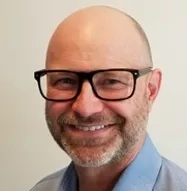
A bald man with a beard wearing black glasses and a blue shirt is smiling at the camera.

Question: Stephen, it's clear to anyone who hears you speak that you are passionate about accessibility. Why? 

Answer: Accessibility is very close to my heart. My mother lost her leg to cancer when I was seven. I spent my summers with my aunt and uncle. Two of their children, my cousins, had Cerebral Palsy and were in wheelchairs. I have Tourette Syndrome, which for me results in uncontrollable tics and twitches. So, I have first-hand experience with the challenges people with disabilities can experience navigating seemingly simple tasks like opening a door, navigating campus buildings, and participating in events.  

Question: Would you start by talking about the kinds of disabilities event planners need to keep in mind to make the event accessible to students, faculty, alumni, and donor attendees? 

 Answer: Yes, that's a great place to start, as many talk about disability as a singular condition when, in actuality, the term represents a wide array of people with a variety of needs. For example, think about the prospective student who has tremors and has difficulty using a mouse, the student who suffers from anxiety, the professor whose speech is impacted from having had a stroke, the major donor who has hearing loss and struggles to catch every word that’s said.

A disability is a condition of the body or mind that makes it more difficult to do certain activities and interact with others. A disability can affect vision, movement, thinking, remembering, learning, communicating, hearing, mental health, or social relationships. While blindness, deafness, and wheelchair use often come to mind when thinking about disabilities, it's essential to recognize that disabilities can take many different forms, including those that are not visually obvious.

Question: How do I appropriately plan to accommodate students with a disability, given I cannot ask if they have a disability? 

Answer: This is a great question as we’re often great at asking about dietary restrictions, but rarely do I see questions about accessibility needs. We event planners just need to know what questions to ask. While we can't ask students directly about disabilities, we can ask what accommodations they might need. For example, we cannot ask if a student is deaf, but we can ask if they need captions, a sign language interpreter, or an audio description. We can ask if a personal care assistant will accompany them, if they use a service animal, and if they use a mobility device.

In my experience, students generally respond positively to these kinds of questions because it communicates that you're tuned into their unique needs and that you care about their experience.

Question: What should education event planners look for in a software platform to know if it's accessible? What steps has Cvent taken to ensure our technology is accessible?

Answer:  For the most part, software products like ours need to be natively accessible. From design to development, accessibility has to be baked into the software development lifecycle. From a Cvent standpoint, we test our products to ensure they work for keyboard-only users and with assistive technologies such as screen readers and Braille displays. We develop our products to Web Content Accessibility Guidelines (WCAG) 2.2 AA, the latest version. 

To ensure that we are fully transparent and honest concerning our level of accessibility, we have an independent third-party accessibility firm test our products, report any defects, and document their findings in Voluntary Product Accessibility Templates (VPATs). We have VPATs for the following products, with new products being added every few months: Event Website and Registration, Attendee Hub Web and app, Event Diagramming, OnArrival, Meeting Request Form and Access Portal, Webinar, Speaker Resource Center, Survey, and Passkey Booking and Block Request. From what I can find, we are the only events software company that has VPATs created this way, something I am very proud of.

That said, our commitment to accessibility goes beyond just meeting the WCAG Guidelines. We actively design and develop the features within Cvent to help ensure content is accessible. For example, when adding an image to the summary page of a Cvent registration site, we require the event designer to fill out the alt text field, the text a screen reader uses to describe the image to a visually impaired reader. When choosing colors in Attendee Hub, notifications pop up if the selected colors don't meet accessibility guidelines.

Question: You talked about event registration in a previous question. When planners create event websites in Cvent, what are the top 3 items they must do to make them accessible? 

 Answer: There are a few things that planners need to do when creating event websites in Cvent. By far, the top 3 things you should do are: 

  1. Add proper alt text to images,
  2. Make sure correct color contrast ratios are met (usually 4.5:1), and 
  3. Maintain correct heading structure. 

The good news is that we try to make this as easy as possible. For example, when creating a site in Attendee Hub Site Designer, we monitor colors and alert planners if the ones they choose do not meet proper guidelines. If safe color mode is enabled then we even modify colors for them, for example by making a red slightly darker, so there is nothing a planner needs to do. 

Question: Any final comments you'd like to share with our readers?

Answer: Yes. We have articles coming to our Cvent Knowledge Base soon, so please check back. 
Here are a few resources you may find helpful: 

  • WCAG Standards - https://www.w3.org/WAI/standards-guidelines/wcag/ 
  • Guidance:
    • Alt text: https://webaim.org/techniques/alttext/
    • Color contrast: https://webaim.org/articles/contrast/
    • Headings: https://webaim.org/techniques/semanticstructure/#headings
  • Helpful contrast checker tool - https://accessibleweb.com/color-contrast-checker/
A woman with blonde hair wearing a pink shirt and black blazer smiling for a picture.

Susan Summerlin Nye

Susan Summerlin Nye has over two decades of experience collaborating with academic institutions and Ed Tech companies. Susan is responsible for education-focused marketing endeavors and crafting marketing strategies aimed at helping institutions enhance event experiences for students, faculty, staff, and alumni.

More articles from Susan Summerlin Nye

More Reading

2
https://www.cvent.com/venues/new-york/hotel/kimpton-hotel-eventi/venue-9ae45ce6…

Why Cvent

A pixelated image of a person in blue and purple, with a black outline, on a black background.

24/7 support from our ~1,700 customer success team

A blue building with the letter "III" on it, placed on a black background with a blue outline.

Over 8 million events managed

A blue star icon with a letter E in the middle on a black background.

Trusted by 70% of Fortune 500 companies

A pixelated image of a hand holding a puzzle piece with a plus sign on it.

Our security and privacy teams protect your data

2
https://www.cvent.com/venues/las-vegas/hotel/hard-rock-las-vegas-hotel-casino-a…

Event Planning for Accessibility: Tips and Best Practices

July 09, 2025
Events Event Experience
By Mike Fletcher
Wheelchair user using ramp at exhibition
Big book of accessibility stock
Woman in wheelchair holding papers talks to another woman at an event at the Singapore Marriott Tang Plaza Hotel.
Planning an event?
Make sure your venue is truly accessible for all attendees
Get the checklist

Accessibility and inclusion have always been core values, but they are also vital for business success.

Accessible events signal that your organization values all people. This builds brand trust, strengthens reputation, and demonstrates social responsibility, which matters to attendees, sponsors, and partners alike.

Whether you stage small meetings or large conferences, careful consideration of accessibility, both online and in-person, will ensure that all your attendees have a positive and inclusive experience.

Besides, the regulatory landscape is moving in only one direction, towards stricter inclusion requirements such as WCAG 3.0 and the new European Accessibility Act.Prioritizing accessibility now will help you stay ahead of legal and market shifts.

Read on to learn practical tips and best practices you can implement to ensure accessibility is at the heart of your event planning - before, during and after your event.

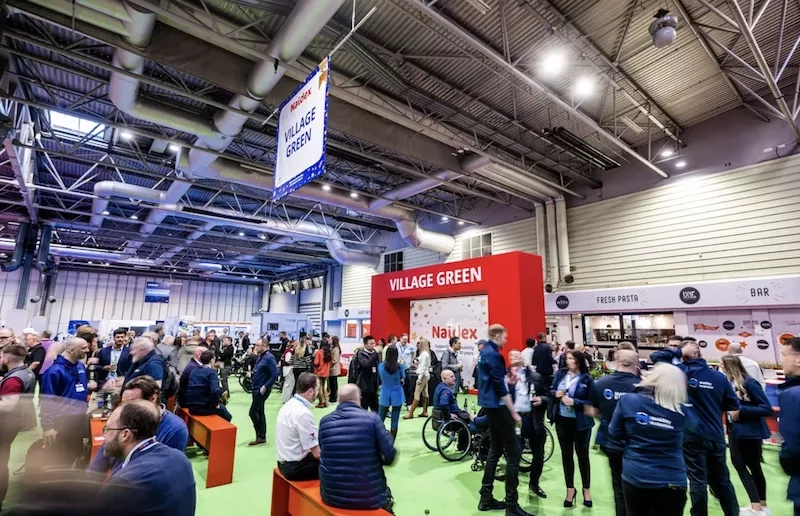
Show floor with disabled attendees

Why event accessibility matters

Some 16% of people worldwide have a disability according to the World Health Organization (WHO).

Across Europe, the average is higher. In 2023, 27% of the EU population (or 101 million people) over the age of 16 had some form of disability. In the UK, it’s almost 22% of the population (or 14.1 million people). In the US, it’s over 28% (or one in four adults).

The WHO says these numbers are increasing, due in part to ageing populations and a rise in neurodivergency diagnoses.

If your events aren’t accessible, you’re likely missing the chance to engage a much wider audience, including the spending power of individuals with disabilities (known as the purple pound), entire households, or even friendship groups in which at least one member has additional needs.

Put simply, creating an accessible event means designing it for everyone, regardless of disability, from the moment someone visits your website to when they leave your venue.

You’re also legally obligated to make your events fully accessible. In the UK, disability is one of nine ‘protected characteristics’ defined by the 2010 Equality Act, making it illegal for any business to discriminate against persons with disabilities (or PWDs). In the US, there is the Americans with Disabilities Act (ADA), which protects people with disabilities from discrimination.

Introducing the European Accessibility Act

If you operate within the European Union, attract EU-based attendees to your events, employ more than 10 people and have a turnover greater than €2 million, you will need to comply with the European Accessibility Act (EAA), which came into force on 28 June 2025.

The legislation applies to any business offering event websites, ticket sales, apps or other digital event services to residents of EU countries, regardless of where your business is based. Any new online product must comply straight away. For existing products and services, organisations have until 28 June 2030 to become fully compliant.

The EAA states that websites and mobile apps must comply with the current version of the Web Content Accessibility Guidelines(WCAG 2.2).

These WCAG guidelines are organized into four principles (POUR):

  • Perceivable: Information should be presented in ways that all users can access, such as providing alternative text for images.
  • Operable: Interfaces should be easy to navigate when using a variety of devices and assistive technologies.
  • Understandable: Content should be clear and predictable.
  • Robust: Websites and digital tools should work with a wide range of assistive technologies.
     

💡 Want to know more? Read How the European Accessibility Act Will Impact Your Events


Understanding accessibility needs 

Accessibility needs can be divided into physical and non-visible disabilities. Physical disabilities refer to impairments affecting a person’s mobility, vision, or hearing, while non-visible disabilities refer to those that aren’t immediately apparent, such as neurodivergent states and mental health conditions.

Here are some examples to consider when planning for your event.

Mobility impairments

Visitors with restricted movement may use wheelchairs or mobility scooters. For them to get around your event comfortably and safely, accessibility solutions like ramps, lifts, wider aisles and allocated parking spaces should be provided.

Visual impairments

For the visually impaired, you should consider accessible solutions such as braille signage and audio description. Large print options also provide an additional layer of support so that everyone has equal access to information.

Hearing impairments

For those visitors who may struggle to hear and understand on-stage presentations, you’ll need to consider using sign language interpreters, captioning services, and audio amplification devices.

Cognitive disabilities

Visitors with cognitive disabilities may face difficulty understanding or interpreting information and sensory stimuli.

To make your content and design accessible for them, you should keep text-based language (e.g. signage, flyers and agendas) simple, and provide visual cues and sensory-friendly spaces.

Something as commonplace as color blindness can have a significant impact on a person’s decision whether to go to an event. So remember to keep visual design elements simple and never color-code your event features or agenda.

Neurodivergent conditions

Autism, ADHD, dyslexia and other neurodivergent conditions have a significant impact on a person’s ability to engage with traditional event design, such as crowded, noisy theatres or interactive networking.

To cater for people with neurodivergence, you should provide sensory-friendly environments, quiet areas of respite when needed, and prior notice of changes to schedules or routines.

Mental health conditions

Mental health conditions, like depression, PTSD, and anxiety, can greatly impact a person’s emotional or psychological state. To support individuals with mental health difficulties during your event, you could offer accessible mental health resources and allow emotional support animals. 

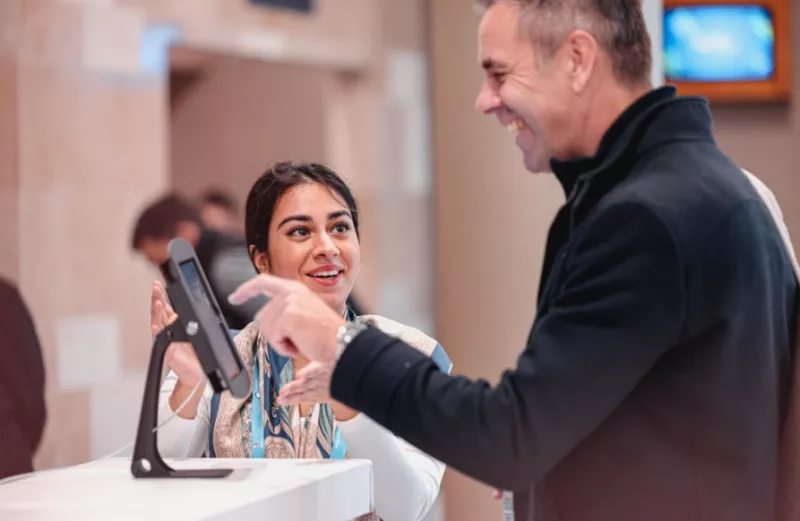
A man and a woman laughing together in front of a monitor at a registration counter.

5 steps to planning accessible events 

“Start planning your events from the beginning with accessibility in mind. You need to build in accessibility from the get-go. If you make your environments and products accessible and show that you are committed, it opens the door to more attendees, and word travels quickly. For us, it has been the marketing tool that you could use.”

Julia Santiago, Managing Director at Center on Disabilities (CSUN), speaking on Hot Take: What’s New and Trending in the World of Accessibility

Let’s now look at the various stages of event design to determine where accessible planning can come into play.

  1. Registration

The registration page on your event website is the first opportunity to discover what additional needs your attendees may have. So, make sure the event platform used to design and host your site is accessible to all, and your registration asks the right questions with checkboxes.

These could include questions such as:

  • Do you require captions?
  • Do you require a sign language interpreter?
  • Will you be accompanied by a service animal or a Personal Care Assistant (PCA)?
  • Do you require wheelchair access?

By asking more detailed questions at the registration stage or by contacting anyone who has requested certain requirements, you’ll not only create a positive first impression of your event but also give yourself more planning time to incorporate additional accessible elements.

  1. On-site experience

To improve the on-site experience, put yourself in the shoes of a disabled person and consider their entire attendee journey.

For example, to accommodate visitors using wheelchairs, consider widening the aisles or adding some lower poseur tables. Don’t forget to assign a dedicated wheelchair area in your conference hall or break-out rooms.

Other visitors with physical impairments may be accompanied by a care assistant, who is there to assist the attendee. You’ll need to ensure that:

  1. They’re given free entry
  2. They’re always able to sit next to the person they’re looking after
  3. You’ve factored them into catering numbers and room capacities

The same goes for service animals, such as a guide dog for a visually impaired attendee. You’ll need to ensure that:

  1. There’s a reserved space for them at the end of an aisle so that their dog can remain alongside
  2. You provide facilities such as drinking water and somewhere for a dog to go to the toilet
  3. Staff are made aware not to distract or fuss over a service animal

Quiet rooms and wellness spaces for anybody to take a break from the hustle and bustle of the show floor are a great addition to your event.

3. Virtual and hybrid events

Making your events accessible also extends to virtual and hybrid formats. Here are some tips:

  • Ensure that online presentations meet certain color contrast ratios so that they’re accessible for the visually impaired or people with color blindness.
  • Not everyone attending virtually will be able to see or interpret the presentation slides. So ask presenters to explain visual content.
  • Attendees who have a hearing impairment may require online presentations to show more detail, offer live captions or have someone in the chat who can answer their questions in real-time.

4. Communication and information accessibility

Including accessibility information in the design of your pre-event communications is key.

  • For instance, add a simple line at the base of posters or flyers written in black text on a light background that reads ‘Our theater is wheelchair accessible’ or ‘A sign language interpreter will be available.’
  • Check if presentation fonts are large enough to be read from the back row of seats, images are of high quality, and messaging is clear.
  • If you’re using a sign language interpreter, make sure that enough seats for visually impaired delegates are reserved in the front row. Having the correct lighting and background also ensures that the interpreter’s face and hands can be seen from the stage.
  • If your event attracts a lot of attendees with additional needs, consider placing an “accessibility desk” by the entrance. Inform registered attendees that they may seek additional help from the desk attendant if they encounter any problems.

5. Staff training and awareness

Create a culture of inclusion by ensuring that everyone involved in the planning and execution of your event is given the same level of training.

For example, when an attendee arrives at your onsite registration desk, train staff to identify when a person needs additional time to respond or help with information, directions or the printing of their badge.

Your registration staff need to know the correct way to interact with a deaf attendee or a visually impaired person who arrives with a service animal, for example (e.g. don’t pet or fuss over the dog, don’t grab the attendee’s arm when giving directions). 

Create a culture of inclusion by ensuring that everyone involved in the planning and execution of your event is given the same level of training.

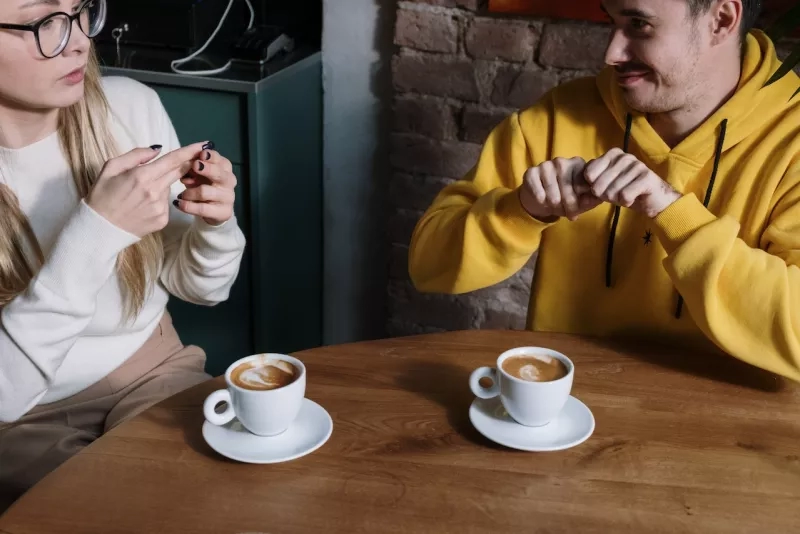
A man and a woman are sitting at a table with coffee cups, communicating using sign language.

Finding accessible venues and facilities

There are many ways your choice of venue can impact how easily different people can get involved in your event - from being able to move freely around the building, to feeling safe in an environment that won’t trigger a seizure or make them feel anxious or at risk.

When sourcing venues, consider both the accessibility within the venue and how your attendees may travel to your event.

Here are 10 venue-specific questions to reflect on:

  1. Can you reserve parking spaces for people who most need them?
  2. Is there ample space for mobility aids?
  3. Does the venue have an alternative accessible entrance? If so, will it remain unlocked during your event?
  4. Is the approach to the venue solid ground or will you need a temporary pathway? Soft mud and loose gravel can be problematic for many.
  5. Does the venue have step-free access throughout? Can lifts be accessed without having to ask for a key? Are the ramps of a gentle gradient (1:20), and do they have handrails on either side?
  6. What signage does the venue offer? Is the signage large and in high contrast? Embossed or in Braille? If not, can you put up your signs?
  7. Is there a loop system in your meeting room for hearing aid users? If so, is it working? Does anyone know how to switch it on or alter the volume? Will that person be there when you hold your event in the building?
  8. Does the venue offer ‘adapted’ toilets or gender-neutral toilets?
  9. Are there visual (flashing) fire alarms in private spaces like toilets, to alert deaf or hard-of-hearing delegates of a fire? If not, consider what you need to do in case of a fire alarm.
  10. 10. Is there a space available to use as a multi-faith prayer room?

💡Delve deeper with our Venue Accessibility Checklist: 17 Questions to Ask Your Venue

Using event and assistive technology

Use technology to improve the accessibility of your events. Here are two ways technology can keep you on the right track:

Accessible tools

Screen readers will convert text and other elements to speech or braille output for attendees with vision impairments or cognitive disorders.

If a site works with assistive technology, it mostly depends on the event platform, so please be sure to choose one that has been tested and verified to work with assistive technology, like screen readers.

To verify that an event platform meets accessibility standards, such as working with assistive technology, request a VPAT (Voluntary Product Accessibility Template) from the vendor. Cvent has VPATs for products such as our Event Registration, Attendee Hub, and others. 

Ensure your event platform is compatible with third-party tools that allow audio content to be consumed in various languages for your global audiences. 

Accessible design

When designing event or registration websites, use a platform like Cvent’s Attendee Hub, which lets you know when color combinations don’t meet accessibility guidelines to help you support attendees who may have visual impairments or be color vision deficient.

Add alternative text to images and make it easier for those using assistive technologies, such as screen readers and braille displays, to navigate your event website and registration process.

💡From screen readers to sign language interpretation, there’s a wealth of tools that can help ensure that all attendees have the same opportunity to participate and engage. Learn more about Cvent’s accessibility features.

Accessible events checklist

Before your event

  • Invest the time and effort to find out what PWDs may need from you or your chosen venue.
  • Everyone’s onsite experience should be equal so assess the content and layout of your event for accessibility, and ensure all staff are trained to provide customer support for all types of disabilities.
  • Keep accessibility in mind when designing communications, online polls and feedback forms.
  • Use technology to improve the accessibility of your website and virtual event elements, as well as the onsite experience for all.

During your event

  • Work with your chosen venue to ensure that additional measures can be added and specific requests are supported.

After your event

  • When your event is over, don’t forget to ask for, and act on, feedback from those attendees who had requested additional needs.
  • Always acknowledge feedback and think carefully about what you can do differently to improve accessibility next time.

FAQs: Making events more accessible

1. What does accessibility mean in the context of events?

Accessibility refers to designing and delivering events so that everyone, regardless of ability, can participate fully. This includes physical access, communication access, digital access (like websites and apps), and inclusive content.

2. Why should accessibility be a priority for events?

Accessible events are more inclusive, reach wider audiences, and demonstrate social responsibility. They also reduce legal risk and often improve the overall experience for all attendees, not just those with disabilities.

3. How does the European Accessibility Act (EAA) impact event organizers?

The EAA, in effect from June 2025, requires that many products and services—especially digital ones like event platforms, ticketing, and websites—meet minimum accessibility standards across EU member states. Non-compliance could lead to legal and financial penalties.

4. Which parts of the event experience are covered by the EAA?

Under the EAA, areas like online ticket sales, mobile event apps, information terminals, and self-service kiosks must be accessible to people with disabilities. If your event uses digital systems in these areas, they need to comply.

5. Do the EAA rules apply to in-person events?

Yes, indirectly. While the EAA focuses on digital accessibility, many in-person event components (like wayfinding, registration kiosks, and information access) rely on digital tools that fall under the EAA. So it’s important to ensure that both digital and physical aspects align with accessibility requirements.

6. What other global legislation is there when it comes to accessibility in events?

In the United States, the Americans with Disabilities Act (ADA) requires that venues, websites, and event experiences be accessible to people with disabilities, and lawsuits for non-compliance have become increasingly common.

In Canada, the Accessible Canada Act (ACA) and the Accessibility for Ontarians with Disabilities Act (AODA) set out similar expectations, requiring proactive removal of barriers in public spaces and digital communications.

In the UK, disability is one of nine ‘protected characteristics’ defined by the2010EqualityAct

For virtual and hybrid events, many of these laws reference Web Content Accessibility Guidelines (WCAG) — the international standard for digital accessibility, which continues to evolve (with WCAG 3.0 on the horizon).

7. What are some quick wins for making a venue more accessible?

  • Ensure step-free access to all main areas
  • Provide accessible toilets with hoists
  • Use clear signage and high-contrast visuals
  • Offer reserved seating for attendees with mobility needs
  • Train staff in disability awareness

8. How can I make my event communications more accessible?

Use plain language, provide captions or transcripts for video content, and ensure that websites and emails are screen-reader compatible. Use alt text for images and avoid relying on color alone to convey meaning.

9. What support can I offer to neurodivergent or autistic attendees?

Provide quiet zones, publish sensory-friendly schedules, and allow flexible arrival times. Familiarisation videos about the venue layout and what to expect can also be helpful.

10. Are there tools to test digital accessibility for events?

Yes. Tools like WAVE and Google Lighthouse can audit websites for WCAG compliance. You can also engage an accessibility consultant or tester with lived experience of disability for deeper insights.

11. What role can attendees play in helping events become more accessible?

Invite feedback before, during, and after the event. Include an accessibility section on your registration form where attendees can note specific requirements, and make sure those needs are addressed in advance.

Next steps 

Accessibility in event planning is a must. With over a billion people, or 16% of the world’s population, experiencing some form of disability, making your events more accessible and inclusive is both a moral and legal obligation.

For a deeper understanding of accessibility and what it means for your event planning, check out the wealth of information available in our Accessibility Resource Hub.

Mike leaning against the wall in his home with London skyline wall art in the background.

Mike Fletcher

Mike has been writing about the meetings and events industry for almost 20 years as a former editor at Haymarket Media Group, and then as a freelance writer and editor.

He currently runs his own content agency, Slippy Media, catering for a wide-range of client requirements, including social strategy, long-form, event photography, event videography, reports, blogs and ghost-written material.

More articles from Mike Fletcher

More Reading

2
https://www.cvent.com/venues/new-york/hotel/kimpton-hotel-eventi/venue-9ae45ce6…
Podcast

From orientation to alumni events: event strategies across the student lifecycle

Two women smiling with text saying event strategies across the student lifecycle with Stacey Sheppard.
Your browser does not support the audio element.
Play
Pause
00:00
Listen to this podcast via your favorite podcast player
Listen on Apple Podcasts
Listen on Spotify
Watch on YouTube

Episode description

You may think university events are just a small, normal piece of a university's student life and marketing plan. 

But what if we told you that it's actually vital to create a long-lasting relationship with that student, who then continues into their journey as a professional adult and alumnus?

This is why we’re dedicating a special two-part episode of Great Events to investigating the impact of events on education.

Join us as Host Alyssa Peltier sits down to discuss this unique topic with Stacey Sheppard, Senior Manager of Solutions Marketing at Cvent. 

In part one of our conversation, we explore the entire lifecycle of a student and the lasting impact of strategic event planning on the university experience. We also discuss the evolution of campus tours, the various departments that planners come from within universities, and the critical role of virtual events post-pandemic. 

So, whether you're a student, an educator, or an event enthusiast, this is one episode you won’t want to miss. 

Here are a few key takeaways from Part 1:

  • Higher Ed events can lead to lifelong loyalty in the student lifecycle. One university found that if a person participated in an event as a student, they were 80% more likely to be active, engaged, and philanthropic alumni. 
  • Experiences that engage and excite students virtually and in person are more likely to improve students’ experience and appreciation for the university.
  • No matter if it's corporate or educational, customizing events for your audience is key to success.

Things to listen for:

00:00 Introducing Stacey Sheppard

04:04 Defining the student life cycle, key milestones, and how events play a role 

06:40 The importance of both virtual and in-person engagement

08:14 The expanded definition of a student and why that matters for event planning

09:07 The flexible role of event planners in Higher Ed

12:01 Customizing event tech to power your programs

14:05 Engaged Students → Engaged Alumni

15:19 The value of intangibles in a student’s experience 

Meet your host

Alyssa Peltier, Director, Market Strategy & Insights at Cvent Consulting

Meet your guest host

Stacey Sheppard, Senior Manager of Solutions Marketing at Cvent.
 

{"preview_thumbnail":"/sites/default/files/styles/video_embed_wysiwyg_preview/public/video_thumbnails/BhDUS_tTYzA.jpg?itok=-VfFcmoc","video_url":"https://youtu.be/BhDUS_tTYzA","settings":{"responsive":false,"width":"854","height":"480","autoplay":false},"settings_summary":["Embedded Video (854x480)."]}

Episode Transcript

Stacey Sheppard:

I think a lot of times when we talk about the student experience, we think about the traditional student experience, that on-campus student. But what we've seen today is that the definition of a student could be a variety of things. We've got adult learners, we've got folks that don't live on campus. We've got those who are taking courses online and are really operating as a virtual type of student.

Alyssa Peltier:

Great events create great brands. But pulling off an event that engages, excites, and connects audiences, well, that takes a village. And we're that village. My name is Alyssa.

Rachel Andrews:

I'm Rachel.


Felicia Asiedu:

And I'm Felicia.


Alyssa Peltier:

And you are listening to Great Events, the podcast for all event enthusiasts, creators, and innovators in the world of events and marketing.

Hi everyone. What has been going on in this wide, wide world of events? My name is Alyssa and I will be your host for this week's episode. We're going to step a little bit out of my kind of traditional comfort zone on this episode today. Usually I am the host who comes in, is talking the business of events, very heavily rooted in our corporate customer conversations.

I just chatted with Morningstar, who's a financial services customer, a few weeks ago. All that talk about counting beans and revenue and the growth objectives, and you name it. I feel like a TikTok skit right now. Cvent does have customers that run the gamut beyond the corporate sector. And so today I am going to interview my colleague here at Cvent to talk about one of those other segments, which just so happens to be the higher education space. Whether it be campus tours, orientation, student services during enrollment, you name it, events are pretty critical to the student experience. I feel like I have a little bit of experience as a student having gone to Virginia Tech and participated in some of those events, but I really wasn't cognizant of the events as I was participating in real time. So we're going to kind of unpack that student journey, that student experience with my colleague, who I'm proud to introduce to the Great Events Podcast, Stacey Sheppard. Welcome, Stacey.

Stacey Sheppard:

Hi. Thanks so much for having me. This is so exciting. My debut appearance on the Great Events podcast.

Alyssa Peltier:

Yeah, it's awesome. This is a week of many firsts. We have a lot of newcomers to the podcast this week, and I'm very excited to introduce not just the conversations to our listeners, but also new guests to the podcast because it's always nice to have fresh perspectives. And certainly you bring a unique one with the higher education kind of subject matter expertise here. So can you tell the audience just a little bit more about what you do at Cvent and how that pertains to higher education?

Stacey Sheppard:

Sure, yes, would love to. And happy to bring you into the other side, the other side of opposite of corporate-

Alyssa Peltier:

[inaudible 00:02:44] The dark side, but this is probably the light side, right?

Stacey Sheppard:

Yes, this corporate light side. Absolutely. But yes, so a quick overview of my background and my role at Cvent. I am currently the senior manager of our industry solutions marketing team. So what does that mean when we say industry solutions? Well, we are the solutions marketers between our product marketing team, our demand generation team. They're very focused on the key industries where our customers sit. So you mentioned financial services. That's absolutely one that my team is passionate about as well. But on the other side, we have unique industries like the higher education space, where our customers have seen great success implementing the Cvent platform and technology across campuses to do exactly what we're here to talk about today, which is engage their students in unique ways with unique lens. And I'm excited to dig more into that.

Alyssa Peltier:

Let's do it. Okay. So when we were prepping for this podcast, we talked a little bit about this kind of notion of the student life cycle. Now usually, I'm having conversations or we're having those corporate conversations, we talk about the attendee lifecycle. So we're going to see where there's commonalities and where there's differences, where these events have a unique opportunity to engage a particular human type, the form of a student in this scenario, across their life cycle with their university experience. So can you talk to me a little bit more about what is the student life cycle? What are those key milestones, and then how do events play a role?

Stacey Sheppard:

Yeah, absolutely. And when we talk about defining these different stages of the student life cycle, we do see that it does vary across universities. For those that are listening today, you might want to take what I'm saying and apply it into the setup and the spread of what it looks like on your campus.

But typically the way we think about this is starting from the admissions experience, the exposure and the reach that you're hoping to have to reach prospective students, hopefully have them apply, then go through that experience of experiencing the campus, experiencing student life, and then transitioning into that orientation into the first year of the student experience. From there, we think about those four years on campus or potentially more or less depending on the type of programs and all of those different engagement touch points that happen throughout that experience. And then from there, commencement, graduation is certainly a significant milestone and piece of that student life cycle. And from there, we think about how to create lifelong students in the form of alumni or advancement and how to keep those students engaged past graduation.

Alyssa Peltier:

Interesting. So it looks like we have two life cycles here, right? The life cycle of the individual event, but then the life cycle with, I don't want to say the brand, but kind of the university experience at large, right? So you're talking pre during post-campus life or post-university, but we're also talking pre during and post each of those event experiences too. So it sounds like a lot to juggle as a planner within the university space. Is that accurate?

Stacey Sheppard:

Yes. And what we see frequently as a higher ed planner, a lot of these lives within one department, one team where you're managing a robust event calendar for one of those types of programs. But what I'm hoping to do here today is really widen that lens and that view to think about the events and the student experience in the form of this life cycle where it's not just this piece that you might be owning or in charge of and able to contribute to, but it's really the entire process. And hopefully, this gets your gears shifting and thinking about ways you can engage with other departments and bring these pieces of the life cycle together.

Alyssa Peltier:

Yeah, it sounds like they really are kind of like a core function of that student engagement, that overarching student experience. They are not just their own unique moments, they are part of a bigger picture, right?

Stacey Sheppard:

Definitely.

Alyssa Peltier:

Let's talk about some of the individual events and the role that they play. I like to talk about the event objective or the event purpose. Let's talk a little bit more about the campus tours kind of thing. I know I did that. That was very fun. It was very much part of my experience. I probably went to the wrong school for what I needed. Maybe I should have had a better event experience as part of my student life cycle. But let's talk a little bit about that and what their aim is to do.

Stacey Sheppard:

Yeah. And that world has really transformed since our experience of touring campus. There was probably some paper forms involved back then where you're signing up or sending an email to someone saying, "Hi, can I reserve this time and meet you at this location on campus and then hopefully take a guided tour?" And today we're seeing our university customers thinking way outside that box and looking to, I know we're going to get into the event technology piece, but looking to how can we provide this experience both online and in person. So we've got those folks that are coming to campus and touring in that traditional way, but what can we provide online in a virtual format that gets them even more excited to be on campus and really kind of tease that campus environment and really try to showcase your campus and your brand through all of those means?

Alyssa Peltier:

Is there also a need to engage virtual students as well through these event programs? I know this is a little bit something off script here, but is this something that is of importance and a value? I recognize that certainly post pandemic, there are a lot more students who are seeking out virtual academia opportunities.

Stacey Sheppard:

Absolutely. And even past that, I think a lot of times when we talk about the student experience, we think about the traditional student experience, that on-campus student. But what we've seen today is that the definition of a student could be a variety of things. We've got adult learners, we've got folks that don't live on campus. We've got those who are taking courses online and are really operating as a virtual type of student. It's really opened up the bounds of what a campus can be. And with that virtual aspect, really your campus could be everywhere and you've got the potential to bring in students of many different types.

Alyssa Peltier:

And effectively, events could be everywhere as part of that experience too so you're having to accommodate in both of these universes, both on campus and outside of campus or in the virtual campus setting, if you will. Let's talk a little bit about some of the people and the players that are involved in this. I'm saying very, very ambiguously the planners, right? I'm not very well versed in the higher ed space, who are the core event planning? Where does that sit? Who does these things?

Stacey Sheppard:

It's a very interesting question that you're asking there, and I'm sure those listening are like, "Yeah, I'm curious to hear you're going to answer this." But really the event planner type of role as we think of it can live in a lot of different places across a university system. That means that it could live in the office of the president, which is much more of the executive branch of a university that's hosting some of those larger visibility events like commencement.

But then we've also got those student services groups that are much more focused on campus. And really a lot of those folks could take the role of event planner regardless of your title and your job description and your role because your role there is to engage students as they're experiencing their education. And so what we've seen is that because they're such a vast department structure at a university with different departments hosting their own events, that those planners and those folks taking that role can really vary across department and across teams. Some might not even know that there's folks in another department actually executing events because of the way that either their title is, their job description, their role. And we're really seeing that the role of the event planner is very flexible as it relates to education.

Alyssa Peltier:

That's good. I like that. Flexible. It's a nice term. So it sounds like there really isn't this kind of governing body or connective tissue to that overarching student experience. It really is the responsibility of a lot of decentralized players, if you will, who are supporting one broader mission, which is to engage the student pre, during, and post experience.

Stacey Sheppard:

Yes, and that's a lot of the types of conversations that our teams are having with our customers, is that there are those universities that say, "There has to be a better way to do this," or "How can we bring these groups together, create a type of process and really start to standardize across different departments on the way they're executing events?" And I think that comes back down to the student experience too, right? So that no matter what department you're attending and experience with or registering for, you're in person, you're off campus, that you're really keeping that experience consistent with using one tool to do that. And whether that tool is mandated by your IT department through procurement, through other teams, it really does vary across universities in the way that they're structured, but more and more we are starting to have those conversations.

Alyssa Peltier:

Perfect segue to my next question because I did want to talk a little bit about the event technology. Obviously, this is a Cvent hosted podcast, so we've got a little bit of something to say in that matter. Can you talk to me about the role of event tech that can power all of these programs? Again, it sounds like we have a decentralized model in a lot of university systems. Does that mean oftentimes we're talking about different technologies for each, not only phase of the student life cycle, but events within each phase themselves?

Stacey Sheppard:

Absolutely. And we kicked off this conversation talking about some of the differences between more of our corporate segments versus education, what we're here to discuss. And we find that the event tech that is powering these types of program also differs from the more corporate environment to our university systems. And with that, it's a really interesting story of seeing how they're taking technologies, using them in unique ways and really customizing it for their programs to deliver what they need for their students or for really any of their audiences depending on where that event fits in that life cycle.

Alyssa Peltier:

How are they garnering that type of success? Is there more of a centralized way to deploy technology across the university system?

Stacey Sheppard:

We have seen with the concept of digital transformation over the past few years that typically some of these more legacy programs that were not first to adapt or adopt technology are starting to think about, "Okay, how can we do this in a different way? How could we use a tool like Cvent event registration across events regardless of the function of this event, but really understanding the importance of capturing that data, keeping it in one central system, and understanding who is attending and how we can continue to engage them?"

Alyssa Peltier:

It's one of those perfect case scenarios where disruption through the pandemic has actually bred a lot of opportunity and has exposed gaps in what was and potential for what could be. Is there any university or college that's doing this well today or do we have some good case studies for success?

Stacey Sheppard:

Yes. I'm not going to name them on the podcast. I wish they were here to join us, but-

Alyssa Peltier:

We'll save them for another podcast because we do want to [inaudible 00:13:58]-

Stacey Sheppard:

Exactly. I'd love to do a part two and bring them on here, but we recently have been working with one university and featuring them in some of our content. One of the most fascinating statistics that they shared is that they found that if a student participated in an event as a student, they were 80% more likely to be an active, engaged, and philanthropic alumni. It was truly a fascinating way to look at this student life cycle. And their goals being advancement and alumni retention really started before these students even set foot on campus.

Alyssa Peltier:

At recruitment, right?

Stacey Sheppard:

Yes.

Alyssa Peltier:

Yes.

Stacey Sheppard:

They were thinking about this the same way we think about marketing campaigns and programs, right? Fill your funnel at the top. And hopefully when you get down to the bottom, you've got these engaged alumni. And it was a fascinating way to look at this type of program and their approach to using event tech to do this, have these insights and understand if this many students attend these events, what does that look like down the line five years from now in terms of the number of active and engaged alumni that we have?

Alyssa Peltier:

I love that. That's so enlightening honestly. I'm just drawing all the parallels to the customer journey and yeah, to a traditional marketing funnel. Anyone else worth mentioning before we wrap things up for this week?

Stacey Sheppard:

I do have one more thought that I wanted to share on that same type of story. A lot of times we talk about metrics and insights as it relates to event tech and your event programs. I think the education space is very unique because yes, this lean into digital transformation and data and insights is so important, but there's also this factor of sort of the intangible experience and results from your events program that is, "How do we quantify a smiling, happy student?" Right? Someone that feels connected to their campus, connected to this brand. We think a lot about the student experience and that experience for four years, but you're an alumni forever, right? Once you graduate, you're connected forever. And I think it's important to think about some of the intangibles too even though we talk a lot about the tangibles and the data.

Alyssa Peltier:

The magic of events, right? The magic of in-person, but really what that means for a business, for a university, for an association. There is inherent goodness that comes from events, and it is hard to quantify, but we all know it's the reason why we keep investing in them, right? No matter what segment you're in, we know that these are important and we will continue to do them in the absence of heart metrics, right? We value human connection, human experience that powers us forward in whatever segment we're in.

I think that's a perfect way for us to wrap this week, Stacey. I really, really appreciated this conversation. And honestly, I enjoy learning from my peers within Cvent, where I may not have that depth of expertise, but certainly willing and open to explore new territories. So thank you for joining me this week. As always, listeners, we appreciate having you and we will see you next week.

Thanks for hanging out with us on great events, a podcast by Cvent. If you've been enjoying our podcast, make sure to hit that subscribe button so you never miss an episode.

Rachel Andrews:

And you can help fellow event professionals and marketers just like you discover great events by leaving us a rating on Apple, Spotify or your preferred podcast platform.

Felicia Asiedu:

Stay connected with us on social media for behind the scenes content, updates, and some extra doses of inspiration.

Rachel Andrews:

Got a great story or an event to share? We want to hear from you. Find us on LinkedIn, send us a DM, or drop us a note at greatevents@cvent.com.

Felicia Asiedu:

Big thanks to our amazing listeners, our guest speakers, and the incredible team behind the scenes. Remember, every great event begins with great people.

Alyssa Peltier:

And that's a wrap. Keep creating, keep innovating, and keep joining us as we redefine how to make events great.

Podcast

From Classroom to Career: Event Education That Works with Carrie Davenport and Candace Fitch

Four women stand against a blue background with text that reads "From Classroom to Career".
Your browser does not support the audio element.
Play
Pause
00:00
Listen to this podcast via your favorite podcast player
Listen on Apple Podcasts
Listen on Spotify
Watch on YouTube

Episode description

The event industry is vast, dynamic, and often misunderstood—but it’s time to change that narrative.

In this episode, Alyssa Peltier and Rachel Andrews sit down with Carrie Davenport, Lead Event Manager at Altria, and Candace Fitch, Howard Feiertag Professor of Practice in Hospitality Leadership at Virginia Tech, to discuss how education and real-world experience are shaping the next generation of event professionals.

From student-led events that raise thousands for local causes to building a curriculum that prepares graduates for corporate, nonprofit, and government roles, Carrie and Candace share how they’re shifting perceptions of what it means to work in events.

In this episode, you’ll learn:

  • How hands-on education prepares future event professionals for real-world success: Virginia Tech’s event management program allows students to plan and execute actual events—from securing permits to managing sponsorships and budgets. This practical experience ensures graduates enter the workforce with skills employers value, such as logistics, financial planning, and audience engagement.

  • Why the event industry is more than weddings and parties: The stereotype of “event planner” often overshadows the full scope of the industry. Careers in events span corporate conferences, government meetings, sporting events, and concerts—roles that require leadership, strategy, and technical expertise.

  • The importance of mentorship and networking for career growth: Connecting with mentors, joining industry associations, and pursuing certifications can open doors and accelerate your career. Whether you’re a student or a seasoned professional, building a strong network will help you stay relevant, learn new skills, and find new opportunities in a constantly changing field.

Things to listen for:

(00:00) An introduction to the episode and guests Carrie Davenport and Candace Fitch

(03:03) How Virginia Tech’s event management program grew

(06:34) The importance of aligning industry experience with curriculum development

(09:50) How students plan real events from start to finish

(12:10) Why hands-on experience gives students a competitive edge in the job market

(13:45) Breaking the wedding planner stereotype and exploring the full scope of event careers

(18:57) Addressing challenges in event education, including the industry's “identity crisis” 

(21:50) Advice for students entering the workforce

(24:45) The role of certifications and associations in growing your career

(29:07) Why understanding the business side of events is key to long-term success

(30:40) The vastness of the event industry and its impact on businesses and communities

(31:04) Final takeaways and a look ahead to 2025

Meet your host and Guest

Rachel Andrews,Senior Director, Global Meetings & Events

Alyssa Peltier, Director, Market Strategy & Insights at Cvent Consulting

Meet your host and Guest

Carrie Davenport, Lead Event Manager at Altria

Candace Fitch, Howard Feiertag Professor of Practice in Hospitality Leadership at Virginia Tech,

Episode Transcript

Candace Fitch:

We have to, like everywhere, justify our use of resources and the need for this program to people who, like you've said, don't understand that events is the biggest thing. And so you're sitting in a room of people who are like, "Well, not everybody wants to be a wedding planner." And I'm like, "How many professional conferences did you go to this year?" And they're all like, "Oh, we got to one every semester and we spent our whole summer traveling to them." And I'm like, "Who do you think plants them? We need these people."


Alyssa Peltier:

Great events create great brands, but pulling off an event that engages, excites and connects audiences well, that takes a village, and we're that village. My name is Alyssa.


Rachel Andrews:

I'm Rachel.


Felicia:

And I'm Felicia.


Alyssa Peltier:

And you're listening to Great Events, the podcast for all event enthusiasts, creators and innovators in the world of events and marketing.


Hello everyone. What has been going on in this wide, wide world of events? I'll be this week's host. My name is Alyssa and I am super excited to have you join us for this week's very special episode of Great Events, a podcast by Cvent. I am joined by my co-host Rachel Andrews, and we've got a really special show with some personal undertones to it. We'll get into that in just a second, but with two very fantastic guests that I am excited to introduce to you all right now.


So first up we have Carrie Davenport, who is a multifaceted professional in the events industry, known for her expertise as an event planner. She's also a speaker, a leadership mentor, and a writer as well. Currently, she is a lead event manager for the industry engagement team at Altria. 

Second, we are joined by Candace Fitch, a renowned professor at Virginia Tech who has worked for several years on a variety of hospitality industry positions in food and beverage. She's also had experience in sales and event planning throughout her career as well. She graduated from New England Law in 2004 and began her career as an attorney, shockingly enough, focusing on hospitality clients and engaging hospitality employees and students about risk and legal issues. Candace, wow, that sounds super exciting.


Candace Fitch:

I don't know about exciting, but I always say I'm the hospitality mutt in the department.


Alyssa Peltier:

Yeah, well, there's an event for every field, right? So these interests have spanned into academia as well, now working through event management and also bringing some of that legal and risk expertise into the hospitality wherewithal. So with that, I just want to nod, since both Rachel and myself are grads from the Virginia Tech, not program [inaudible 00:02:40] here that we're going to talk about today, but from Virginia Tech University, it's a really special episode for us.


Rachel Andrews:

I just want to give Carrie one more nod. She is on the board for Virginia Tech Hospitality Tourism program. So we thought it would be really interesting to bring together the mix of this and higher ed here. So I'm really excited for you both join. So welcome to our podcast.


Candace Fitch:

Thank you for having us.


Carrie Davenport:

Thank you.


Alyssa Peltier:

All right, Candace, I'm going to start with you. Admittedly, I graduated from the Graphic Design program at Virginia Tech. I don't even know what it's called anymore, Visual Communications and Design. I was not in the hospitality, tourism and management track, and nor was Rachel, is that right Rach?


Rachel Andrews:

I was a communications marketing major, but I planned a ton of events at Tech.


Alyssa Peltier:

So from my understanding, there's been a lot of movement since both Rachel and I graduated many months ago. We won't talk about the years on that, but we'd love to level set for our listeners on where the HTM program is at Virginia Tech and how it's evolved over your tenure at the institution.


Candace Fitch:

So I've been here eight years. I was brought in eight years ago to work in the Event Management class. It was one class at that time of 25 students, and they wanted to develop and grow at least the class, and there was thoughts of it growing into a minor, and that happened fairly quickly. I started with that one class of 25 and the next year it was two sections of the class, and it kept growing, and then we started applying for it to be a minor.


Virginia Tech changed their general education program to they call a Pathways Program. The idea was to try and get students to take courses all across campus and be more well-rounded students. 

And so we became a Pathways class and then the minor is a Pathways minor. So we get students from all across campus. I just finished up a class, the capstone class that they use to finish their minor. And most all of the students in there were from the communication school, so we get a lot from your program and we love that. So it's really helped us expand the program across campus also with people knowing. I had a meeting with a group of students last night and one of them said, "You need to market this better because I loved this minor and no one knows about it, and everybody I talk to about it is like, 'Oh my gosh, that sounds so cool. How do I sign up for that?'"


Rachel Andrews:

It starts [inaudible 00:05:00] the workforce too. I think what you're doing is very, very great and marketing it would be huge because when I was there and when Alyssa was there, same with Carrie I think, I just looked at the HTM major and I thought, "I don't really want to work in hotels," and I don't think students, and maybe you're doing a better job with this, but I don't think students know how big the events world is. They think weddings, they think social parties, but they don't think the business element of it, and quite frankly, and I loved my time at Virginia Tech, I thought what I did with my major, I took a hodgepodge of PR, marketing, psychology and then coupled with the extracurricular things that I did and made that into a events career. But I wish I would've learned more about contracts, and wish I would've learned more about budgeting, and things that really fit into the event professional world, but-


Candace Fitch:

Well, hopefully that's exactly what I'm doing here because that's exactly what I do. And all across campus, this minor is now the second-biggest minor on campus, so we're getting there.


Rachel Andrews:

That's awesome for workforce, especially with so many Gen Z and folks coming in, I think the status by 2030 is 30 or 40% is going to be Gen Z, Millennials in our workforce. So it's so important what you're doing.


Alyssa Peltier:

Carrie, I'd love to hear a little bit more about the collaboration and the curriculum development. I know you sit uniquely on the board and so you have this industry profession experience that's influencing the direction of the curriculum development. So can you tell us a little bit more about that dynamic and how that comes to life?


Carrie Davenport:

Sure, and hi everybody. I definitely was a Tech grad. I'm a Hokie through and through. I did not take any classes in the HTM program, which I fully regret now, but again, I didn't know much about it. I was a psych major. I was lucky enough to get tapped a few years ago by another alum and board member to join the board. And I'll just really walk through what we do for the students on the board, really quickly. We help with several things, one being fundraising. So throughout the year we try to utilize our influence to help fundraise for the department and for the students in the department, for field trips and other things related to the hospitality and tourism management arena. We also work in mentorship, internships, and thirdly, we work for access for the students. So if you think about resources, jobs, again, internships, that sort of thing.


Now that we're looking at having this, while we do have this new major, which I'm really excited about, a few of us on the planning side have been asked to come together as a little bit of a task force to review the current curriculum and think about what the students will need in the future. Rachel, to your point, in business, and Candace, I know you do a lot in legal, so how we can utilize those things to help shape this holistic meeting planner right out of the gate, who understands logistic but also the business side of things. So I think that's my role in a nutshell with HTM Board. It's far beyond that as well, as we look towards the future for these students.


Rachel Andrews:

I think that's great that they have a board that is in the field, giving back like that because, Candace, as you've probably alluded to, there's so much that changes day to day in the industry. You can have someone get the CMP, but there's always things changing in terms, especially with technology, especially with any trends coming out, and I feel like it's just rapid fire for you. How do you prepare the students for that and keep your curriculum relevant?


Candace Fitch:

Like Carrie said, we use our board heavily. We rely on them to help us get feedback from the industry. They fill out surveys, and so we rely on their expertise. We also have a number of guest speakers. Most every class, all of my colleagues teach here, we try and bring in industry guest speakers to go over things and talk about their career path, how they got started, what they deal with on a daily basis, what might impact the industry, how we're recovering from COVID, so we're still talking about that. So all of the things we use guest speakers. I know in my classes I make them do current events, so they're finding things in the news, and online, and all around to see how the industry looks in the world, and the things that you don't think are hospitality-related, very much are. And so trying to get them to look at the news and listen to things a little more critically with how it could impact them and their industry.


Alyssa Peltier:

Candace, you tell us a little bit more about, I know we talked about this in our prep calls for this, but I believe you called it the capstone project for the students, what that looks like. I know that was really a true real life application that they're basically running an event, end to end.


Candace Fitch:

Absolutely. So the students come into the capstone, they finish the minor and they'll be finishing the major with a capstone class. It's an Event and Experience Management workshop we call it, and they have to come in, and plan, and actually have an event happen in the 16 weeks they're in class. And I give them pretty much free will. They can do whatever they want. So some students come in and do sporting events. We've had a pickleball tournament this semester. We had a one-mile fun run this semester. And so they do sporting events. They do creative things like paint and sips. They've had concerts at local bars here. Some of the venues, the small local venues here have been really supportive of our program and working with students to have events to bring more business to them, because they see the benefit of this also.


They go out and find sponsors. They find sponsors that donate gift cards for prizes for the tournaments or any contest they're having. And a lot of them actually do some fundraising. So I've had some events over the years where you have to bring something to donate to Micah's Backpack or a woman's shelter. This semester, the students of the one-mile fun run raised $80 for the USO. One group had, they painted pumpkins and they had dogs from the local animal shelter so that you could see the dogs, and pet the dogs, and paint pumpkins outside. It was a beautiful day. They raised $1,100 for the local animal shelter.


They're learning, they're actually executing an event. The one-mile fun run had to get a permit for the road closures, so they go through absolutely everything and they always give feedback that it's really helpful to see how everything they've learned over the years in the minor comes together and actually works in the workplace. And I tell them, "Then you have something you can go and talk about in interviews too. You've actually done these things. It's not a theoretical idea of what you could do. You've actually done it," and so they seem pretty proud of that and they should be.


Alyssa Peltier:

Yeah. Carrie, let's talk to you on the real world readiness of all of this. Wow, that was a mouthful. I don't know how [inaudible 00:11:53] out, but have you worked with students that have not necessarily been through Virginia Tech's program, but similar, right? We know that this is not an anomaly. There are many that exist in the university space. Do you see a lot of value in that hands-on experience managing your own programs moving forward?


Carrie Davenport:

Yeah, absolutely. I've had many internship programs and interns over the year come in and get really applicable real world experience, and I myself took an internship in the event sector, even though I wasn't in events, at Virginia Tech because I was told that that was something that I needed to get a leg up on the competition as I was going into the job market. So for me, that was the most beneficial thing that I could have done. I worked at the Jefferson Center Foundation in Roanoke, and that was my internship, and I learned things about CRMs, and databases, and iMIS, and memberships, and I doubt that I would've learned in the path that I was taking. So really, really applicable. I also, as Candace was saying, I get to guest speak for some of the programs and events for Tech.


So I'm getting in there and I get to learn firsthand what students know about events, what their perception about event management is. And to your point, Rachel, it's a lot about, oh, I know about wedding planning. I'm not interested, do I go into hotels? And I get an opportunity to say, "Hey, you're missing the whole association management piece, the whole corporate management piece, the special events, concerts, sporting events side of it." And it's incredible to see their faces light up like, wow, I didn't realize that there was anything outside of hotel management and just wedding planning. So for me, that personal touch means everything, again, that is that accessibility into the real world, and what I do, and bridging that gap between people that are interested in HTM and actually becoming an event manager in the future.


Alyssa Peltier:

Yeah, I think there's a ridiculous amount of diversity and skills within this career that is so oftentimes just bucketed as event planner, right? There's so much skilling that is involved, and honestly, it changes every day. Especially us living in the technology space, we see this as a challenge from a lot of our customers because there is a need for specificity in... The contracts management might be one role at one organization. Oftentimes, I work with some of our largest global brands, so the deeper you can go on one thing, the better. Sometimes you get really good with the technology pieces, sometimes you get really good with the production pieces. I know Rachel's team has subject matter experts in production, so having a program and a curriculum that really embraces you and shows you the diversity of what's possible in a career, I just really think sets you up for longevity in the role and not just thinking that it's a one-size-fits-all thing. We've used the stereotype of the wedding planner, but that's of but one type, right? And just commentary, I know that's not a question. Rach, were you going to say something?


Rachel Andrews:

Yeah, I just was going to say kudos to you all because we like to say at Cvent, I don't know if other people say this, but events are the biggest industry you've never heard of. And I think that you all are doing your best to rebrand that and bring that to the forefront of, where it starts is with the students, and if they don't know that that world is out there, they don't understand that landscape, then how are they ever supposed to come into this field? So kudos to you for that, first of all, and I was just going to piggyback on what Alyssa said with the different roles. We have event technologists on our team. We have a strategic audience generation event marketers. My friends that are in the industry, I have someone that all they do is market sporting events and they're account managers for sporting venues, or they're at a higher level doing VIP events for CEOs. And so there's just so many different avenues I think you can go down.


I was also laughing, and this is a shameless plug, but for my team, I just did the math, I probably hired in my 14 years at Cvent, I probably hired 30 interns and I would say probably over 1/3 of them have been from Virginia Tech. And that's just awesome for... It may have been a little nepotism of me slightly [inaudible 00:16:07] looking at their resumes and saying, "Oh, they're in the HTM program, let's definitely go with them," but I think that there are so many. If you're in those programs and some of the universities, like Virginia Tech are doing it really well, that's just awesome.


Alyssa Peltier:

Candace, can you talk a little bit about, I know we talked slightly about the maturity of the function, and the curriculum, and how events manifest themselves in academia. Can you talk about how this has evolved since you've been at Virginia Tech and perhaps comment on what you see going on elsewhere? I don't know if you have that vantage point, but the development of these curriculums outside of just the Virginia Tech establishment.


Candace Fitch:

Yeah, it's been really interesting and fun to be in it in the grassroots. My background is hospitality and tourism management. It's all I've ever done. I went to Johnson & Wales for culinary. I went to Cornell for hotel management. So I've always done this, but to be in a program that's just starting out is actually really exciting. Frustrating at times, but exciting.


In every university, a lot of bureaucracy, you have to go through committee approvals and it has to be approved all the way up the line. And we have to, like everywhere, justify our use of resources and the need for this program to people who, like you've said, don't understand that events is the biggest thing. And so you're sitting in a room of people who are like, "Well, not everybody wants to be a wedding planner." And I'm like, "How many professional conferences did you go to this year?" And they're all like, "Oh, we got to one every semester, and we spent our whole summer traveling to them." And I'm like, "Who do you think plants them? We need these people." And so that's been really fun, and it's interesting to try and keep on top of trends and figure out where our program's going to go because we're so new.


I know one frustration I've had is we have the minor in place and now it's going to be a major, but the classes aren't that much different. And I feel like we really need to be developing new classes to add, to make it a really meaty major that can compete with all the others that are already well-known in the industry. And so we're working on that and that's where we're using Carrie, and our board members, and our industry partners to say, "We have a real opportunity here to really grow new classes that are relevant right now. We don't have to change them. We're developing what you need today and what you're going to need tomorrow." And I think that gives us a leg up a little bit on some of our competitors because they have classes they've had for years and they're just tweaking what happens in those classes. But we have an opportunity to really create new and relevant classes for the industry, and they might be very different than they were 10 years ago.


Alyssa Peltier:

So true. Carrie, so I'd like to hear where you see some of those gaps. Where are we trying to make headway?


Carrie Davenport:

I won't say gaps, I'll say challenges, right? Just like Candace said, it just sounds better. As we are an evolving profession, we need to look at more AI. As we are still business we need to look at, and Candace does a great job of this, the financial piece, logistics piece and the legal piece. So it's taking some of that and tying it together, but also figuring out what the future is going to look like for event management as a business in general, from the association side, from the corporate side, from all of the other pieces. And sometimes it's really hard to sell what isn't easy to define.


I just read a study, I want to say it was PCMA, and they said that for meeting planners, there were 300 different titles submitted. So we're having an identity crisis, I [inaudible 00:19:46] events, right? Some people are planners, coordinators, specialists, directors of education, on the marketing side. We fall under so many different departments in the real world that it's hard to sometimes get a grasp on what the core curriculum should be. So I think that's our challenge right now, and as a task force working on the major, it's hard because each of us has our own lane that we're in. One of us is heavy in the AV, the other is a hotel event manager. I'm corporate, we have associations and we each want our own thing.


Rachel Andrews:

It's like where do we career path if the industry itself doesn't even know what the career paths are?


Carrie Davenport:

Exactly. If there's this big perception, it's hard to sell what we do, because people are like, "Oh, it's just this. It's just events."


Rachel Andrews:

That's like us making our own path, I think in some ways, because we as event professionals are scrappy. We get stuff done. We're leaders. We're project managers. We have, in some cases, made our own path through this, but I think with the university's help, I think we can organize it better, but I love what you said, because it's a problem still. And I've been in the industry two decades. Even on my team, I was trying to do the hierarchy of the actual title names and what is an event manager here is really senior, but an event manager in the UK could be right out of college.


Alyssa Peltier:

Yeah. I think what I'm getting at from what you guys are all saying is celebrate the vastness. Celebrate how big this thing is as opposed to being reduced to something. I don't want to say, "So small," but it isn't just one thing, right? It's all of this, and when it's all of this, that means it's a really big deal and it justifies all of this conversation, certainly all of this investment in developing curriculum, and growing, and retaining career professionals in this way. Okay, so last question for everyone, and Rachel, I'm going to ask you too, because you also are bringing up talent in this sphere. What advice would you give to students coming into the workforce? So Candace, I'll start with you as you're working day to day, day in and day out with students.


Candace Fitch:

Entering the workforce, I say, keep your head down and your attitude up. We get a lot of students now who are interested in this lovely idea of work-life balance and they're like, "Well, I don't want to be a wedding planner, because I don't want to work weekends, and I don't want to work nights, and I don't want to work..." And I'm like, "Okay, you don't have to." There are event planners, government event planners, the Society of Government Meeting Professionals is one of the largest associations for us. They do government work. So, like we were just saying about the vastness, one thing for me that attracted me to hospitality, and that I have loved throughout my career is if I don't like what I'm doing today, tomorrow I could be in a whole new trajectory in the same industry. And I like to think that I'm an example to show the students that.


I started as a chef. I was a meeting planner. I was a conference salesperson. I've done all these things in private clubs, hotels, restaurants. You can work anywhere and do anything you want, and if you decide that's not what you want to do, there's another path for you still in hospitality. And so just get in there, and start looking around, and decide what you like and don't like about certain things.


A lot of students will come to me and say, "The only job I can find is in a hotel and I don't really want to work in a hotel." And I'm like, "Okay, get in there, and do your very best, and figure out what you don't like about it, because sometimes knowing what you don't like is more important than knowing what you do, because it will correct your path. And so you think you're going in and you find there are things you don't like, because everybody, in every single job, has parts of it they don't like. And figure out what that is and how important that is to you, and then course correct, but there's still room for you in hospitality as we've mentioned. IT, finance, risk management, HR. Whatever you want to do, we have space for you in hospitality and we can teach you how to get there."


Carrie Davenport:

I'll say, stay curious, ask questions. I was terrified to ask questions when I first started in this industry. And you're going to learn a lot in school, but you still need to ask questions, find your peers, find your champions. So find people who are willing to be your mentor, and work for you, and open doors, and provide you with resources. I think that was the biggest help to my career, was finding the right champions and mentors to help guide my path and introduce me to things that I didn't even know existed, like PCMA and MPI, and all of the other groups that exist out there. And for the students, get involved right now. There are so many student programs under EIC, PCMA, MPI, I'm sure we'll drop all these acronyms in the show notes, make sure that you get involved at this level and your network is going to be really, really beneficial for helping you move where you move in the future and throughout your career. So that's it for me.


Candace Fitch:

Carrie's, so right on that. And a mentor or a coach doesn't have to be a formal... We had some event planners speaking on a panel and one of them said, "I asked somebody to be my mentor, and they were like, 'Well, I don't know how to be a mentor. I don't know how to do that. I don't know what that means. That sounds so formal.'" And she was like, "Can I ask you questions about what you do every day?" And he was like, "Sure." And she's like, "That's all I want. That's a mentor to me." And so if you find somebody who's doing something you think you might be interested in, ask them to go for a cup of coffee, or lunch, or something and pick their brain. What do they like? What do they do every day? What do they not like? What about their job appeals to them? Because sometimes that's how you find out, and that's all a mentor is just someone who's guiding you a little bit in your career path.


Rachel Andrews:

You guys said all of mine, but I'm going to break it down a little bit further I think, just to round it out. And I have another guest on the podcast. I got the HokieBird with me. I realized that he sits right next to me. The bird sits right over here, so then you couldn't see him. But for the listeners, I have a HokieBird stuffed animal. I guess my takeaway for the workforce, I have people that ask me to go to coffee all the time just to help pick brains. My experience is probably not unique, right? I went into PR right after I graduated, thinking it would be more in the event space, but it really wasn't.


One of the things I would recommend is, and why I think your program is so important to get the hands-on experience, is you should learn if you like it or not, because you can go down this whole path and then get to planning something and then the stress is too much for you. So start small, volunteer for an event or two, hopefully by the point you've graduated college, you should know if you like it or not at a smaller scale, right? So that's it. Getting your hands dirty a little bit through either volunteering or planning your own smaller events would be one.


Number two would be I did a lot of interviewing. I asked people in the events industry to chat with me. I interviewed people at AV companies. I interviewed people at... And these were friends of friends that I had either met throughout college or professors introduced me to them. I interviewed people in TV production. I interviewed people at Jack Morton, which is an experiential marketing agency, and I just learned what they do day to day. And a lot of it was business driven, which scared me because I didn't go to the business school. I didn't learn econ. I didn't learn how to do budgets, but luckily I had great mentors on the job that taught me how to do those things. But in those interviews I learned little pieces of the different industries and I thought, "This isn't what I want to do. This is what I want to do." And mostly it was just to get my foot in the door in the job market because it is hard to do that initially, right?


Luckily with internships and things like that, that also helps you as well get that experience before you graduate, in internships, so you can narrow that down. And then what Carrie said, the connections. I joined MPI way too late. I joined it probably 10 years after I should have. I should have joined it when I graduated college, or PCMA, or ASAE, or all of these acronym soups that we are presenting you with, like SGMP. There's so many that are out there, if you just google, meeting professional or production manager associations, there's an association for everyone. If they have a local chapter, it just helps you meet people and then you can get jobs through meeting people. That's a big thing. And then the last thing would be certifications.


I think there's things like an event tech that you can get that are free like, shameless plug, Cvent, Cvent certification is free and you can get yourself certified. You can get AI certifications, which will help you in your events role. If you want to pay a little bit of money, you can go through those associations we just mentioned, like PCMA and MPI, that have CMP, CEM, CMM. There's another acronym soup for you, but there's a ton of certification you can get out there and learn, and then really get your teeth sunk into the industry, that I would recommend. So just kind of summarized a lot of what you just said, but those would be my top four things.


Alyssa Peltier:

I'll throw one out there too, and it's a double click into one that you just said, Rachel, but I encourage people to really understand the business of events. And by that I mean the business that you're supporting. So whether it's an association, or a higher education, or it isn't a corporation, understanding the why behind the event is really important. And it oftentimes becomes secondary when there's a laundry list of to-do things that are on your day-to-day planning task sheet, right? And the why behind it sometimes gets lost. And we do see professionals, even much later in their careers, struggling to justify not just the events, but also their role at the organization, right?

So getting really tight with the business conversation, the business language, I really think will help uplevel you as an individual, but also the career as a whole. And that's something that I lean into every day, really speaking that language of, we call it the C-suite, but certainly there's the same thing on the... I mean, not the hospitality, the association side of the house. Nonprofits have their same language and it really helps to grow and to evolve within the role itself.


Candace Fitch:

Yes, I get students all the time that are like, "Well, I didn't think this involved budgeting. I'm not good at math and I don't want to do budgeting." And I said, "Even if you want to be a wedding planner, the couple only has so much money. You have to know where it's going. What pot are they going to... In order to understand that, you have to understand why they're doing this." And students look at me and say, "Well, to get married." And I'm like, "You can go to the courthouse for $50 and get married, but $30,000 on a Saturday seems really significant to me." And you have to be able to tell them where that money's going, and you have to know where it's going because you need to understand why they're spending this money on something like this. It doesn't matter what area of events you're doing it in. It's a business, and you have to understand that.


Alyssa Peltier:

I think that's a perfect way to wrap this episode this week. I do want to thank Candace and Carrie both for joining us. It's been a lovely conversation. And last, it's really hard to believe, but this is actually our final episode of 2024. I can't believe we're already at the end of the year. I would love to wish all of our listeners a really happy, and healthy, and safe holiday season, and we'll be back in the new year with our 2025 hot trends episode, which we're really excited to record. That will launch January 8th. With that, see you next year.


Candace Fitch:

Thank you.


Alyssa Peltier:

Thanks for hanging out with us on Great Events, a podcast by Cvent. If you've been enjoying our podcast, make sure to hit that subscribe button so you never miss an episode.


Rachel Andrews:

And you can help fellow event professionals and marketers, just like you, discover great events by leaving us a rating on Apple, Spotify, or your preferred podcast platform.


Felicia:

Stay connected with us on social media for behind the scenes content, updates and some extra doses of inspiration.


Rachel Andrews:

Got a great story or an event to share? We want to hear from you. Find us on LinkedIn, send us a DM or drop us a note at greatevents@cvent.com.


Felicia:

Big thanks to our amazing listeners, our guest speakers, and the incredible team behind the scenes. Remember, every great event begins with great people.


Alyssa Peltier:

And that's a wrap. Keep creating, keep innovating, and keep joining us as we redefine how to make events great.


Cvent, Inc. 1765 Greensboro Station Place
7th Floor, Tysons Corner, VA 22102

Social menu
  • Cvent on Facebook
  • Cvent on Twitter
  • Cvent on LinkedIn
  • Cvent on YouTube
  • Cvent on Instagram
Footer
  • Sales

    • Request a demo
    • Pricing
    • Contact us
    • 866.318.4358
  • About

    • CventIQ™
    • Awards
    • Careers
    • Investor relations
    • Management team
    • Newsroom
    • Partners
  • Popular products

    • Event registration
    • Mobile apps
    • Repeatable events
    • Check-in & badging
    • Webinar platform
    • Venue sourcing
    • All products
  • Free resources

    • Blog
    • Case studies
    • Events
    • Watch webinars
    • Find event venues
    • Destinations
    • Venues by region
  • Support

    • Contact support
    • Community
    • Developer Hub
    • Knowledge Base
    • Security
    • Training
    • Log in to Cvent
  • For suppliers & venues

    • Attract
    • Convert
    • Manage
    • Improve
    • Corporate Travel

© Copyright 2026 Cvent Inc. All rights reserved.   LEGAL  |  PRIVACY POLICY  |  ACCESSIBILITY   |  PRODUCT TERMS OF USE |  WEBSITE TERMS OF USE   

CCPA Icon YOUR PRIVACY CHOICES

This site is protected by reCAPTCHA and the Google Privacy Policy and Terms of Service apply

  • Deutsch
Reset redirect preference
Clear redirect preference