

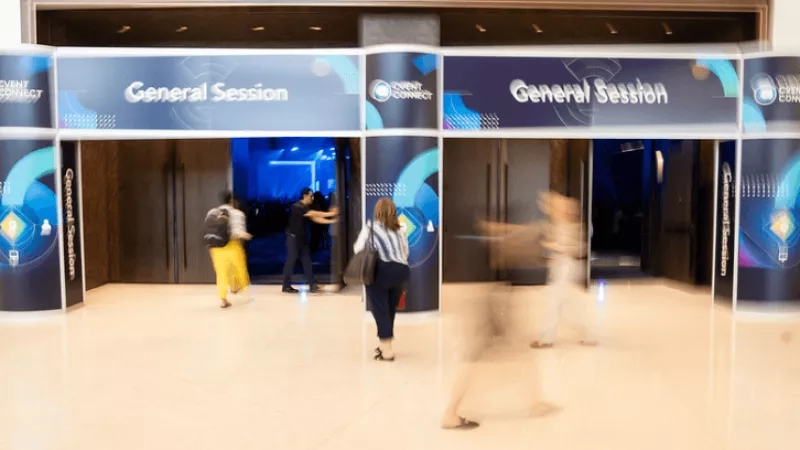

What's the main difference between a conference and a seminar? A conference is a larger, often multi-day event featuring multiple sessions, tracks, and networking opportunities, whereas a seminar is a smaller, focused session led by an expert for in-depth learning and discussion.
You've probably heard people use "seminar" and "conference" interchangeably, as if they're basically the same thing. They're not.
Both bring people into a room to learn, talk, and leave having gained knowledge and insight, leaving them smarter than they were when they arrived. Yet the way they get there (the scale, flow, logistics, and technology) differs in ways that matter when you’re on the hook for event planning.
This guide compares seminars and conferences, examining how each format functions, identifying key differences, and outlining the essential tools to select behind the scenes to ensure your event runs smoothly.
What’s a conference?
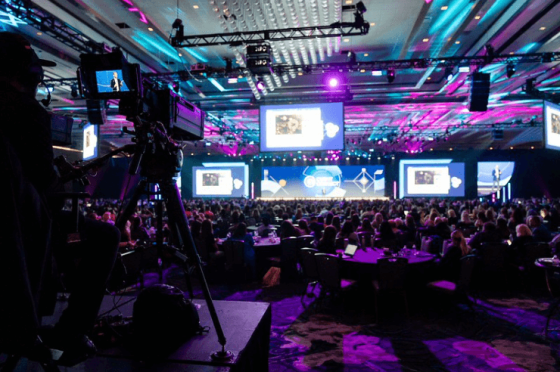
A conference represents the large-scale end of event planning. These multi-day gatherings invite hundreds or even thousands of professionals from across an industry. You'll find keynote presentations in grand ballrooms, concurrent breakout sessions in smaller meeting rooms, panel discussions with industry leaders, networking receptions, and exhibition halls filled with vendors and sponsors.
Consider conferences like Cvent CONNECT, Adobe Summit, or Dreamforce. These take months of planning and coordination. They require venues capable of hosting multiple simultaneous sessions, AV teams managing different stages, catering services that can serve large crowds, and wayfinding systems to keep attendees moving smoothly between sessions. This coordination with multiple vendors, managing stakeholder expectations, and creating an engaging experience makes the time and cost attendees invest feel worthwhile.
What makes conferences particularly valuable is their ability to create unexpected connections. Attendees choose their own path through the event, selecting sessions that match their interests, discovering new perspectives in panel discussions, and forming relationships during coffee breaks and evening receptions.
The scale allows for diversity; you'll encounter people from different companies, regions, and specializations, all contributing to a broader industry conversation. The complexity behind these events is substantial. And success requires not just flawless execution on event day, but months of strategic planning beforehand.
What’s a seminar?
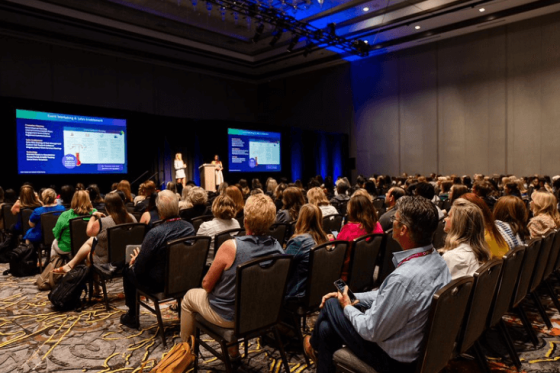
A seminar narrows the aperture. It’s smaller (often 15 to 50 participants), sitting in one room with a single topic and a clear learning goal. The setup feels closer to a classroom than a convention center: seating that encourages discussion, a facilitator who guides the group through a sequence, and time set aside for questions or exercises.
For planners, these micro events are lighter in terms of logistics but still require attention. You’re not orchestrating five tracks across three floors; you’re making sure essentials are right. Can everyone hear at the back, and see? Is the room arranged to invite participation instead of silence? Are materials ready? Is the pace realistic? When those basics are in place, people leave with ideas they can use immediately.
Seminars also suit teams that want to repeat knowledge-sharing throughout the year. You can run the same session quarterly, tweak based on feedback, and build an internal cadence without the resource load of a full conference.
Seminars and conferences at a glance
Sometimes it helps to see the fundamentals side by side. The point isn’t to declare a winner; it’s to make the trade-offs visible so you can match format to intent.
| Feature | Seminar | Conference |
| Size | Small groups, commonly under 50 participants | Large gatherings, often hundreds or thousands |
| Focus | Single subject, in-depth learning | Multiple topics, broad industry or professional conference themes |
| Format | One main presenter with participant dialogue | Keynotes, panels, breakouts, and networking sessions |
| Duration | A few hours to one day | Multi-day, typically planned annually |
| Venue Needs | One room set up for discussion and AV | Multiple rooms, staging, AV teams, and vendor space |
Matching technology to scale
Tools rarely get the spotlight, but they shape the experience and how calmly a team can execute. What works for a focused seminar may feel underpowered at a 2,000-person conference. The reverse is also true: a complete enterprise platform can be overkill when all you need is a clean registration flow and a projector that turns on.
For small, repeatable events: Cvent Essentials
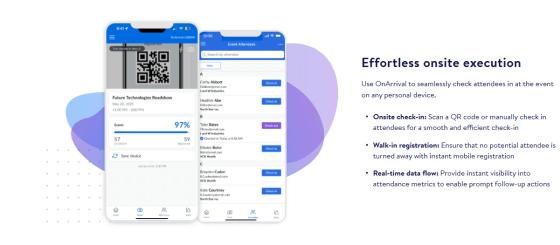
For micro events, pop-up events, or seminar-style programs, you want speed, consistency, and minimal overhead. Cvent Essentials is designed for that use case. You can set up pre-approved, on-brand templates, open registration without manual back-and-forth, and capture feedback immediately after the session.
- Quickly clone past events to save setup time for recurring seminars
- Allow self-service registration links for attendees without manual intervention
- Gather feedback instantly through built-in surveys that tie back to attendee profiles
- Give small teams visibility into attendance trends without heavy reporting setups
For large-scale programs: Conference management software
Conferences generally require the range that event management software provides: multi-track agendas, speaker and sponsor portals, exhibitor management, complex scheduling, mobile apps for attendees, and integrations that roll data into your CRM and marketing tools. The goal is to make conference management work since content can change at the last minute, a sponsor may want to update collateral, and capacity across rooms needs constant monitoring.
- Build registration pages or websites and use an event marketing tool to promote your event
- Crowdsource content with an efficient Call for Papers process.
- Create and publish complex agendas with parallel tracks and last-minute changes
- Deliver detailed ROI reports to stakeholders with integration into CRM and marketing systems
Key differences between a conference and a seminar
Below are the differences planners cite most when deciding which format to run. The headings are familiar; the nuance lies in where planning decisions tend to fall.
1) Audience size and composition
Conferences attract a larger crowd by design. With more people come variety: job titles ranging from junior to C-level, a diverse geographic mix, and a spectrum of interests. That diversity is a strength for serendipity and networking, and it can complicate programming because you’re balancing content for newcomers and veterans.
Seminars are deliberately selective: smaller groups with a shared need. The intimacy makes it easier to ask questions, run exercises, and adapt on the fly. It also means you’ll want to be thoughtful about who gets invited so the discussions stay on track.
2) Event objectives
A conference rarely serves a single objective. Sponsors want visibility, speakers want a platform, attendees seek both learning and connections, and organizers often time product launches or research announcements to coincide with the week. With seminars, the goal is typically to deepen understanding of a single subject or teach a specific skill set, providing clear takeaways. Training, professional development, and small-group knowledge transfer are common use cases.
3) Structure and format
Conferences run on layers. A morning keynote sets the tone, parallel breakouts carry the day, and an evening reception provides an opportunity for informal exchange. It’s a choose-your-own-adventure design that increases choice and logistical complexity in equal measure.
Seminars are linear by comparison. One facilitator guides the room through a plan that includes a warm-up, instruction, practice, discussion, and wrap-up. You keep the group together, and you leave more room for questions without the distraction of competing sessions.
4) Planning complexity
With a conference, the timeline stretches. You may start venue negotiations approximately a year in advance, secure room blocks, assemble a program committee, and establish workstreams for content, operations, sponsorship, and marketing. Risk management becomes part of the job: backup speakers, overflow rooms, session recording permissions, and accessibility considerations.
Seminars can be organized in a few weeks. You lock the room, confirm the facilitator, set the cap, and ensure the AV is stable. The shorter horizon and lower risk profile make repetition easier throughout the year, which is why many organizations prefer seminars for internal enablement and customer education.
5) Budget and resources
Costs diverge quickly. Conferences require large venues, production crews, sophisticated staging, clear signage, and staff to guide hundreds of attendees smoothly through registration and navigation. Ticket sales and sponsors help cover costs, but success is measured by more than headcount, including brand lift, partner outcomes, and community health counts as well.
Seminars run lean. You’re covering facilitator fees, room hire, basic catering, and materials, and not much else. The trade-off is reach; you’re optimizing for depth and quality of interaction rather than broad visibility.
6) Technology requirements
Conferences often require enterprise-grade stacks, including mobile event apps, session scanning, room capacity monitoring, speaker portals, live streaming, and analytics that track engagement. Seminars call for lighter tools: a dependable presentation setup, an easy registration flow, and a simple feedback loop.
The decision to scale up or down on tech should follow the outcomes you’re targeting. If you need session-level insights and sponsor proof points, go bigger. If you primarily care that attendees learned something they can apply next week, a lighter stack is usually enough.
7) Sponsorship and revenue
Conferences thrive on multiple revenue streams (sponsors, exhibitors, or ticket tiers), and those stakeholders shape the program. Sponsor activations and partner sessions are integrated into the agenda. Seminars typically avoid that layer altogether. They’re, on many occasions, funded by the host organization, sometimes with a modest attendance fee, and they rarely involve exhibitor management.
8) Measurement and reporting
Another difference shows up after the lights go out. Conference teams compile engagement metrics across sessions, scan data at the doors, track app interactions, monitor sponsor leads, and analyze post-event surveys. The reporting typically feeds directly into a CRM and marketing automation system, allowing sales to follow up.
Seminars focus on whether participants actually learned something useful: Was the content relevant to their work? Would they tell a colleague to attend? What should be different next time? You're working with fewer responses than you'd get from a conference, but the feedback tends to be more specific and gives you clearer direction for improvement.

Practical planning tips
Regardless of the format you choose, a few habits make everything easier:
- Design for flow: Map how people move between doors, bathrooms, food, and sessions. Chokepoints create frustration.
- Provide buffers: Sessions that end at 09:00 and start at 10:00 leave no time for transition. A five-minute break in between buys sanity.
- Test the AV early: A 10-minute sound check can save an entire morning.
- Write the brief in outcomes: “Attendees should be able to do X by the end” clarifies every planning decision.
- Close the loop: Send the deck or key takeaways quickly. People engage more when you honor their time.
Choosing the right format
There isn’t a universal answer. Instead, start with intent and constraints:
If you want frequent upskilling with lean teams and predictable costs, a seminar is a good fit. If the goal is to increase reach, brand presence, or convening an industry, a conference is more likely to deliver. If your stakeholders need sponsor ROI, exhibitor value, or cross-functional alignment, plan for conference complexity. If your executive sponsor primarily wants a skilled and confident team by next quarter, a seminar series will likely be the best option.
Think in arcs, not one-offs. Many organizations run a flagship conference annually and layer seminars throughout the year to deepen specific skills. The two formats can reinforce each other when you’re deliberate about the role each plays.
Frequently asked questions
1. What is the difference between a seminar room and a conference room?
A seminar room is built for conversation. Around 20–50 seats, U-shape or small rounds, sightlines that let people read faces, and AV that’s simple but reliable: a screen, two mics, and decent acoustics. Chairs can move; the facilitator can too.
Conference rooms are designed to accommodate a large number of people efficiently. You’ll see a stage, rigging points, stronger lighting, multiple inputs, and seating blocks that scale without killing exits or aisles. Wayfinding, power drops, and load-in routes suddenly matter. Capacity is only part of it; the real question is what kind of interaction you want to make possible.
2. What is the purpose of a conference vs. a seminar?
Seminars aim for depth. One topic, a focused group, and a clear “you can do this now” outcome. The win is applied learning.
Conferences aim for reach and alignment. Many topics, many voices, and space for chance meetings that turn into work later. The win is visibility, new connections, and a shared picture of what’s next. Both teach, just in different ways and on different timelines.
3. How do you choose the right event type?
Start with the outcome you owe. If leaders expect behavior change in the next few weeks, such as acquiring new skills or adopting a process that people will actually use, consider running a seminar. If they want market attention, partner momentum, or a place to launch, plan a conference.
Then sanity-check resources. Conferences require months, larger budgets, and more personnel on deck. Seminars can be set up in weeks and repeated without burning the team. When in doubt, pilot a seminar first; graduate to a conference once the story and demand are proven.
4. What’s a workshop?
A workshop is a hands-on session where participants engage in activities such as exercises, problem-solving, or practice. It can stand alone or be incorporated into a seminar or conference program. For planning, the key is capacity: space for small-group work, materials that don’t bottleneck, and time to give feedback without rushing.
5. What’s a symposium?
A symposium is typically and academic event organized around a single theme. Multiple experts present and discuss their work with peers. It’s usually smaller than a full conference and more formal than a seminar. Think structured sessions, clear discussant roles, and a focus on research contributions rather than broad programming.


