
Event Planning for Accessibility: Tips and Best Practices


Accessibility and inclusion have always been core values, but they are also vital for business success.
Accessible events signal that your organization values all people. This builds brand trust, strengthens reputation, and demonstrates social responsibility, which matters to attendees, sponsors, and partners alike.
Whether you stage small meetings or large conferences, careful consideration of accessibility, both online and in-person, will ensure that all your attendees have a positive and inclusive experience.
Besides, the regulatory landscape is moving in only one direction, towards stricter inclusion requirements such as WCAG 3.0 and the new European Accessibility Act.Prioritizing accessibility now will help you stay ahead of legal and market shifts.
Read on to learn practical tips and best practices you can implement to ensure accessibility is at the heart of your event planning - before, during and after your event.
Why event accessibility matters
Some 16% of people worldwide have a disability according to the World Health Organization (WHO).
Across Europe, the average is higher. In 2023, 27% of the EU population (or 101 million people) over the age of 16 had some form of disability. In the UK, it’s almost 22% of the population (or 14.1 million people). In the US, it’s over 28% (or one in four adults).
The WHO says these numbers are increasing, due in part to ageing populations and a rise in neurodivergency diagnoses.
If your events aren’t accessible, you’re likely missing the chance to engage a much wider audience, including the spending power of individuals with disabilities (known as the purple pound), entire households, or even friendship groups in which at least one member has additional needs.
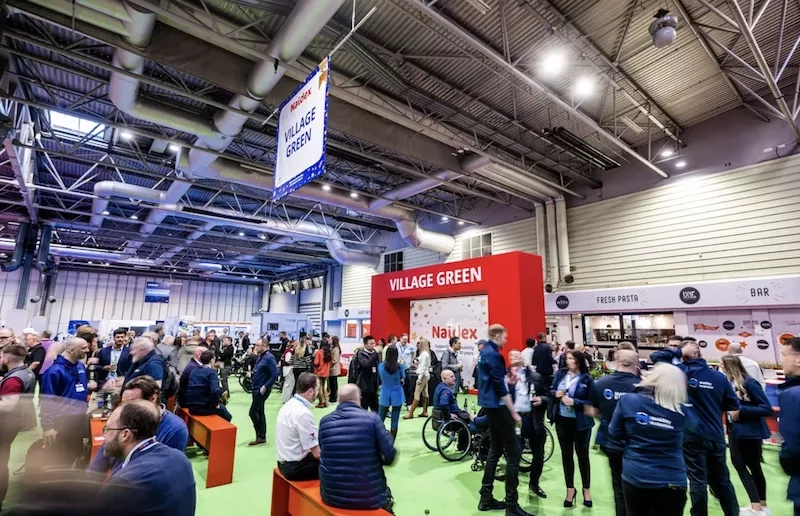
Put simply, creating an accessible event means designing it for everyone, regardless of disability, from the moment someone visits your website to when they leave your venue.
You’re also legally obligated to make your events fully accessible. In the UK, disability is one of nine ‘protected characteristics’ defined by the 2010 Equality Act, making it illegal for any business to discriminate against persons with disabilities (or PWDs). In the US, there is the Americans with Disabilities Act (ADA), which protects people with disabilities from discrimination.
Introducing the European Accessibility Act
If you operate within the European Union, attract EU-based attendees to your events, employ more than 10 people and have a turnover greater than €2 million, you will need to comply with the European Accessibility Act (EAA), which came into force on 28 June 2025.
The legislation applies to any business offering event websites, ticket sales, apps or other digital event services to residents of EU countries, regardless of where your business is based. Any new online product must comply straight away. For existing products and services, organisations have until 28 June 2030 to become fully compliant.
The EAA states that websites and mobile apps must comply with the current version of the Web Content Accessibility Guidelines(WCAG 2.2).
These WCAG guidelines are organized into four principles (POUR):
- Perceivable: Information should be presented in ways that all users can access, such as providing alternative text for images.
- Operable: Interfaces should be easy to navigate when using a variety of devices and assistive technologies.
- Understandable: Content should be clear and predictable.
- Robust: Websites and digital tools should work with a wide range of assistive technologies.
💡 Want to know more? Read How the European Accessibility Act Will Impact Your Events
Understanding accessibility needs
Accessibility needs can be divided into physical and non-visible disabilities. Physical disabilities refer to impairments affecting a person’s mobility, vision, or hearing, while non-visible disabilities refer to those that aren’t immediately apparent, such as neurodivergent states and mental health conditions.
Here are some examples to consider when planning for your event.
Mobility impairments
Visitors with restricted movement may use wheelchairs or mobility scooters. For them to get around your event comfortably and safely, accessibility solutions like ramps, lifts, wider aisles and allocated parking spaces should be provided.
Visual impairments
For the visually impaired, you should consider accessible solutions such as braille signage and audio description. Large print options also provide an additional layer of support so that everyone has equal access to information.
Hearing impairments
For those visitors who may struggle to hear and understand on-stage presentations, you’ll need to consider using sign language interpreters, captioning services, and audio amplification devices.
Cognitive disabilities
Visitors with cognitive disabilities may face difficulty understanding or interpreting information and sensory stimuli.
To make your content and design accessible for them, you should keep text-based language (e.g. signage, flyers and agendas) simple, and provide visual cues and sensory-friendly spaces.
Something as commonplace as color blindness can have a significant impact on a person’s decision whether to go to an event. So remember to keep visual design elements simple and never color-code your event features or agenda.
Neurodivergent conditions
Autism, ADHD, dyslexia and other neurodivergent conditions have a significant impact on a person’s ability to engage with traditional event design, such as crowded, noisy theatres or interactive networking.
To cater for people with neurodivergence, you should provide sensory-friendly environments, quiet areas of respite when needed, and prior notice of changes to schedules or routines.
Mental health conditions
Mental health conditions, like depression, PTSD, and anxiety, can greatly impact a person’s emotional or psychological state. To support individuals with mental health difficulties during your event, you could offer accessible mental health resources and allow emotional support animals.
5 steps to planning accessible events
“Start planning your events from the beginning with accessibility in mind. You need to build in accessibility from the get-go. If you make your environments and products accessible and show that you are committed, it opens the door to more attendees, and word travels quickly. For us, it has been the marketing tool that you could use.”
Julia Santiago, Managing Director at Center on Disabilities (CSUN), speaking on Hot Take: What’s New and Trending in the World of Accessibility
Let’s now look at the various stages of event design to determine where accessible planning can come into play.
Registration
The registration page on your event website is the first opportunity to discover what additional needs your attendees may have. So, make sure the event platform used to design and host your site is accessible to all, and your registration asks the right questions with checkboxes.
These could include questions such as:
- Do you require captions?
- Do you require a sign language interpreter?
- Will you be accompanied by a service animal or a Personal Care Assistant (PCA)?
- Do you require wheelchair access?
By asking more detailed questions at the registration stage or by contacting anyone who has requested certain requirements, you’ll not only create a positive first impression of your event but also give yourself more planning time to incorporate additional accessible elements.
On-site experience
To improve the on-site experience, put yourself in the shoes of a disabled person and consider their entire attendee journey.
For example, to accommodate visitors using wheelchairs, consider widening the aisles or adding some lower poseur tables. Don’t forget to assign a dedicated wheelchair area in your conference hall or break-out rooms.
Other visitors with physical impairments may be accompanied by a care assistant, who is there to assist the attendee. You’ll need to ensure that:
- They’re given free entry
- They’re always able to sit next to the person they’re looking after
- You’ve factored them into catering numbers and room capacities
The same goes for service animals, such as a guide dog for a visually impaired attendee. You’ll need to ensure that:
- There’s a reserved space for them at the end of an aisle so that their dog can remain alongside
- You provide facilities such as drinking water and somewhere for a dog to go to the toilet
- Staff are made aware not to distract or fuss over a service animal
Quiet rooms and wellness spaces for anybody to take a break from the hustle and bustle of the show floor are a great addition to your event.
3. Virtual and hybrid events
Making your events accessible also extends to virtual and hybrid formats. Here are some tips:
- Ensure that online presentations meet certain color contrast ratios so that they’re accessible for the visually impaired or people with color blindness.
- Not everyone attending virtually will be able to see or interpret the presentation slides. So ask presenters to explain visual content.
- Attendees who have a hearing impairment may require online presentations to show more detail, offer live captions or have someone in the chat who can answer their questions in real-time.
4. Communication and information accessibility
Including accessibility information in the design of your pre-event communications is key.
- For instance, add a simple line at the base of posters or flyers written in black text on a light background that reads ‘Our theater is wheelchair accessible’ or ‘A sign language interpreter will be available.’
- Check if presentation fonts are large enough to be read from the back row of seats, images are of high quality, and messaging is clear.
- If you’re using a sign language interpreter, make sure that enough seats for visually impaired delegates are reserved in the front row. Having the correct lighting and background also ensures that the interpreter’s face and hands can be seen from the stage.
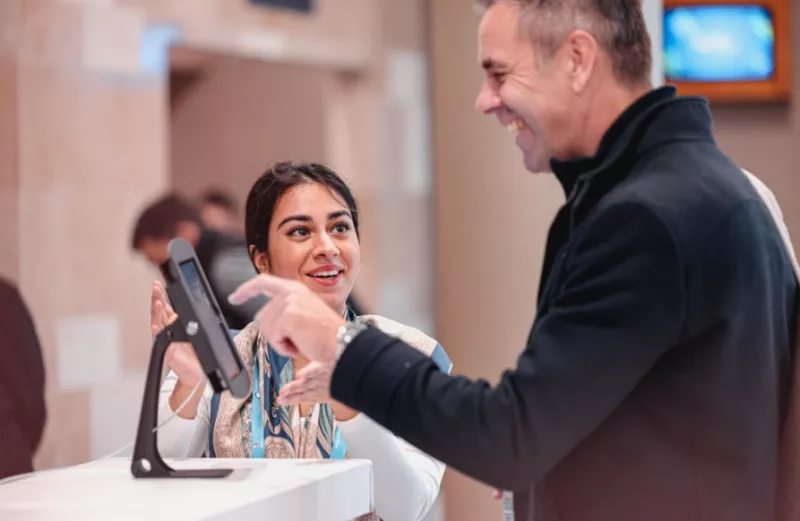
- If your event attracts a lot of attendees with additional needs, consider placing an “accessibility desk” by the entrance. Inform registered attendees that they may seek additional help from the desk attendant if they encounter any problems.
5. Staff training and awareness
Create a culture of inclusion by ensuring that everyone involved in the planning and execution of your event is given the same level of training.
For example, when an attendee arrives at your onsite registration desk, train staff to identify when a person needs additional time to respond or help with information, directions or the printing of their badge.
Your registration staff need to know the correct way to interact with a deaf attendee or a visually impaired person who arrives with a service animal, for example (e.g. don’t pet or fuss over the dog, don’t grab the attendee’s arm when giving directions).
Create a culture of inclusion by ensuring that everyone involved in the planning and execution of your event is given the same level of training.
Finding accessible venues and facilities
There are many ways your choice of venue can impact how easily different people can get involved in your event - from being able to move freely around the building, to feeling safe in an environment that won’t trigger a seizure or make them feel anxious or at risk.
When sourcing venues, consider both the accessibility within the venue and how your attendees may travel to your event.
Here are 10 venue-specific questions to reflect on:
- Can you reserve parking spaces for people who most need them?
- Is there ample space for mobility aids?
- Does the venue have an alternative accessible entrance? If so, will it remain unlocked during your event?
- Is the approach to the venue solid ground or will you need a temporary pathway? Soft mud and loose gravel can be problematic for many.
- Does the venue have step-free access throughout? Can lifts be accessed without having to ask for a key? Are the ramps of a gentle gradient (1:20), and do they have handrails on either side?
- What signage does the venue offer? Is the signage large and in high contrast? Embossed or in Braille? If not, can you put up your signs?
- Is there a loop system in your meeting room for hearing aid users? If so, is it working? Does anyone know how to switch it on or alter the volume? Will that person be there when you hold your event in the building?
- Does the venue offer ‘adapted’ toilets or gender-neutral toilets?
- Are there visual (flashing) fire alarms in private spaces like toilets, to alert deaf or hard-of-hearing delegates of a fire? If not, consider what you need to do in case of a fire alarm.
- 10. Is there a space available to use as a multi-faith prayer room?
💡Delve deeper with our Venue Accessibility Checklist: 17 Questions to Ask Your Venue
Using event and assistive technology
Use technology to improve the accessibility of your events. Here are two ways technology can keep you on the right track:
Accessible tools
Screen readers will convert text and other elements to speech or braille output for attendees with vision impairments or cognitive disorders.
If a site works with assistive technology, it mostly depends on the event platform, so please be sure to choose one that has been tested and verified to work with assistive technology, like screen readers.
To verify that an event platform meets accessibility standards, such as working with assistive technology, request a VPAT (Voluntary Product Accessibility Template) from the vendor. Cvent has VPATs for products such as our Event Registration, Attendee Hub, and others.
Ensure your event platform is compatible with third-party tools that allow audio content to be consumed in various languages for your global audiences.
Accessible design
When designing event or registration websites, use a platform like Cvent’s Attendee Hub, which lets you know when color combinations don’t meet accessibility guidelines to help you support attendees who may have visual impairments or be color vision deficient.
Add alternative text to images and make it easier for those using assistive technologies, such as screen readers and braille displays, to navigate your event website and registration process.
💡From screen readers to sign language interpretation, there’s a wealth of tools that can help ensure that all attendees have the same opportunity to participate and engage. Learn more about Cvent’s accessibility features.
Accessible events checklist
Before your event
- Invest the time and effort to find out what PWDs may need from you or your chosen venue.
- Everyone’s onsite experience should be equal so assess the content and layout of your event for accessibility, and ensure all staff are trained to provide customer support for all types of disabilities.
- Keep accessibility in mind when designing communications, online polls and feedback forms.
- Use technology to improve the accessibility of your website and virtual event elements, as well as the onsite experience for all.
During your event
- Work with your chosen venue to ensure that additional measures can be added and specific requests are supported.
After your event
- When your event is over, don’t forget to ask for, and act on, feedback from those attendees who had requested additional needs.
- Always acknowledge feedback and think carefully about what you can do differently to improve accessibility next time.
FAQs: Making events more accessible
1. What does accessibility mean in the context of events?
Accessibility refers to designing and delivering events so that everyone, regardless of ability, can participate fully. This includes physical access, communication access, digital access (like websites and apps), and inclusive content.
2. Why should accessibility be a priority for events?
Accessible events are more inclusive, reach wider audiences, and demonstrate social responsibility. They also reduce legal risk and often improve the overall experience for all attendees, not just those with disabilities.
3. How does the European Accessibility Act (EAA) impact event organizers?
The EAA, in effect from June 2025, requires that many products and services—especially digital ones like event platforms, ticketing, and websites—meet minimum accessibility standards across EU member states. Non-compliance could lead to legal and financial penalties.
4. Which parts of the event experience are covered by the EAA?
Under the EAA, areas like online ticket sales, mobile event apps, information terminals, and self-service kiosks must be accessible to people with disabilities. If your event uses digital systems in these areas, they need to comply.
5. Do the EAA rules apply to in-person events?
Yes, indirectly. While the EAA focuses on digital accessibility, many in-person event components (like wayfinding, registration kiosks, and information access) rely on digital tools that fall under the EAA. So it’s important to ensure that both digital and physical aspects align with accessibility requirements.
6. What other global legislation is there when it comes to accessibility in events?
In the United States, the Americans with Disabilities Act (ADA) requires that venues, websites, and event experiences be accessible to people with disabilities, and lawsuits for non-compliance have become increasingly common.
In Canada, the Accessible Canada Act (ACA) and the Accessibility for Ontarians with Disabilities Act (AODA) set out similar expectations, requiring proactive removal of barriers in public spaces and digital communications.
In the UK, disability is one of nine ‘protected characteristics’ defined by the2010EqualityAct
For virtual and hybrid events, many of these laws reference Web Content Accessibility Guidelines (WCAG) — the international standard for digital accessibility, which continues to evolve (with WCAG 3.0 on the horizon).
7. What are some quick wins for making a venue more accessible?
- Ensure step-free access to all main areas
- Provide accessible toilets with hoists
- Use clear signage and high-contrast visuals
- Offer reserved seating for attendees with mobility needs
- Train staff in disability awareness
8. How can I make my event communications more accessible?
Use plain language, provide captions or transcripts for video content, and ensure that websites and emails are screen-reader compatible. Use alt text for images and avoid relying on color alone to convey meaning.
9. What support can I offer to neurodivergent or autistic attendees?
Provide quiet zones, publish sensory-friendly schedules, and allow flexible arrival times. Familiarisation videos about the venue layout and what to expect can also be helpful.
10. Are there tools to test digital accessibility for events?
Yes. Tools like WAVE and Google Lighthouse can audit websites for WCAG compliance. You can also engage an accessibility consultant or tester with lived experience of disability for deeper insights.
11. What role can attendees play in helping events become more accessible?
Invite feedback before, during, and after the event. Include an accessibility section on your registration form where attendees can note specific requirements, and make sure those needs are addressed in advance.
Next steps
Accessibility in event planning is a must. With over a billion people, or 16% of the world’s population, experiencing some form of disability, making your events more accessible and inclusive is both a moral and legal obligation.
For a deeper understanding of accessibility and what it means for your event planning, check out the wealth of information available in our Accessibility Resource Hub.

Mike Fletcher
Mike has been writing about the meetings and events industry for almost 20 years as a former editor at Haymarket Media Group, and then as a freelance writer and editor.
He currently runs his own content agency, Slippy Media, catering for a wide-range of client requirements, including social strategy, long-form, event photography, event videography, reports, blogs and ghost-written material.
More Reading
What is Field Marketing? 8 Strategies for Success


Field marketing, or direct marketing, is a strategy that involves promoting products or services to consumers directly. Examples of popular field marketing events include trade shows, conferences, roadshows, and conventions.
When it comes to promoting products and services, there is a big focus on connecting with consumers digitally. Animated ads, social media posts, and promotional emails reach millions of people every day. While certainly effective and convenient for brands, such broad strokes make the personal touch provided by field marketing more appreciated than ever.
Ultimately, consumers and businesses like being able to see products in person and getting their questions answered directly. They like being able to look someone in the eye and shake their hand. Enter field marketing.
In December 2024, a Meetings Industry PULSE Report from Northstar Meetings Group and Cvent found that 42% of planners feel more optimistic about meetings and events than they did six months ago. If you are among that group, you feel energized and ready to get out there to help your company and others share their goods and services with other businesses and consumers.
The in-person sharing of these products and services is exactly what field marketing does. For event planners in charge of managing field marketing events, field marketing software can help to make the process smooth and efficient. Read on to learn more about field marketing and how you can plan successful field marketing events.
What is field marketing?
Field marketing, also known as direct marketing, specifically covers the process of promoting products or services face-to-face. While most commonly done “out in the field,” field marketing also refers to live meetings, webinars, or other events that are conducted virtually but where a field marketer can still interact directly with online participants.
Field marketing is a distinct sub-category under the general marketing umbrella, and it differs from other types of marketing in its approaches and specific goals.

What is the difference between corporate marketing and field marketing?
Corporate marketing is usually about marketing a brand or company. The focus is on creating a strong and positive corporate image, satisfying customers, and getting them excited for the company’s products and services. It is also more commonly done through more traditional, expansive advertising–TV, social media, print–than through direct interactions with customers.
Field marketing can help to create the same positive regard for a brand, but that is often an indirect (albeit still intentional) side effect that comes from the direct promotion of specific products and services. This kind of marketing is focused on individual interactions and one-on-one connections rather than wide-ranging advertising.
What is the difference between product marketing and field marketing?
Product marketing is a complex process of successfully bringing products to market. Before a product even exists, a product marketing team can become involved in establishing the demand for a product and even its initial design. This team will also determine overall messaging and work with sales, customer service, and other teams for consistency.
Field marketing would be considered just one part of the larger product marketing strategy. This team oversees bringing the product or service directly to the public.
What is field marketing for B2B versus B2C?
Successful B2B field marketing helps your brand connect with other businesses, and it hopefully establishes long-lasting and mutually beneficial relationships. Having all these businesses come together at the same time during a convention or other event makes arranging conversations much easier and infinitely more convenient.
Field marketing for B2C also helps to create long-lived connections, but between businesses and end consumers. For event planners, this can mean establishing annual conventions that honor particularly popular lines of products or niche entertainment with passionate built-in fan bases that are ready and willing to get more of what they love. Comics conventions and sci-fi conventions are just a couple of examples.
Whether you’re a field marketer focusing on B2B or B2C, specially conceived trade shows and conventions help you connect with businesses and other customers that come specifically for what you’re trying to promote.
What does a field marketer do?
Field marketers seek to make direct connections between their brand and potential customers and partners. That may sound straightforward on its face, but it requires much more than just showing up at a trade show or other field marketing event to be successful.

If done well, you can:
Improve brand perception
Whether representing a small brand in need of recognition or a large brand that wants to bring a more personal touch to their marketing efforts, a field marketing expert can act as the friendly, knowledgeable face of the brand at events.
Change the minds of cynical customers
Many consumers trust the input of their friends and individual social media influencers more than they do brands, which can sometimes be viewed as faceless and untouchable. Field marketers can help to build up the trust of cynical customers by answering questions and demonstrating products or services to them directly.
Help with sales efforts
Field marketers straddle marketing and sales departments by both promoting and, when needed, directly selling a brand’s products or services. In their customer outreach efforts, field marketers can also compile lists of ready contacts that the sales team can use to pursue leads after events and the initial field marketing conversations.
Build and support customer relationships
Field marketing does not necessarily end when an event does. After establishing a connection, some customers will feel most comfortable continuing their business relationship with that same person. So, a field marketer can remain the point of contact throughout, bridging the gap between a customer and the sales or customer service teams.
Provide real-time ROI numbers
When at an event, you can collect direct, real-time data about customer demographics, traffic, product or service feedback, input about other marketing initiatives, and so forth. This kind of event data can be easily collected and analyzed using field marketing software and turned into actionable information. For example:
- Say engagement numbers seem weak. You can tweak presentations on the spot to gain more traction with passers-by.
- If customer feedback implies you need more information than what you have, you can decide to update collateral.
- Lead generation numbers are staying low, so you might think about switching venues in the future.
Interact directly with your target audience
It’s much easier to generate qualified leads when field marketing happens in front of an already receptive audience. That’s why it’s important to plan and attend events that will draw in customers in need of what your brand offers. Before the event, verify that the event marketing is indeed focusing enough on your target audience.
8 Field marketing strategies for success

Field marketing requires quite a bit of planning to make the execution successful. Each of the following steps helps to make the most of every field marketing effort you make:
1. Find your target audience
Basically, who needs your products or services? Research customer demographics for similar products or services, and then find or plan events that will draw the same kinds of demographics in an audience. Make sure your audience is aware of upcoming events by sending out targeted communications and make them even more compelled to attend with special event-only promotions, exclusive demonstrations, and other incentives.
2. Have tailored collateral
And have it available for every stage of a customer’s journey. Fact sheets, case studies, and swag show your brand’s thoughtfulness and expertise. They also answer customers’ questions and help to keep the brand front of mind during a customer’s decision-making process.
And who doesn’t like getting pens, keychains, and other freebies? They make a potential customer feel like they’ve already benefitted and gotten something good from your brand from the very beginning.
3. Create smart campaigns
With customer data and collateral in hand, you can plan your field marketing strategy and campaigns effectively and efficiently. See what current event trends tell you about the best venues and types of events for your specific marketing initiatives.
Build cohesive, eye-catching displays for your field marketing events. Create a basic presentation script that hits on all important talking points while remaining adaptable to the audience you have.
4. Keep an eye on the competition
Whether a competitor is doing something wrong or right with their marketing efforts, it is to your benefit to know about it either way. Determine what seems to be working for them or not and keep that information in mind when creating your campaigns.
5. Organize things with a content management system
A content management system (CMS) is a centralized hub for images, ads, written content, and other assets for various campaigns. A shared CMS helps field marketers and other teams coordinate their efforts and track successes. Pulling from a single content source not only ensures consistency but convenience; no time is wasted trying to locate an asset when you already know right where it is.
6. Don’t forget digital devices
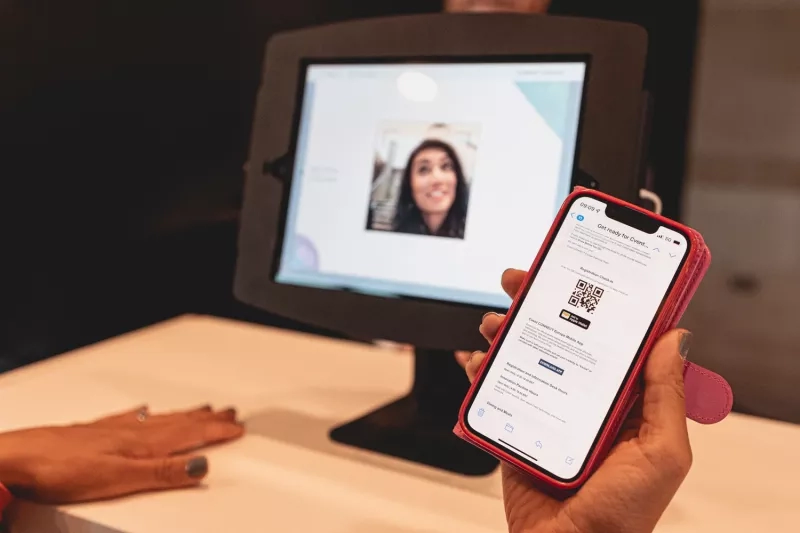
Printed collateral that you can put in a customer’s hand is great, but you can give yourself an even greater edge with digital offerings. When out and about at events, potential customers will have smartphones and tablets in hand, and they are ready to use them.
Links and QR codes to dedicated websites, videos, and other digital content modernizes your field marketing campaign and makes good use of tools your customers already have.
7. Measure ROI
As mentioned above, in-person events are great ways to aggregate information in real-time about customers and what’s working for them. This data not only supports further field marketing efforts but other sales and marketing initiatives as well. Specialized field marketing software can streamline this process and help you aggregate just the data points you and your team need to determine your ROI.
8. Perform continual outreach
Successful field marketers will quickly and consistently follow up with any leads or other contacts they make at an event. Build on the impression you’ve made at an event and stay in communication to continue that momentum.
Send out “great to meet you” emails, introductions to members of your sales team, promotional offers, and your ongoing availability to provide more information if needed.
Types of field marketing events
Depending on your identified audience, your budget and team members, you have several options to engage with an audience and build relationships.
Some of the most popular options are:
Trade shows
Trade shows tailored to specific industries ensure field marketers can more easily target an interested audience. Automated trade show solutions help you to stay focused on demonstrating your products and connecting with customers while still gathering data and maximizing your event ROI.
Conferences
Especially for B2B field marketers, conferences are a great way to inform others in the same or similar industry about complementary products or services. High-quality conference management will help to ensure lots of well-timed conversations and qualified leads.
Conventions
The ability to showcase new products and product knowledge can give your products and brand added credibility among complementary businesses, as well as interested attendees from the public. With a typically less formal structure than conferences, conventions may give field marketers windows of free time that can be used as opportunities for networking with peers and other presenters.

Roadshows
If customers can’t come to you, you can always come to the customers. With the roadshow approach, you and your field marketing team travels and sets up a product or service demonstration at a business’ location for a set period for their employees and/or customers.
Here, the audience may be smaller than a conference or trade show. But the request to have you come out suggests that the audience will be qualified and interested.
Face-to-face meetings
In-person or virtual meetings with decision makers are a great way for field marketers to follow up with leads from previous events. With undivided attention and typically smaller audiences, these meetings offer a truly personalized touch.
Webinars
If event trends can tell you anything, it’s that virtual events are popular and will only continue to become more so. With unparalleled convenience of access, a remote webinar or meeting only helps to broaden the outreach of an in-person event. It is a great follow-up option after an event, as well.
Benefits of field marketing for event planners
Event planning and field marketing cross paths in a couple of ways. First, event planners can be responsible for creating events specifically for field marketing purposes. In that instance, event planners need to understand field marketers’ basic needs when it comes to venues, presentation spaces, foot traffic, scheduling and event marketing. (Hopefully this article has helped with this understanding!)
Secondly, event planners can also be field marketers themselves. Just like any other industry, event planning can benefit from the face-to-face approach of field marketing. The best kind of field marketing for event planners? The events themselves.
You can be the face of your event, which is a product that you can show off to others interested in creating a new event or participating in an existing one in the future. Then, if your event is successful, it is a product that can sell itself with the follow-up support of a well-designed post-event report, other collateral, and good word of mouth from attendees and participants.
Whether you’re a field marketer, event planner or both, the tools are at your disposal–and the audience is out there–to make the most of your efforts and your ROI.

Hope Salvatori
Hope is a Senior Content Marketing Associate who has been with Cvent for four years. She has 10 years of experience producing content for corporations, small businesses, associations, nonprofits, and universities. As a content professional, she has created content for a wide range of industries, including meetings and events, government and defense, education, health, and more.
More Reading
Why Cvent

24/7 support from our ~1,700 customer success team

Over 8 million events managed

Trusted by 70% of Fortune 500 companies

Our security and privacy teams protect your data
Revenue, Retention, and Results: The Power of Event-Led Growth with Splash's Camille Arnold


Episode description
Just because you’re hosting events doesn’t mean you’re practicing event-led growth.
In part one of our event-led growth (ELG) series, Camille Arnold, Director of Experiential Marketing at Splash, joins Alyssa Peltier, Rachel Andrews, and Felicia Asiedu to unpack what it means to lead with an event-first strategy.
They explore how ELG goes beyond event execution. It involves business alignment, attribution, tech stack readiness, and building meaningful, long-term customer relationships. Whether you are new to the concept or looking to refine your approach, this conversation sets the stage for a smarter, more strategic way to use events as a marketing channel.
In this episode, you’ll learn:
- What ELG really looks like: Get clarity on the difference between doing events and building an event-led strategy.
- How to measure what matters: Learn the basics of attribution and how to connect event performance to revenue.
- Why small events go further: Understand the long-term impact of repeatable, relationship-driven experiences.
Things to listen for:
(00:00) Introducing Camille Arnold
(05:27) Defining event-led growth
(11:18) Being strategic with your event goals
(13:00) How customer behavior has changed over time
(15:38) Getting to know your ICP
(20:45) Why embrace an ELG strategy?
(21:50) Small events build lasting relationships
(27:08) Proving impact through attribution
Meet your hosts
Rachel Andrews,Senior Director, Global Meetings & Events
Felicia Asiedu, Director, Europe Marketing at Cvent
Alyssa Peltier, Director, Market Strategy & Insights at Cvent Consulting
Meet your guest
Camille Arnold, Director of Experiential Marketing at Splash
Camille Arnold [00:00:00]:
Spoiler alert: events can dramatically reduce a sales cycle for a company.
And also, by the way, events can be a mechanism for you to get to know your customers on a much deeper level. The companies that are using it today are growing faster. And they're seeing really incredible outcomes when it comes to customer retention and expansion that other companies that are not using event-led growth are not seeing.
Alyssa Peltier [00:00:26]:
Great events create great brands. But pulling off an event that engages, excites, and connects audiences, well, that takes a village and we're that village. My name is Alyssa.
Rachel Andrews [00:00:39]:
I'm Rachel.
Felicia Asiedu [00:00:40]:
And I'm Felicia.
Alyssa Peltier [00:00:41]:
And you are listening to Great Events. The podcast for all event enthusiasts, creators, and innovators in the world of events and marketing.
Hello, everyone. What has been going on on this wide, wide world of events? My name is Alyssa and I am joined by my fellow co-hosts, Felicia and Rachel. And we are here altogether for this week's episode of Great Events, a podcast by Cvent. Now, many of you are aware that Splash was acquired by Cvent at the end of last year. And along with that, came a really great new player on to our team and this week's very special guest, Camille Arnold. Welcome to the podcast, Camille.
Camille Arnold [00:01:23]:
Hi. Thank you so much for having me. I'm so excited to be here.
Alyssa Peltier [00:01:26]:
We are super psyched to have you on the podcast. Especially because not only are you a critical member of the Splash marketing team, but you're also a fellow host of a podcast that supports the Splash brand called Checked In With Splash. Is that right, Camille? Did I say it right?
Camille Arnold [00:01:41]:
I am, yes. Yeah, I host the Checked In Show. And so, I feel like this is super kismet that I get to be a guest on your show and blend our worlds here, since we're one team now. One team, one dream.
Alyssa Peltier [00:01:53]:
I love this. Okay. So let's give our listeners just a little bit more background about yourself, your career, how you got to the place where you are today, which is under Cvent. But obviously, by way of Splash. So let us know a little bit more about yourself.
Camille Arnold [00:02:05]:
Yeah. So I joined the Splash team in August of 2018. And it's funny, I've been asked how I found myself in the world of marketing and events. And I have tried to pivot my career a couple of times and I just always get sucked back into the world of experiential marketing and event production. And I do love it. I think you have to be a little kooky to thrive in this world.
And I am a self-proclaimed kookster. But I started my career off in the music industry and through that experience, got into event production really by connecting brands with talent that I was working with at the time. And then, for a few years, ran my own creative agency. Before everyone and their mother had their own creative agency, I ran a creative agency and people were like, "What does that even mean? What is a creative agency?" And I was like, "I work with talent and artists and brands. And I create amazing experiences through events and digital experiences as well."
And that was really fun until I burned myself out. I was pretty early on in my career and I realized I wanted to go in-house and learn from really seasoned business operators. I felt really confident in terms of creating exceptional experiences for my target audience. But what I was missing was really being able to say that I was a data-driven marketer. And so, I knew I needed to, like I said, join a team and learn from other people who were walking that walk already.
And so, I found my way to Splash in 2018 and I was in a number of different roles, right hand to the CEO at first, learned everything about the business. And then, I joined the marketing team in early 2021 in a communications manager role. And then, there was a gap. No one was really owning and driving the event strategy, as funny as that sounds for an event tech company. And I said, "Hi, it's me. I'm the solution here and I want to do this." So I created our event strategy. Really holistically partnering with other revenue leaders, developing our own event-led growth strategy. And then, the acquisition happened in late 2024.
Now, I get to be part of the Cvent ecosystem, which is so exciting. Because obviously, what you have been building with Cvent, all of the amazing customers that you have is just a really exciting ride to be on now. And to continue to grow Splash under the Cvent umbrella and have new teammates and counterparts. And it's just been an amazing experience. So that is a little bit about how I got to Splash and how I now have found myself part of the Cvent Nation.
Felicia Asiedu [00:05:04]:
I love that. I love listening to your story because you have the similar zigzag to what I often talk about in my career where it's like I did music production. And then, suddenly I was doing something else and I was a marketer. And then, I went... I love the zigzag and a lot of event professionals and marketers could probably relate to that. But what I also liked hearing you say is that you got to build that event strategy from the ground up, which I think is quite a privilege actually. And you mentioned event-led growth. A lot of people would be like, "Huh? What is that?" So what is that?
Camille Arnold [00:05:34]:
Let's talk about it. Yeah. So event-led growth is a strategic go-to-market motion where events are the primary channel for customer acquisition, retention, and expansion. And if you're newer to this term, that's cool. That's okay. Welcome. The Splash team recently conducted a survey of 1,000 US-based marketers just to learn about how they're leveraging events in their marketing strategies and what impact they're having on their business.
And the stats that we're seeing in terms of the companies using an event-led growth strategy are astonishing. So I'm just going to share a few quick ones just to drive home that this is, one, a legitimate go-to-market motion. And two, that the companies that are using it today are growing faster. They have stronger brand awareness. And reach and they're seeing really incredible outcomes when it comes to customer retention and expansion that other companies that are not using event-led growth are not seeing.
So 94% of marketers say that events help their team generate a steady flow of revenue. 79% are hitting their revenue goals every single quarter. In this market, in this economy that's freaking crazy. And three in four marketers say that events are their most effective marketing channel. So I think what I would just say is if you're new to the concept of ELG, dig in here.
If you are a marketer, a planner... Heck, even if you're not, but you play some other role for your company and you don't know if your company is practicing event-led growth today, find out why. And share these stats with the stakeholders at your company to just make a case for why you should be investing more in events as a real marketing channel.
Alyssa Peltier [00:07:40]:
My previous job was for a smaller, family-owned and operated company. We did a lot of events and by doing a lot of events, I mean, I did pop-up stands at trade shows. We did a lot of community activation events. We did a customer golf appreciation event. A lot of just grassroots efforts. I wasn't necessarily quantifying that impact. So just because I did it, does that mean I was practicing ELG or event-led growth?
Camille Arnold [00:08:07]:
It's a really great question. It's one of my favorite questions to get; and I hate to be the bearer of bad news. But no, just doing events does not mean that you are practicing event-led growth. And I would say, the key differentiators are, first, primarily aligning your business objectives with your event strategy objectives. So what are your goals as a business? Are you trying to get new customers on board or are you trying to increase brand awareness?
If you're struggling to close new business, why? Are you getting people interested and then sales is just not able to land the plane or are you getting a lot of new business but losing it? Do you have a churn problem? So I think the first thing is really aligning your event goals to your business goals. The next step is really you have to have some sort of handle on attribution. So I'm not the one that's going to be the one to lead an attribution revolution for my company, no matter what company I work at. But you can ask your revenue operations leaders, your finance leaders who would own how things are getting attributed.
So when I'm talking about attribution, I'm talking about like, "How do we weigh and measure the impact of everything that's going in your buyer's journey?" So how valuable is it for someone to attend an event? What weight does that hold in helping them decide to become a customer versus reading an ebook or requesting a demo, if you're a SaaS company? You have to have some handle on attribution your company does and you have to be able to make sure that events can be attributed to revenue.
And then, the third major requirement, I would say, is you need to understand the technology requirements. So I started with mapping two business objectives, right? You have to be able to set clear goals for your events that align to business objectives. You have to have some handle on attribution. And then, you need technology platforms that allow you to simplify your processes, amplify your brand, and measure your results. And once you can get a handle on those three things, then you can build your event strategy, and then you're practicing event-led growth. There's a lot more that can go into it. But I would say, at a high level, those are the big three.
Alyssa Peltier [00:10:45]:
It's not just about doing the do, right? A lot of times, we get caught up, especially in the planning practice around just getting it done. But there's a lot more awareness, and I keep fixating myself on the word you're cognizant. You're cognizant of what you're doing. This thing has a business purpose and a business application. And all of that is established before the event even takes place. It's not a cleanup effort after. Whereas in my previous role, it was collect the business cards and do the thing and then, "Oh, what do we do with them?" It's always kind of after the fact as opposed to a very conscientious movement.
Rachel Andrews [00:11:18]:
A lot of planners struggle with the beginning part of that statement. Early on it was like, "Okay. We want to do product seminars. Why do we want to do them? Oh, we want to get our product out there." "Okay. Cool." That was it. That was the conversation and I think a lot of planners are like, "Okay. I'm just an executor. I'm going to get it done." I talked to so many people, planners, marketers in the industry that their business goals are attendee growth, NPS score from their surveys, attendee satisfaction, and session surveys. That's it. And they are not thinking about what account value is in the room that you're inviting. What is the actual purpose of the event? The beginning part of the business goals is so important. Candidly, I think I could do a better job at some of these or some of our events.
Alyssa Peltier [00:12:11]:
Well, and conversely, there's bad attendees in the room. It can't just be an attendance count, right? We are measuring things on a quantitative scale oftentimes, right? As opposed to the qualitative scale and the qualitativeness needs to be determined by some other factor before the event takes place.
Rachel Andrews [00:12:27]:
You're dealing with execs being like, "Just get in. Shove people in the room. Just get them there. Numbers, numbers, numbers," and it's like, "Hold on. Why don't you take a look at what those goals are first and the numbers and who you're getting in the room?" The target strategy, also, is super important in this and then it can flow into this. There's obviously a ton of work in attribution and a ton of work in setting up systems in MarTech. It can seem really daunting is all I'm trying to say is. But if you get that first step right, I think it can get a little bit easier on the other two steps.
Felicia Asiedu [00:13:00]:
Yeah. I was going to say, I did a session ages ago about basically dating your attendees. I need to court you a little bit first. I need to understand a bit more about you. I need to figure out what do you like, what do you dislike. Make sure that when I do take you on that eventual date, I'm informed enough that I didn't take you to McDonald's when in fact you should have gone to the Ritz, that kind of thing.
And so, that's where the partnership between whoever's planning the event and the marketing team, sometimes it's one and the same. I get that. Sometimes they're vastly different. But there needs to be this alignment where, "How have you courted these attendees?" And that event, oftentimes, I'll say, "Look, we have our own Connect Europe." I want to court my attendees so much that by the time we get to Connect Europe, we're like, "Oh, thank God I'm seeing you. I'm so glad that you are here. I'm so glad that you invited me." Not that that's the first time I ever asked you, "Hey, just come to my event." I now have to overpitch the event. I now have to work doubly hard when you get there to prove the fact that you weren't wasting your time when you got there. So it does need to be thought about all the way through the year that we're going to meet later. It's a real partnership that has to happen.
Camille Arnold [00:14:11]:
Yeah. And you said something, Felicia, just now that is really one of the foundations of why event-led growth is such an effective go-to-market motion today. One, event attendee behaviors are vastly different today than they were pre-pandemic. We've been seeing this shift, I would say both gradually and all at once, where people are incredibly discerning with their time and their resources.
So why should they take time out of their day to engage with you and your brand at any event that you're hosting, virtual or in-person? Their time is so very precious. That's one kind of component here. The other thing is that buying behavior is also vastly different. For the most part, people want a very self-serve, autonomous, "I'm going to figure it out on my own," buying experience. Except for when it comes to peer recommendations, right? You ask your friends, you ask your peers, "What do you think about this thing?" Whether you're buying a pair of jeans or shoes or a new makeup product or you're buying technology, you're going to ask people that you trust for their opinion on something.
Rachel Andrews [00:15:38]:
Let me ask you something for maybe more junior event planners. How do you figure that out? How do you figure out what your ICP or ideal customer profile, what their buying cycle is? Are you talking to the sales teams? Are you talking to the customers directly? Are you surveying them? How can an event marketer get that sentiment for their vertical or their industry?
Camille Arnold [00:15:58] :
I think there's a few ways you can go about it. One is there's luckily a lot of research out there, right? So you can look to research firms that are publishing data for your industry to understand how buyers in your industry, what they're looking for, what they're wanting.
I'll just say one quick note on that. Just from I think 2019 to today, we went from around or just under 17 touch points in the SaaS industry. 17 touch points in the buying journey to over 30. Some say over 40, right? It depends on the source that you're looking at. That's insane, okay? That's basically double the touch points. So that means one of the reasons why investing more in events is really smart. To Felicia's point, you have to date your buyer a lot longer these days. So that's one way is figure out what industry research you can get your hands on and study that.
The second thing that you can do, which is really leaning more internally at your company is you said it, Rachel, talk to your sales team. Look at that data. You can figure out, "Are sales cycles getting longer, shorter? What are the levers that we can pull to shorten that if we are seeing they're getting longer?" Spoiler alert: events is one of those things that can dramatically reduce a sales cycle for a company.
And I would say on the customer front, if your company doesn't already have some sort of voice of customer program in place, that's something that you should advocate for. And also, by the way, events can be a mechanism for you to accomplish that, for you to get to know your customers on a much deeper level. And going back to the point that I made about how people are, where they're going to get recommendations for their needs to be met, right? Where are your customers learning? What platforms, what websites, what communities are they a part of?
Again, back to Felicia's point, it's like we need to get to know our people, our prospects, and our customers as intimately as possible without being creepy. And what that leads to is really rich first party data that we can then action on. And again, that's why events are so powerful is because we can't just rely on collecting cookies from all the website browsing, because cookies went away. So how are you going to get that rich first party data?
Well, again, not to be a broken record, but events. We need to be really intentional though. We shouldn't just be doing events just for the sake of doing them. What are your goals? Do you need to learn more about your target audience? Do you need to help sales reduce their sales cycle? Do you need to help customer success with their retention and expansion priorities?
When you can align with the revenue leaders at your organization and just ask them point-blank like, "What are your biggest priorities this year? What are your biggest challenges?" And I think it's maybe even harder if your company has been investing in events. In some cases, if your company is just starting to get into leveraging events as a marketing channel, it might be easier for you in some ways.
Felicia Asiedu [00:19:30]:
Well, that's why I said it's a privilege. Like when you said, "I saw a gap. I built up..." I was thinking, "You are very lucky." Because to come into an organization of any size that is already doing, "This is what we've already done. This is where we're going. This is why we go," and you're like, "Hey, let's introduce this methodology." And they're like, "Sit down. This is what we do. All I need you to do is book the restaurant," and you're like, "What? I'm trying to be strategic for you here."
Camille Arnold [00:19:56]:
Well, especially if you're not really properly measuring the results of your event programs and/or if you historically haven't seen great performance from your events, right? How do you get the buy-in internally to invest more or make a strategical pivot? It is so important to zoom out and make sure that you and everyone in your organization understands the big picture. Why are we doing these different kinds of events and what are the outcomes that we're looking for in the business that are measurable? That we can point to and say, "Oh, that's why we did this. Here are the results. Let's learn from these results. And do more of what's working and stop doing what's not working for us."
Alyssa Peltier [00:20:45]:
I think there's a timeliness about this conversation too right now. Camille, I know you were dancing around that and gave some of the statistics that are proof points. But in this macroeconomic climate that we're in right now, why ELG? Why is this of utmost importance? I also think there is a little bit of a return to connection, return to face-to-face. Not to overuse the word connection, but face-to-face connectivity-
Felicia Asiedu [00:21:09] :
Return on relationship.
Rachel Andrews [00:21:11] :
Yeah. I don't even know how to track ROR to save my life, but I know that I like ROR.
Alyssa Peltier [00:21:16]:
I care about it.
Rachel Andrews [00:21:18]:
Literally, every event we've ever planned in my whole history of planning events, the number one feedback is, "You know, it was really great, but I wish I had more time to talk to my people."
Alyssa Peltier [00:21:28]:
Well, part of that's what Camille is saying is we're peer review-driven at this point. So all of this community fostering and community engagement is going to support that, right? In a business environment, but also in a personal development, a personal career, profession. All of those things are supported by us enriching our community and live events are the best way to do that. They are the most enriching way to do that.
Felicia Asiedu [00:21:50]:
I'm thinking about this trend of smaller meetings as well. So many things triggered that. Like, Camille, earlier you were talking about, ask them, ask your customers, ask your prospects. But the best environment to ask people is probably in those smaller settings where you're kind of like, "Okay. What do you think? What do you think?" And Rachel, that's probably where you're getting that. The meat of those conversations isn't happening in the big auditorium, it's probably happening around a smaller table, a lunch, or something like that. So I think that's what's driving that.
Camille Arnold [00:22:18]:
100%. Listen, there is a time and a place and a purpose for your large, scale flagship events. Absolutely, 100% believe in that. Really getting your community rallying around a mission, an idea, a solution that your brand can be attached to, that is so valuable for your largest events. I think the best way to create really deep-rooted, long-lasting relationships with your target audience though, is in the smaller, repeatable events.
Not just one. It's not like one dinner, one lunch, one webinar, one virtual wine tasting, whatever. But lots of little experiences. I mean, think about just your personal friendships, right? If you meet someone one time, you might have an amazing experience with them that one time. But if you don't see them again for a year or two years, how deep is that relationship really going to go? Not that far.
But if you can see your friends repeatedly, you meet them for coffee, go see a concert. You make these core memories over time with your friends by spending time with them consistently. And that's the same thing that you want to try and recreate between your brand and your target audience. So that's why these smaller events which are usually easier to replicate, repeat, and scale across markets, geos, different audience segments. That's why you're going to get so much more out of them.
And you start small and you scale up and you work your way to that big, flagship brand moment. For those who are not convinced and you're like, "No, you start with the big summit and then you scale down." Again, going back to the touch points in the buyer journey, how are you engaging your audience, your buyers 365 days a year, right?
Rachel Andrews [00:24:29]:
In Felicia's analogy, that'd be like proposing to them before you've even taken them on a date.
Camille Arnold [00:24:34]:
Exactly.
Felicia Asiedu [00:24:35]:
That's exactly what I said during the talk.
Camille Arnold [00:24:36]:
All of us have the attention spans of a goldfish these days. So how do you get someone to be engaged with you consistently enough that they do want to spend money or convince their company to spend money, get on a flight potentially, and go to your 3-day conference or summit or whatever it is?
Rachel Andrews [00:25:01]:
You hire Lady Gaga to perform and guaranteed-
Felicia Asiedu [00:25:06]:
Pretty much.
Rachel Andrews [00:25:07]:
I think what you're saying, Camille, is like the investment of something so large is such a gamble without having this trickle down, trickle up approach to getting customer loyalty. To even have a customer program of that size, you need to have those smaller programs to build up.
Felicia Asiedu [00:25:24]:
Yeah. And you know, what's really funny? We can use ourselves as an example. Because as you were saying it, I was like, "We did a Cvent Accelerate event in Singapore." And it was like the first time we've done it there and their registration went through the roof and it turned into a large scale event. It definitely wasn't intended to be small. It was like 500 reg or something, which is crazy given that it's taken us years to build that for things like Connect Europe and whatnot.
But they came with a bit of a brand weight. They came with a bit of a tried and tested model in other markets. All of the learnings from Connect and from other accelerates is probably what gave them the gumption to just be like, "Boom. Here we are." But I think what I'm really learning from what you're talking about is being very intentional about it. It's not, "Hey, we did it and we got lucky," or, "That was good. Let's do that again." It's much more the why's, the taking the time. So I think, Alyssa, you had asked earlier, "Why event-led growth?" And I think that's answering that question. You got lucky. Sorry everyone who did Singapore Accelerate. But we definitely didn't have the ELG in our minds is what I'm saying. It was much more, "Let's try test. Let's try test-"
Alyssa Peltier [00:26:36]:
It breaks down that notion of test and learn, right? It's test, but know what you're testing. You have to have some hypothesis that you're attempting to achieve in that environment. It's a conscientiousness. It's a methodology about knowing what it is that you're trying to achieve. It might fail. But at least, you know how you need to iterate, to improve, to get better, as opposed to just taking the budget entirely and scrapping something. Or maybe, it's wildly a success, but you know how to tout that story as a positive one, how it's tied to revenue, how it's tied to growth.
Rachel Andrews [00:27:08]:
Can I ask one quick question about attribution? So this is something that keeps me up at night and I'm not an attribution specialist. I'm not in the data scientist side of marketing. But a lot of planners when I talk about ROI or how we're doing attribution here at Cvent, a lot of them are like, "Can you give me the percentages that I'm supposed to weight events for attribution?" And I don't think anybody knows that answer. I think we have a time decay model where if it was a certain time period ago, it gets weighted less and less the further out you go. But I think you got to work on that with your finance teams and your other teams within marketing. Does anyone have an exact science? Because I know that you give certain percentages to events versus webinars versus form fills versus whatever. But do we know? Is this a question mark in our industry?
Camille Arnold [00:28:06]:
Unfortunately. There's for sure no one size fits all approach or solution to attribution. I've personally talked to hundreds of marketers about this topic. I swear to you, it is... I think the number one topic that comes up when I talk to marketers, because it's tied to like, "Well, how are you measuring your results? How are you proving the impact of your events?" And it always goes back to we've got the attribution conundrum, okay? And so, I'm so sorry. No one has 100% figured this out to the point where they can say, "This is the right way to do it." It's going to depend on a lot of different factors.
Alyssa Peltier [00:28:54]:
Well, here's the reality. This extends beyond just events. It's a marketing conundrum, right? Because it is all very subjective. I'm going to say, "This is how much a form fill is worth." But how do you give weight or how do you determine the weight of those individual things? And also, the time component recency towards the closing of a deal or the creation of pipeline. So all of that creates for quite a complex, especially in B2B marketing.
Felicia Asiedu [00:29:16]:
Our marketing operations team are probably rolling their eyes right now, "Were you not listening when we gave you all of the understanding of this?" So we just need a podcast again with them on, because they will break this down for us in a way that we won't be able to comprehend.
Rachel Andrews [00:29:29]:
But that might be for our company what works, but maybe not for other companies.
Camille Arnold [00:29:33]:
That is 100% my point, Rachel. What works for one company, no guarantee that it's going to work for someone else. Different companies have broadly different models, right? Some are doing multi-touch attribution. Some are not. Some are just doing first touch or last touch and looking at the most recent impactful moments versus what got a lead or a contact into your database or into your funnel.
Alyssa Peltier [00:30:00]:
It is just a model. So I think the most important part is whatever that model is, be consistent with it so that you can at least have comparative metrics. I'm always going to measure this in a certain way. All of my events are going to operate this way and that's how I can at least attempt to measure impact consistently.
Camille Arnold [00:30:18]:
And listen, some companies are not attributing any revenue to events. So let's start with table stakes there. Your events need to be part of your attribution model.
Alyssa Peltier [00:30:41]:
Thanks for hanging out with us on Great Events, a podcast by Cvent. If you've been enjoying our podcast, make sure to hit that Subscribe button so you never miss an episode.
Rachel Andrews [00:30:43]:
And you can help fellow event professionals and marketers just like you discover Great Events by leaving us a rating on Apple, Spotify, or your preferred podcast platform.
Felicia Asiedu [00:30:52]:
Stay connected with us on social media for behind the scenes content, updates, and some extra doses of inspiration.
Rachel Andrews [00:31:00]:
Got a great story or an event to share? We want to hear from you. Find us on LinkedIn, send us a DM, or drop us a note at greatevents@cvent.com.
Felicia Asiedu [00:31:10]:
Big thanks to our amazing listeners, our guest speakers, and the incredible team behind the scenes. Remember, every great event begins with great people.
Alyssa Peltier [00:31:19]:
And that's a wrap. Keep creating, keep innovating, and keep joining us as we redefine how to make events great.