Experiential Marketing: The Complete Guide 2026
As marketers, we constantly explore unique solutions and entertain wild ideas, seeking to take our event marketing strategies to the next level.
Experiential marketing is one of the many ways marketers can give their strategies a boost in a way that's not only engaging for participants but also extremely effective—if done well. In this blog post, we will go into detail on exactly what experiential marketing is and ways that your organization can make this strategy your new go-to for 2025.
What Is Experiential Marketing?
Experiential marketing occurs when a team creates an experience that leaves a long-lasting impression on the audience. Sometimes, these events or experiences can be a large investment of time and/or money, but the reward is increased brand recognition and higher revenue.
Let’s say that you are walking on a sunny college campus, and suddenly an eager student wearing a university club t-shirt runs up and hands you a Post-It note that reads “Your smile is infectious!” You are told to spread the positivity and hand this same note to a fellow student on your way to class. Hours later, the entire campus is teeming with people holding brightly colored notes.
This school-sponsored organization was practicing its own form of experiential marketing. By embedding itself into the lives of its “consumers” (students), it was able to make a lasting impression on the students’ memories. More students would express interest in joining the club, which would lead to more members and an increased budget.
A successful experiential marketing campaign is one that quite literally “runs into” the consumer. Your brand and experience should seamlessly flow into the consumer’s life but should also stand out enough to force the consumer to stop and take notice.
What Isn’t Experiential Marketing?
Experiential marketing is trickier to execute than its counterparts. Other marketing tactics like print and digital are quite simple to define, while experiential executions tend to fall in a gray area.
Experiential marketing is not an umbrella term for every advertising campaign that occurs in “real life” as opposed to over a screen. For example, a standalone billboard advertisement is not considered an experiential campaign. An experiential marketing campaign involves the audience directly in the tactic. The audience is active in the advertisement rather than passive.
Experiential marketing is not limited to “real life”. Later in this blog post, we will provide examples of some excellent digital experiential tactics designed by brands. Experiential marketing can take place over a screen as long as the consumer of the content is actively engaging with it.
Below are some examples of advertising tactics that you may see day-to-day. We have defined how and why these are or are not examples of experiential marketing.
- A banner ad on your smartphone
No, this is not an experiential marketing tactic. The banner on your smartphone is a static advertisement that does not interact with the consumer other than to promote its message. The goal of the banner ad was to garner high click-through rates, not to create an emotional connection with the consumer.
- Andy Bernard and the cast of “Sweeney Todd” performing in the office (on The Office)
Any true Office fan will remember Andy Bernard’s musical performance in Sweeney Todd. At the beginning of the episode, the cast of the play stages an impromptu performance for the rest of the office. This is an example of experiential marketing, as Andy and his castmates were directly involving his coworkers in the musical experience as they promoted the play.
- A print ad in a magazine with a QR code for a coupon
Even though you are engaging with the ad to redeem a coupon, you are not having any experience with the brand. If the QR code led to an online game created by the brand or a virtual concert sponsored by the brand, then it would be an example of experiential marketing.
Experiential Marketing Strategies
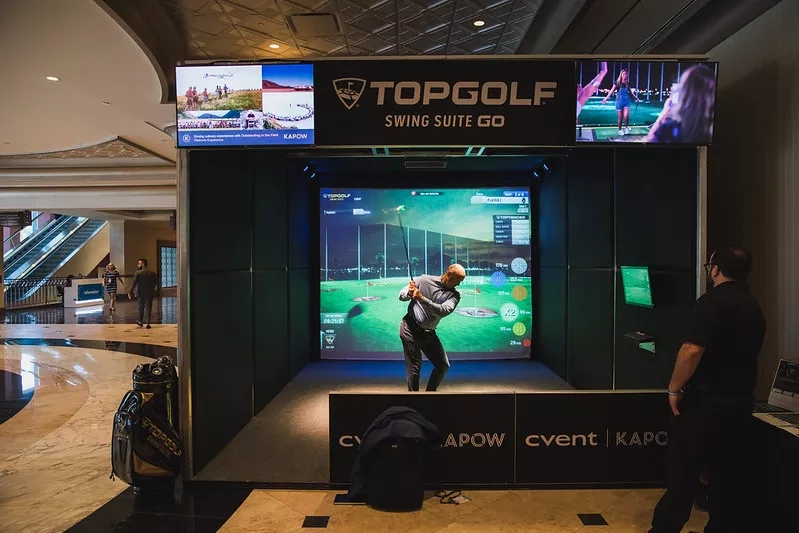
Experiential marketing tactics have become increasingly prevalent as technology has become more sophisticated. However, like the Post-It note example above, these tactics do not have to be super complicated. Below are some of the most common experiential marketing strategies brands adopt today.
Hosting Events
As we in the events industry know very well, there is truly no replacement for face-to-face interaction. Experiential events are an essential part of your experiential marketing strategy to engage your audience and introduce them to your brand. Many companies have gone beyond the traditional shareholder dinners and monthly sales events to create unique experiences that get consumers talking.
Installations
Have you ever walked by a pop-up shop sponsored by your favorite TV show? These installations are a way for brands to engage their audience in a particular city or town by becoming a part of their surroundings for a few days or weeks.
Digital Experiences
With our phones and computers playing such important roles in our lives now more than ever, many brands have embraced the fact that consumers are rarely without a device in their hands. By integrating their campaigns directly into your screens, digital experiential marketing campaigns are accessible from anywhere.
Examples of Experiential Marketing
There are so many great examples of experiential marketing out there, but here are just a few events, installations, and digital experiences to help inspire your planning process:
Events
- Revolve Festival at Coachella - Hosted by the clothing brand Revolve
- Anheuser-Busch Virtual International Beer Festival
- Cheetos “House of Flamin’ Haute” Fashion Show
Installations
- OGX Car Wash
- Wendy’s Halloween Drive-Thru
- HBO’s Lovecraft Country Drive-In Event
- Reese’s Peanut Butter Robot
- Netflix’s “The Irishman” Manhattan Little Italy Takeover
- Dove Body Wash Sustainable Vending Machine
- Club Wyndham “Elf” Hotel Room
Digital Experiences
- IKEA + Snapchat Escape Room
- Canada Goose in California Virtual Reality Experience
- South by Southwest Virtual Reality Experience
Steps for Creating an Experiential Marketing Campaign
When designing your experiential marketing campaign, your team must create a strategy that aligns with your broader marketing goals. What is the goal of this campaign? What resources are available? What tone do we want to communicate? It is very easy for an experiential campaign to look sloppy if all the elements outlined above are not cohesive.
If you're considering incorporating experiential marketing into your marketing strategy, here are the steps you need to take to create a successful campaign:
1. Define Your Goals
Brands create experiential marketing campaigns for many reasons. Before you brainstorm ideas, gather your team to decide why you need to execute this tactic in the first place. We’ve named some of the most common goals below, but if none of these speak to your organization, take the time to find your “why."
- Expand Your Brand Reach: An experiential marketing campaign is a great way to introduce your brand to a new region or demographic through location-based tactics.
- Clarify your Brand Image: Consumers want to feel a connection with the companies they support. Experiential marketing is a clear way to announce your brand’s story and ideals to your audience.
- Launch a New Product: Experiential marketing tactics are an engaging way to introduce customers to a new product, either through experiences that enhance awareness or actual product demos.
- Increase Customer Engagement: If you're hoping to recapture the attention of your customers or hook them in a new and exciting way, experiential marketing is a great way to increase customer engagement with your brand and products.
- Boost Sales and Quality Leads: If adding to your bottom line is the goal, an experiential marketing tactic that showcases your product is a great way to attract customers who are ready to buy. You'll also gain leads for prospective customers who are just encountering your product for the first time and might buy in the future if you get them into your marketing funnel.
2. Understand Your Target Audience
To create a memorable experiential marketing campaign, you need to have a deep understanding of your target audience. Conduct market research to identify their preferences, interests, and pain points. This information will help you design an experience that resonates with your audience and creates a meaningful connection.
3. Develop a Creative Concept
Your experiential marketing campaign needs to have a unique and creative concept that aligns with your brand and captures the attention of your target audience. Brainstorm ideas that are innovative, engaging, and incorporate interactive elements. Think about how you can create a multisensory experience that appeals to all senses and leaves a lasting impact.
Of course, your creative concept must stay within the scope of your resources. Outline your budget, time, location, and other project constraints, and design your concept with these limitations in mind.
4. Choose the Right Event Technology
Event technology plays a crucial role in creating a seamless and impactful experiential marketing campaign. Utilize event technology solutions that allow you to integrate digital elements, such as augmented reality, virtual reality, or interactive touchscreens, into your experience. This will help you create a more immersive and engaging environment for your audience.
If possible, also leverage event technology that allows you to track as many people who stop by as possible. With form fills and surveys, you can track things like total visitors, new customers, repeat customers, interested prospects (leads generated), and contact information for anyone willing to provide it.
5. Create a Comprehensive Promotion Plan
Once you have your concept and technology in place, it's time to create a detailed promotion plan for your campaign. Outline the various touchpoints and interactions your audience will have throughout the experience. Consider how you will promote the campaign, whether it's through social media, email marketing, or traditional advertising channels. It's important to have a clear timeline, budget, and allocation of resources to ensure a smooth execution.
6. Measure and Analyze Results
After your experiential marketing campaign has concluded, it's crucial to measure and analyze the results. Track key performance indicators such as attendee engagement, social media reach, website traffic, and lead generation. By analyzing these metrics, you can identify what worked well and areas for improvement. Use these insights to refine your future campaigns and optimize your marketing strategy.
Track key performance indicators to measure the success of your campaign. Monitor attendee engagement, social media reach, website traffic, and lead generation. Analyze the data to gain insights and make data-driven decisions for future campaigns.
Experiential Marketing Best Practices
As you craft your experiential marketing strategy, the key is to create a memorable and immersive experience that goes beyond traditional marketing tactics. Follow these experiential marketing best practices to leave a lasting impression on your customers:
1. Maintain Authenticity
Throughout your campaign's execution, ensure your messaging stays true to your brand. Experiential marketing can be one of the most successful ways of communicating your brand image and personality. However, it can easily become disjointed or awkward if your experience does not reflect your brand's values.
To make this easier to understand, we decided to explain by example. Imagine you work for a big-time Manhattan event planning company that specializes in creating daring, off-the-cuff experiences for young and trendy New Yorkers. Below are some key elements that you would consider while designing your experiential marketing campaign:
- Experience: It would be a strange choice for this fashionable event planner to design a common campaign centered in a simple hotel ballroom or a stuffy restaurant. To convey a more avant-garde approach to event planning, the company could instead throw an impromptu street fashion show or flash mob. Onlookers could take photos and post to social media, creating organic buzz around the event planning style of the organization.
- Location: When creating a live event or installation, the saying is most definitely true: location, location, location! These event planners would not be reaching their desired clientele if they hosted the brand experience in a popular tourist zone such as Times Square or a corporate-centric area like Wall Street. Instead, they should search for up-and-coming neighborhoods with a reputation for trendiness. The location of your experiential marketing campaign should enhance the experience and add to the brand message, not argue against it.
- Energy: Have you ever been to a party where you show up ready to dance, and as soon as you walk through the door, your energy goes from yay to… blah? If these event planners organized corporate retreats or spa weekends, it would make sense to create a relaxed mood. However, these event planners need to align their exclusive events with a proper level of excitement.
Evaluate your campaign continuously during the creation phase to ensure that it stays true to your brand’s voice and image. Experiential marketing should clarify to the consumer what your brand is—it should not further muddy the waters.
2. Create a Memorable Experience
Develop a creative and unique concept that captures the attention of your audience. Consider incorporating interactive elements, multisensory experiences, and technology to create an immersive experience that leaves a lasting impact. Especially if your goals for the campaign are longer-term, such as customer engagement and brand awareness, you'll need to make an instant and lasting impression.
4. Train Staff
Ensure your staff is well-trained and equipped to deliver a seamless and engaging experience. They should understand the campaign objectives, be knowledgeable about the product or service, and be able to answer any questions or concerns from attendees. What's more, they should add to the overall experience with the right amount of energy!
5. Foster Social Sharing
Encourage attendees to share their experiences on social media by creating shareable moments, photo opportunities, or interactive elements. Incorporate branded hashtags or contests to increase the reach and visibility of your campaign.
5. Follow Up with Attendees
After the campaign, follow up with attendees to maintain the connection and nurture leads. Send personalized emails, offer exclusive promotions, send photos from the event, or provide additional information to keep the conversation going.
6. Continuously Innovate and Improve
Experiential marketing is an evolving field, so it's essential to stay up to date with the latest trends and technologies. Continuously innovate and improve your campaigns based on customer feedback, insights, and industry best practices.
Proving the ROI of Your Experiential Marketing Campaign
Although not as glamorous as the actual execution of your campaign, the data collection process post-campaign is one of the most important steps. If you do not analyze the ROI from your experiential marketing campaign, you won’t know if you carried out the goals you outlined earlier in the process.
There are multiple ways to measure the ROI of your experiential marketing campaign, depending on which tactic you choose to employ. Below are some common data elements you can track, but you can always measure additional criteria as it applies to your strategy.
- Number of downloads
- Website traffic
- Number of social media posts and/or tagged photos
- Percentage increase in news mentions year-over-year
Get Started on Your Experiential Marketing Strategy
Before jumping in to create an experiential marketing campaign, be sure to weigh the pros and cons of this effort. Experiential tactics tend to be more costly and do take a lot of manpower and time to execute successfully. If the resources are available to you and you think an experiential strategy is the right move, begin to plan.
Do your research—what have other brands similar to yours done in the space? Is there room to differentiate your brand? Outline your goals and write them down so they are always at the forefront of the strategy. Brainstorm multiple ideas, and make sure that they align with your brand image. Keep the campaign authentic and true to the organization.
Finally, take the time and energy to do a thorough analysis of the success of the campaign. Learn from the campaign's successes, but also its failures. Make note of where things could have been improved upon and use these lessons in the next campaign.
Experiential marketing is a great strategy to set your brand above and apart from the rest. By taking the time to complete your due diligence and craft a compelling narrative, your brand can win earned media and increased exposure in the marketplace. And, you need to make sure that you have the right event marketing platform to track all of your data in one place.
Anna Linthicum
A recent graduate of Washington and Lee University, I am currently the Sales Development Representative for the Marketing Partnerships team here at Cvent.
My writing journey got its start with stories about my cousins and our incredible adventures together on family vacations. You can find me organizing my closet, doing Kayla Itsines workouts, or watching The Office for the umpteenth time.
More Reading
Experiential Events: 14 Innovative Ideas to Inspire You
Experiential events are about taking risks, thinking up new, creative formats, and engaging your audience. But why should they be part of your event marketing strategy?
Well, today’s audiences look for immersion and interaction. They don’t want to sit in a stuffy boardroom as someone reads off a PowerPoint presentation. The goal is to connect with attendees on a deeper level, and as marketers, using experiential events can help us deepen engagement with our audience. Of course, that's easier said than done.
To give you some inspiration, we’ve gathered 14 creative examples of experiential events that provide meaningful, unique, and memorable event experiences.
What Is an Experiential Event?
An experiential event provides attendees with a unique and immersive experience that promotes a brand, product, or service.
These events are designed to create a memorable and emotional connection between attendees and the brand, often through interactive activities, sensory stimulation, and storytelling. The goal is to engage attendees in a way that leaves a lasting impression and encourages them to become loyal customers or brand advocates.
Experiential events push boundaries. They go beyond traditional event marketing tactics with interactive, hands-on experiences, and allow attendees to interact with your brand, products, and values in a fun, exciting way.
Experiential events can take many formats, and while the goals of each event will differ, the overarching goal is to generate buzz, build brand awareness, and drive customer loyalty.
Here are a few elements shared by experiential events:
- Active engagement: These might include hands-on activities, interactive installations, workshops, and gamification.
- Innovation and creativity: Experiential events favor novel formats, technologies, and unconventional strategies.
- Uniqueness and memorable experiences: Unique or experiential event design, layouts, and activities make these events interesting and memorable.
- Risk and adaptability: Experiential events mean taking calculated risks, testing new concepts, adapting to change, and embracing uncertainty to create something fresh and impactful.
- Audience engagement and involvement: Attendees can contribute ideas, participate in co-creation activities, and influence your event elements.
- Outcome and impact: The aim is to achieve specific outcomes, spark new ideas, collaborate, and wow your audience.
Types of Experiential Events
Experiential events come in many shapes and sizes, including:
- Brand activations: These are events, campaigns, or strategies designed to create direct engagement and interaction between your brand and your target audience. They are all about bringing your brand, its values, and personality to life.
- Innovation summits: These events showcase new technologies, trends, and innovative solutions within an industry.
- Product launches: These events are designed to reveal your latest product or solution to prospects and customers.
- Partner collaboration events: These events bring businesses together to co-create and explore partnership opportunities between their offerings.
- Interactive workshops: These are interactive sessions where businesses can explore and learn about specific solutions. They often involve hands-on demonstrations and practical use cases.
14 Memorable Experiential Events to Inspire You
1. Cvent CONNECT
A whole host of immersive experiences
Cvent CONNECT, one of the largest events for event professionals, offers a unique experience that goes beyond traditional conferences and trade shows.
This annual event includes experiential event experiences like virtual reality, where attendees can explore immersive experiences, and product showcases, which allow attendees to interact with the latest product features. Interactive workshops are another way in which attendees can gain hands-on experiences to help them learn new skills.
2. Adobe MAX The Creativity Conference
Providing hands-on experience
Adobe MAX’s Creativity Conference introduced the Creative Park, an interactive area to explore new tools and features. Attendees could test emerging Adobe software in a hands-on environment, fostering creative experimentation and providing instant feedback to the developers.
3. Salesforce TrailblazerDX
Immersive learning experiences
Salesforce's TrailblazerDX is an immersive learning and networking experience. Attendees could earn badges through workshops and interactive challenges, emphasizing skill-building and practical learning within a dynamic environment.
4. Lululemon Sweatlife Festival
Bringing your brand to life
Lululemon's Sweatlife Festival is a great example of bringing your brand to life. It featured a full day of yoga classes, workout sessions, wellness workshops, and interactive experiences. The event brought together fitness enthusiasts, wellness experts, and brand ambassadors for a day of physical activity, learning, and connection.
Regular tickets also allowed attendees to attend two sweat classes, including boxing, spinning, or trampolining.
5. IBM Think's Cognitive Studio
Experiencing innovation
IBM Think featured the Cognitive Studio in 2016, an interactive zone showcasing AI and cognitive solutions. Attendees could explore real-world AI applications through interactive demos, discussions, and expert-led sessions, bridging the gap between theory and practice.
6. HubSpot INBOUND's Deep Dive Workshops
Interactive collaboration
HubSpot INBOUND is a mainstay of the marketing industry's events.
Its intensive ‘Deep Dive’ workshops allowed attendees to explore specific marketing or sales challenges through collaborative problem-solving and direct application of strategies.
7. Microsoft Ignite and Inspire’s Immersive VR Experience
Incorporating virtual reality
Microsoft Ignite introduced mixed reality to their event with immersive VR experiences. Attendees used VR headsets to explore Microsoft's technologies virtually, bringing complex concepts to life tangibly and memorably. Keynote speakers also appeared on stages as 3D holograms.
8. Splunk .conf
Interactive workshops
Splunk .conf featured interactive workshops—from educational game shows to team problem-solving—to engage and delight attendees.
These sessions allowed attendees to discover product use cases, walk through real-life scenarios, and demo as they went. Their ‘Hands-on labs’, hosted by Splunk instructors, also divulged their products’ best tips and tricks.
9. IKEA’s Sleepover Event
Thinking out of the box
In honor of World Sleep Day, IKEA announced a sleepover event available only for IKEA family members. Members could choose their own bed linen, and then experience immersive sleep-themed activities like ASMR experiences, a silent disco, sleep workshops, and more.
As a B2B brand (and without access to large shops full of furniture), hosting a sleepover probably wouldn’t work. However, why not treat your most loyal customers to exclusive, themed experiences?
10. Qualtrics X4 Dream Team
Interacting with attendees
Qualtrics X4’s Dream Team was a group of Qualtrics employees dedicated to making the X4 an experience to remember. Using their software, they took over 2,000 requests from attendees to improve their experience. These requests covered a range of things, including:
- Delivered a birthday cake to an attendee celebrating their birthday
- Helped a customer get their skateboard signed by Tony Hawk
- Got prescription glasses for an attendee who forgot theirs
11. Dell Technologies World
Interactive experiences and training
Dell Technologies World brought its brand to life with hands-on labs and training courses, educational and interactive experiences, and 1:1 interaction with engineers in live Ask the Expert sessions.
But that’s not all. The immersive Solutions Expo gave attendees an interactive experience of their latest products. Attendees could even turn themselves into video advertisements using Dell technology.
12. Juniper NXTWORK 2019
Gamification
Juniper NXTWORK 2019 added gamification to a series of panel conversations called ‘Unpacking AI’ with theCUBE, a well-known media platform and interview series.
Panelists were scored on their contributions to the conversation, resulting in a final winner. Filmed in a professional studio, this experience allowed attendees to submit questions and comments during the livestream.
13. ServiceNow's Knowledge
Giving attendees the chance to unwind
ServiceNow's Knowledge event featured arcade games throughout the Expo hall floor, giving attendees a wonderful chance to unwind. Attendees could explore engaging mini-games related to IT, HR, and customer service solutions, making learning more interactive and enjoyable.
14. LinkedIn Talent Connect Innovation Lab
Showcasing innovation
LinkedIn Talent Connect, an in-person and online event, included an Innovation Lab. Attendees explored emerging talent solutions through interactive tech showcases and discussed how AI and automation impact HR practices.
Tips for Creating Successful Experiential Events
Understand your audience
Before planning your event, thoroughly understand the needs, interests, and pain points of your B2B audience.
Consider their industry, roles, challenges, and goals. This understanding will help you tailor the event experience to resonate with their preferences and provide meaningful solutions.
Set Clear Objectives
Define clear and measurable objectives for your experiential event. Are you aiming to showcase new technology, foster partnerships, generate leads, or educate attendees? Well-defined goals will guide your event planning and help you evaluate its success afterward.
Prioritize Engagement and Interaction
The essence of an experiential event is interaction. Incorporate interactive elements such as workshops, hands-on demonstrations, group activities, and networking sessions. Encourage attendees to participate actively, collaborate, and engage with your offerings and content.
Innovate and Think Creatively
Embrace innovation and creativity throughout the event planning process. Experiment with unique event formats, technologies, themes, and activities that differentiate your event from traditional gatherings. Offer attendees experiences they wouldn't find elsewhere, and push the boundaries of what's possible within your industry.
Use technology to Enhance the Attendee Experience
Technology is vital to creating an immersive attendee experience. For example, you could use artificial intelligence or augmented reality to create interactive brand activations or product demos.
Or connect directly with your audience through a mobile event app. Give them easy access to content, networking, and important information all in one place. Chat, Q&A, polls, and surveys also bring another level of interaction to sessions.
Experiential Events: Plan Memorable Experiences
Remember: The success of a B2B experiential event doesn't just come down to attendance numbers. Think about the quality of engagement, connections made, and the long-term impact on attendees' perceptions of your brand.
Focus on creating memorable moments that resonate with attendees long after the event ends. Incorporate elements like immersive installations, surprise guest speakers, interactive challenges, and opportunities for hands-on learning.
Consider how attendees will feel, what they'll learn, and the overall impact the event will have on their perception of your brand.
With careful planning, creativity, and a genuine commitment to delivering value, you can create an event that stands out and leaves a lasting positive impression.
Interested in learning more about creating in-person events your attendees love? Download our Ultimate Guide to In-Person Events.
Olivia Cal
More Reading
9 Interactive Event Ideas for Memorable Experiences
Event planning isn't easy. There's a lot to juggle with tasks like budgeting, registration, marketing, and post-event feedback. And while you're at it, you just cannot forget to create interactive events that engage and entertain attendees.
So, where do you start? This post will help you do just that. Read our top 9 interactive event ideas that get everyone involved and having fun.
1. Install Photo Booths
Everyone loves a photo booth. It’s a great way to let your attendees capture their event experience in fun photos. Modern photo booths can do more than take pictures; they can also create GIFs and videos.
Take event interactivity to the next level by getting attendees to share those photos on your social wall. This gives them a fun activity, and you get loads of content to use in your post-event marketing activities. And as attendees share their photos on social media, it amplifies the reach of your event and attracts more attention and potential attendees for your next event.
2. Award Attendees for Participation
Showing attendees that you appreciate their participation can boost engagement in a big way. Awarding prizes for different categories encourages them to get involved and rewards the most engaged.
For example, you could award the person with the most correct answers in a quiz or who asked the most questions in an AMA. Use various platforms in the market to create leaderboards and display the top participants on a big screen throughout your event to create a competitive spirit and highlight and celebrate active participation.
3. Ask Me Anything (AMA) Sessions
Following up on the last point, Q&A sessions are great for keeping audiences engaged, but Ask Me Anything (AMA) sessions can be a game changer. Ask attendees to submit their questions before and during the talk, with the twist that they can ask anything they want.
This format allows attendees to discuss their specific situations and receive tailored advice, making the session super relevant and personal. AMA sessions encourage openness and direct interaction with speakers or experts and give your audience valuable insights they can relate to.
4. Schedule Roleplays and Simulations
Roleplays are great for simplifying complex topics and helping attendees absorb more information, especially at learning-focused events. Get participants to team up and act out scenarios live.
For instance, at a customer experience conference, attendees could pair up and reenact a conversation between a customer support rep and an angry customer. This is one of the best interactive corporate event ideas, and it works well in small breakout sessions. However, you can also do it on the main stage with an audience debrief and Q&A.
5. Don't Just Talk, Do! Hands-on Workshops for Engaged Attendees
Whether a conference, festival, or meetup, hands-on workshops are a great way to get attendees involved. These interactive sessions run alongside your main program and have attendees dive in and get hands-on with the content.
Looking for interactive ideas?
At a digital marketing conference, you could do website audit workshops where attendees get to roll up their sleeves and audit their own site. Similarly, why not do a "build your own mini garden" workshop for a sustainability event? Participants learn a new skill and leave with a little green friend to nurture.
These workshops add a personal touch to your event, make it memorable and educational for everyone involved, and ensure interactive event experiences.
6. Get Social, Get Buzzing
Another aspect of social media is hosting contests on platforms like Instagram, LinkedIn, or TikTok. These can really increase online engagement and buzz. Ask attendees to participate in activities such as answering trivia questions, joining an online quiz, or simply sharing photos of their event experience. Make it even more enticing by offering a prize for the winner
Combine your social media contest with a social media wall for maximum impact. Display all the entries on a big screen for everyone to see, creating buzz and getting more attendees to join in. Seeing their contributions live can increase their sense of participation and make your event more memorable.
7. Game Shows
Finding interactive entertainment for virtual events can be tough, but game shows are the answer. Here are a few to choose from:
- Family Feud: This is always the top choice as it's team-based and encourages communication and teamwork.
- Jeopardy: Test attendee's knowledge on a wide range of topics in a fun, competitive format.
- Who Wants to Be a Millionaire: Create excitement with this classic trivia game where participants can win virtual prizes.
- Name That Tune: A fun way to engage music lovers by having them guess songs from short clips.
Pro Tip: Set clear ground rules to make this virtual event idea run smoothly and keep everyone engaged. For example, tell participants when to use the mute button to avoid overlapping answers and keep the conversation flowing. Setting these expectations upfront will help create a more organized and fun experience for everyone involved.
8. Host Panel Discussions
Panel discussions are a great way to create an interactive and dynamic environment at events. These thrive on audience input, so they are very engaging. To host a panel discussion, gather a group of experts on a topic and allow attendees to ask questions. This Q&A format keeps the audience engaged as their questions steer the conversation in meaningful directions.
This format gives valuable insights from multiple perspectives, allows attendees to feel heard and involved, and creates a more inclusive and interactive environment.
9. Gamify Your Event
Gamification is another excellent event engagement idea that increases attendee participation. For festivals, why not set up a scavenger hunt? It's a great way for people to explore the venue and engage with clues and tasks.
In a corporate setting, participation quests can encourage networking. Imagine tasks like "find someone with the same job title" or "collect business cards from three new contacts." Adding leaderboards will bring out the competitive spirit and encourage attendees to get more involved as they see their names move up the list. Quizzes and trivia games, especially if themed to your event, will be a hit and keep attendees entertained.
If you plan to use event software like a mobile app, add in-app games to keep everyone entertained during breaks. Don't forget to offer points for participation in various activities—attendees can redeem these for prizes or rewards, adding an extra layer of fun.
3 Top Tips for Hosting Interactive Events
Hosting an interactive event requires moving away from the traditional structured format to a more fluid and engaging experience. This is what makes these events so enjoyable and memorable for attendees.
Here are three tips to help you host your next event without feeling overwhelmed.
1. Get a Pro Moderator
To make your event run smoothly, get a pro moderator. A good moderator will guide the attendees and keep the order and the energy up. They are like the captain of the ship, making sure the journey is fun and engaging and preventing any chaos. With a pro at the helm, you can allow attendees to explore and participate without losing control of the event.
2. Be Creative
Speakers are the backbone of any conference, but sticking to traditional 45-minute sessions can make your event feel stale. Instead, encourage your speakers to use more interactive formats like Q&A sessions or panel discussions. Talk to them beforehand to see how much time they need and how they like to engage with the audience. Giving them flexibility in their presentation can make the sessions more dynamic and keep the attendees actively involved.
3. Use Digital Tools
More than 81% of virtual event marketers use event management tools to boost audience engagement and interaction. Use digital tools that not only streamline any event type but also allow attendees to submit questions, feedback, and opinions anonymously. These tools can help facilitate engagement, especially for those who might be shy to speak up in a big group. You can capture a wider input range and keep the interaction alive using digital tools.
The Benefits of Hosting Interactive Events
Interactive events can keep people engaged throughout the whole event. By providing hands-on experiences, interactive events allow people to absorb information and gain valuable insights.
They create a space for people to connect, network, collaborate, and break the ice with simple conversations.
This, in turn, makes your event memorable for attendees, who can potentially boost your event's reach and ROI through word of mouth. Plus, the honest feedback during interactive sessions allows you to tailor future events.
Create Interactive Events with Cvent
Use these to make your event memorable and get attendees to come back for more. Choose the ones that fit your industry, event type, and audience, and make them fun. When attendees have a good time and learn a lot, they will return for more.
Let Cvent help you make your events interactive. Our on-site solutions and virtual event platform can take your attendees' experience to the next level. Book a live demo to see the magic of Cvent. Let the fun start!
Frequently Asked Questions
Still curious about how you can host better interactive events? Check out our FAQs to learn more.
1. How do I make my conference more interactive?
Here are a few quick ones: polls and quizzes to test audience knowledge, breakout sessions with hands-on activities, or even a game show. Social media walls where attendees share their thoughts and photos are great for keeping the energy up. Don't forget to incentivize participation by offering prizes for the most engaged attendees. By adding a few interactive elements, you can make your conference a real show.
2. How do you come up with an event idea?
Brainstorming is the key. Think about your audience's interests and what knowledge gaps you can fill. Consider current event trends, popular topics, or even the skills people want to learn. Once you have a general theme, think interactive. Workshops, game shows, pop-up events, or panel discussions with audience Q&A can all spice things up. Don't be afraid to get weird—the most engaging events are often the most unusual.
3. How do you get people to a conference?
Highlight the wow factor in your marketing to get people excited. Show off big-name speakers, unique workshops, or interactive elements in your marketing. Encourage pre-event social media with a branded hashtag to create a sense of community. Offer early bird discounts or limited-edition swag to get people to register. You can turn mild interest into a must-attend by building up and showcasing the value they will get.
John Hunter
John is the Senior Manager of Event Cloud Content Marketing at Cvent. He has 11 years of experience writing about the meetings and events industry. John also has extensive copywriting experience across diverse industries, including broadcast television, retail advertising, associations, higher education, and corporate PR.