


Engagement scores show you who’s ready to take the next step. By tracking actions like session attendance, booth visits, Q&A questions, and resource downloads, you can see which leads are leaning in, what they care about, and when to reach out. Used well, this data helps you personalize follow-up, move the right people forward faster, and prove your event’s real impact on the pipeline.
Engagement data is everywhere. Every time someone joins a session, downloads a resource, or asks a question during a webinar, they’re telling you something. But too often, these signals get buried under top-line user engagement metrics like attendance or registration numbers.
For marketers running events, engagement is a powerful signal: it gives you visibility into buying behavior, surfaces warm leads, and shapes how follow-up happens. This blog breaks down how to use this data to move leads faster, personalize follow-up, and show pipeline impact without guesswork.
?Engagement scoring is just one piece of the puzzle. Download this guide to driving engagement through events to learn best practices for deepening audience engagement.
How engagement signals move leads forward
Events generate a volume of leads, but not all of them are ready for sales. Engagement signals help you see who’s actually moving through the funnel and who’s just skimming the surface.
Take two webinar registrants: one logs in late, stays ten minutes, and drops. The other joins early, submits two questions during Q&A, downloads the post-event resource, and books time with your team. Same lead source, but very different behavior.
Engagement scoring makes that distinction clear and directs focus where it matters. Unlike traditional lead scoring, which often relies on static firmographic data like job title or company size, engagement scoring uses real-time behavioral signals. This gives you a live picture of intent, helping you route high-potential leads to the right sales conversations faster.
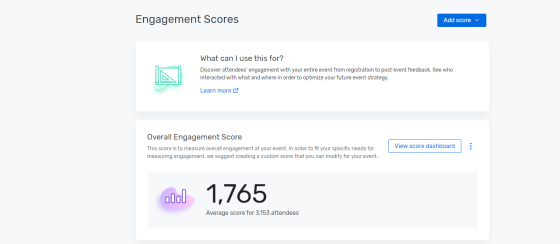
Prompt follow-ups matter because time kills deals, and wasting it on unqualified leads slows everyone down. When you prioritize based on actual interaction, such as session time, poll participation, booth visits, and content downloads, you give sales more than a list.
High-engagement leads can be routed faster, with follow-up tailored to what they interacted with. Warm leads showing some interest can go into a nurture path based on the sessions or topics they cared about. And unengaged contacts might just need a re-engagement trigger or reminder.
This also strengthens attribution. If a contact moves from webinar to meeting in just a few days, you can tie that activity directly to pipeline. If others register but never attend, that’s a signal to revisit your messaging, timing, or format.
?Go behind the tech to see how we used engagement scoring and other tech at one of our events.
How to track the engagement signals that matter
Collecting engagement data starts with choosing which actions really matter most for your funnel. At events and webinars, every click, scan, or question tells you something, but without a consistent way to capture it, those signals get lost.
Map the important touchpoints
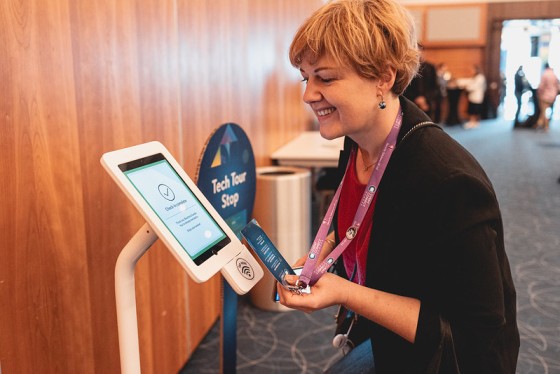
Before the event, list the touchpoints you want to track. For in-person events, this might include session check-ins, booth visits, badge scans, meeting bookings, and resource downloads. For virtual or hybrid, think join times, duration, poll responses, Q&A participation, chat messages, and on-demand content views.
The goal is to track behaviors that indicate intent. A booth visit might be worth more than a general session check-in. Likewise, a product demo question may outweigh a poll click. Defining these in advance keeps your data clean and actionable.
Use the right tech
Your badge scanners, lead retrieval apps, and event apps should sync directly to your CRM or marketing automation platform.
For webinars, integrate your platform so engagement details, such as questions asked or resources clicked, flow into the same system. Skip manual exports and spreadsheets that delay access to the data and, as a result, sales follow-up.
If you’re running multiple events, keep the tracking format consistent. That way, “Q&A participation” or “demo attendance” means the same thing every time, and you can compare across events.
Assign weight to different actions
Not every action signals the same level of intent. So, assign point values that reflect their impact, for example:
- 1 point for a quick poll response
- 3 points for downloading session content
- 5 points for visiting your booth or requesting a meeting
- 8 points for asking a question during a demo
Weighting actions this way creates an engagement score that’s easy to read at a glance. High scores spotlight leads to fast-track; warm scores show who to nurture; low scores point to re-engagement opportunities.
Add context to every action
A list of clicks or scans on its own doesn’t move the funnel. Link each action to a topic, product, or outcome to give the follow-up direction.
For example, if an attendee spent 40 minutes in a product session and downloaded your API integration guide, the sales team knows precisely how to start the following conversation. This context turns “engaged” into “ready to talk about X.”
Don’t miss qualitative signals
Some of the most valuable insights come from signals outside the scorecard. Questions, comments, and feedback shared in sessions, networking lounges, or surveys often reveal deal drivers, concerns, or partnership ideas.
A single pricing question can be more telling than ten passive booth visits.
Track engagement pre- and post-event
Engagement starts well before doors open (or your webinar starts) and continues long after.
Early signals include meeting bookings, agenda-building in your event app, and pre-event content downloads.
After the event, follow-up activities include on-demand content views, session replays, and follow-up resource clicks. Early signals show intent to engage; later signals show sustained interest. Both help determine the most effective next step.

5 ways to turn engagement data into action
Engagement data only delivers value when it shapes the next step. Once your event or webinar signals are scored, the priority is to move the right people forward, keep others nurtured, and make every follow-up intentional.
1. Pass hot leads to sales
Leverage engagement scoring to qualify accounts and determine which leads will convert first. Attendees with high scores and clear buying signals should be routed to sales right away. Include the exact actions taken so sales can open with context, not re-qualification.
2. Group leads by topic of interest
Layer topics onto scores so you’re not just ranking leads, you’re understanding them. A high scorer in your AI track should get follow-up around AI use cases, customer stories, and upcoming technical webinars.
Someone in your sustainability sessions should receive related content on best practices, cost-saving initiatives, and your next green event. This ensures outreach reflects what they signaled they care about.
3. Nurture warm leads
At your tech expo, you notice an interesting trend: leads who scored between 12–18 points were 40% more likely to schedule a meeting within two weeks than those with lower scores. This insight tells you that while higher-scoring leads are showing strong intent, there's still value in nurturing those with lower scores.
Lower scorers can also carry targeted intent. Maybe they’re interested in a specific feature or use case, and one tailored interaction could be enough to spark further engagement. For example, if a lead attended an API security session, a follow-up email with a checklist for secure implementation might be exactly what they need to continue their journey.
With more than 60% of customers expecting personalization, tailoring follow-ups to actions and topics is critical. It’s how you turn warm leads into hot prospects ready for sales.
4. Personalize your thank-you
Replace the generic wrap-up email with something that reflects what each attendee did. Reference a question they asked, share a replay of a breakout they attended, or send a short product video tied to the session content they interacted with. Using personalization in this way makes the follow-up feel intentional and specific, not like a mass send.
5. Keep sales and marketing in sync
Feed engagement insights back to sales with clear, story-like summaries. “Attended keynote on AI tools for events, booked a booth demo, downloaded API checklist” is far more actionable than just “Engagement Score: 18.”
Proving ROI with engagement insights
Engagement data guides follow-up and proves how your marketing channels contribute to revenue. By tying behavioral signals to outcomes, you can show exactly where your efforts moved the needle.
Connect engagement to pipeline impact
Start by mapping high-value actions to pipeline stages. If attendees who booked meetings at your booth are converting to opportunities at twice the average rate, highlight that in your event reporting.
Include the actual numbers so the impact is easy to see, for example: “26 meetings booked onsite; 14 converted to opportunities within 30 days”.
Show influence across the funnel
Go beyond counting leads generated. Show how engagement activities influenced deals already in the pipeline. A mid-funnel account that sent three people to your product demo session may have accelerated their decision timeline because of one of your events.
Linking these touchpoints to closed-won deals reinforces your event’s role in shortening the sales cycle.
Demonstrate depth, not just reach
Attendance can be a surface metric. Depth comes from showing how long people stayed in sessions, how many resources they downloaded, and which follow-up offers they accepted.
For example, say you hosted a hybrid AI conference. The 85 attendees of the technical breakout generated 40 downloads of the spec sheet, and 60 stayed for the full Q&A. This proves sustained interest beyond headcount.
Track signals for retention and expansion
For customer events, engagement can signal future revenue beyond net-new sales. If existing customers attended advanced product workshops and booked a 1:1 time with your account team, that’s a direct link to upsell or renewal conversations. Including these metrics in your event ROI story shows long-term value.
Tailor insights to different stakeholders
Tailor how you present ROI data to each audience. Sales leaders want to see opportunity creation and deal acceleration. Marketing teams need conversion rates and engagement patterns. Executives want the headline numbers, such as revenue influenced, revenue generated, and strategic accounts touched. The same dataset can serve all of them when framed with their priorities in mind.
FAQs: Making sense of engagement scoring
1. What is engagement scoring?
Engagement scoring measures how interested someone is based on their actions across your marketing touchpoints. Each interaction—like attending a session, asking a question, downloading a resource, or booking a meeting—can be assigned a value. Adding these up creates a score that highlights who’s most engaged and why. With the right tools, these scores feed into your CRM, giving sales a clearer picture of which prospects to prioritise.
2. What’s a good engagement score?
There isn’t a universal “good” score—it depends on your audience, scoring model, and the channels you run. The best benchmark comes from your own data: which scores were most common among people who became opportunities or customers? For example, leads who hit 15+ points in a webinar series might convert to opportunities at a much higher rate than lower-scoring leads.
3. How do you measure engagement scores?
Start by deciding which actions signal real interest for your business. At events, this might be session duration, booth visits, or meeting requests. For webinars, it could include Q&A participation, downloads, or chat messages. Assign a point value to each action based on how much it indicates intent. The most effective models also tie actions to topics or products—so you not only know who is engaged, but also what they care about.
4. What’s the difference between lead scoring and engagement scoring?
Lead scoring usually focuses on who someone is, using static data like job title, seniority, or company size. Engagement scoring focuses on what they do—their behavior across events and campaigns. Used together, they give a fuller picture: lead scoring shows whether someone fits your ICP, and engagement scoring shows whether they’re actively interested right now.
5. Why does engagement scoring matter?
Engagement scoring helps you separate passive contacts from active prospects. It highlights who’s most interested, guides how you tailor follow-up, and shows how interactions contribute to pipeline and revenue impact. Done well, it turns raw activity data into actionable insight.
Build a smarter event marketing strategy with engagement data
Each event generates insights that shape the next, helping you refine scoring models, sharpen follow-up, and consistently improve conversion rates.
Over time, this creates a benchmark for what high engagement looks like for your audience, and a playbook for moving them from interest to revenue faster.
Marketers who align capture, scoring, and follow-up build a direct path from live interaction to pipeline movement. Sales teams receive leads with context, not just names, and prospects experience follow-up that reflects their interests.
Over time, these practices deepen audience understanding, strengthen customer relationships, and prove events as a driver of both revenue and long-term success.


