There are seemingly a million ways to approach event marketing. In fact, depending on your role in your organization, event marketing can take quite a few forms. What’s undeniable? When it comes to events, whether they be in-person, virtual, or hybrid, promotion is key.
Through the use of integrated technology, data, and analytics, event marketing is actually very easy to implement across events and at scale. This event marketing guide will explain what event marketing is, how to create a winning strategy, and how to carry that strategy out to improve your events program.
What is Event Marketing?
"Event marketing" is a pretty broad term. So, what is event marketing? By and large, event marketing can mean one of two things: marketing tactics used to promote events or the strategic use of events as a marketing tactic to promote an organization, mission, product, etc. In either scenario, whether promoting your events or leveraging events as a marketing channel, events are powerful.
For many organizations, events represent a large share of their overall marketing spend. In fact, 14% of marketing budgets are spent on event marketing, making events the second-largest expenditure behind online advertising.
This makes sense, when you consider that experiential marketing ranks as the most successful marketing tactic for industry professionals, and the majority of the experiential marketing budget goes to events (24%).
Types of Event Marketing
If the event marketing you do involves planning a calendar of events that will support your marketing plan, then your strategy and planning process will be more complicated and nuanced.

If you need to develop an event marketing strategy that functions as a promotional plan for a specific event, you can break down your strategy using the following marketing channels:
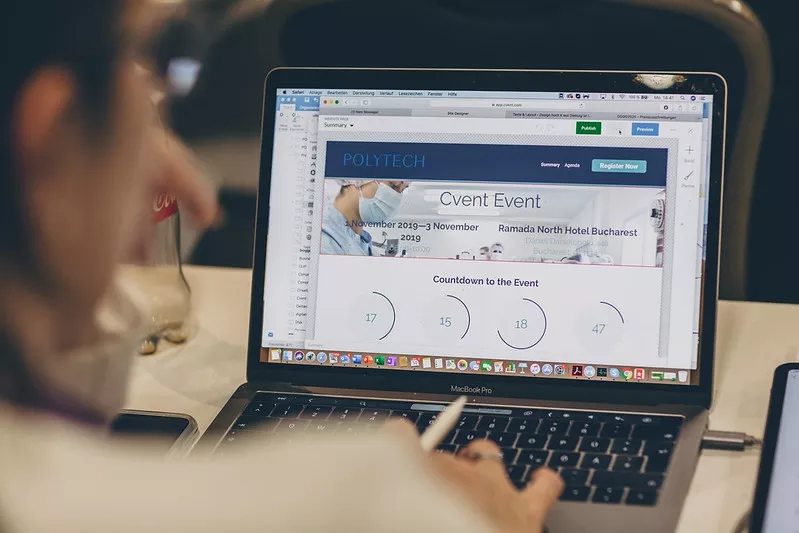
Event Website and Registration: No event marketing strategy is complete without a branded event website and registration page.
Event Mobile App: If you think event apps are just for tracking attendees and saving on agenda printing, you’re behind the times! Mobile event apps are capable of so much, from connecting attendees and boosting engagement with gamification, to sending push notifications to influence attendee behavior.
Email Marketing: A fan-favorite among marketers, email marketing for events is a tried and true method of not only promoting your events but keeping attendees in the loop with access to resources like a registration page, event agenda, travel guidance, and more.
Social Media Marketing: Advertising on your own social media networks is free–so use it! Don’t neglect the power of your own or your organization’s online network; create canned social shares and imagery that can be reproduced and shared across different channels and pages. Don’t forget your #eventhashtag!
Paid Advertising: Paid advertising is a crucial method of event marketing, as paid ads can reach prospective attendees you might not be able to reach via email or free social media marketing.
Organic Search / Search Engine Optimization (SEO): Organic search can play a huge role in gaining exposure for your brand and events. By optimizing your event website, blog posts, and other online marketing materials, you can funnel online traffic to your event website organically.
Event Sponsorships: While you might just think of event sponsorships as sources of revenue, sponsorships aren’t just marketing opportunities for the sponsors themselves. Partnerships with sponsors can go a long way toward marketing your event if you take advantage of opportunities for mutual promotion and choose sponsors that can influence prospective attendees to attend.
Live Event Marketing During and After Events: Event marketing doesn’t end when your event begins. There are plenty of ways you can continue to promote your event, brand, and future events during your event programming, from sharing live social media updates from on site to creating fun experiences attendees will want to share online.
Continued Promotion After Your Events: Events generate so much amazing content that can be repurposed and promoted later on, and with the leads you’ll generate during your event, you can leverage new connections to inform and expand your marketing strategy.
How to Create an Event Marketing Plan
Events are costly, which is why creating a detailed event marketing strategy is important. Your budget, goals, resources, target audience, and more will determine the types of events you plan as well as the promotion strategies you adopt.
The event marketing process begins by evaluating your organization’s marketing and sales goals, as well as broader business goals, and how events can help achieve them. Events can add valuable leads to your sales pipeline; boost morale for customers, employees, or other stakeholders; promote a new product; and so much more.
By identifying what you hope to achieve, and how your events can help you do so, you can begin planning your event promotion strategy and objectives based on those overarching goals.
Of course, it’s not always easy to know where to start. To help guide the way, we’ve compiled some event marketing best practices, including a breakdown of different event promotion tactics, which you can use as your event marketing plan template to get your strategy on track.

1. Know Your Event Basics
Before you can do anything else, you must have a handle on the purpose and high-level details of your event. Make an outline of your event that includes:
Event Name: This is your event’s first impression, so make it a good one! If you’re planning a recurring event, make sure the event name is recognizable throughout every iteration. That way, you can create a “brand” for your event that builds a sense of loyalty and excitement, making it easier to promote your event to repeat attendees.
Event purpose: Consider the purpose of your event through the lens of each group of stakeholders: your organization, attendees, sponsors, and exhibitors. Your event will need to cater to the goals of each stakeholder, which means your event will serve different purposes to different people.
Target Audience: Who is your primary audience? What does the ideal attendee look like, and what will they want from your event? Defining your target audience means evaluating your event goals and deciding which attendees need to be there to help you meet them.
Event Type: Choosing your event type is the bridge between your event purpose and the event format. This is when you’ll decide whether your event would make most sense as a conference, webinar, training or workshop, VIP event, or otherwise.
Event Format (In-person, Virtual, Hybrid, or Webinar): Once you have a handle on your event goals and audience, it’s time to decide the best format for your event. Is your audience spread around the world? Perhaps a virtual event is best. Will face-to-face conversations be the key to achieving your goals? In-person might be the way to go. Whichever format you choose, ensure your event management platform can support your needs.
KPIs to Measure Goal Performance: After locking down your event purpose(s), you’ll need to define a way to track and measure your success in meeting those goals. Event KPIs (key performance indicators) can include: event revenue, registration and attendance rates, attendee engagement scoring, sales qualified leads, and so much more.
Theme: Whether it’s a one-off event or an annual affair, your event should have a theme that speaks to its purpose, is timely, intrigues prospective attendees, and is relevant to your event programming.
Tagline: You know those fast-food or brand slogans that have permanently embedded themselves in your memory? (“I’m Lovin’ It,” anyone?) Your tagline might not stand the test of time quite as well, but if you can create a fun tagline that captures the heart of your event, it’s a great way to make your event stand out.
Color Scheme and Brand Imagery: Your event branding should match your company’s branding guidelines and imagery, but you should also consider–especially for recurring events–creating graphics and guidelines that make your event recognizable across every iteration and easy to spot across all promotional materials.
2. Create a Branded Event Website
Your event website will be the primary touchpoint for prospective attendees where they can go to be introduced to your event, find all the key details they need when deciding to attend, and keep up with event updates.
As with all promotional materials, your event website should be branded to match your company and event branding guidelines. A cohesive look to all marketing content ensures attendees trust that your company is hosting the event and makes it easy for them to recognize communications about your event.
Your event website should include:
Event name and tagline
Time and Date
Location or platform
Cost to attend
Call to action leading to registration page
Enticing details like keynote speakers
FAQs
Build Registration Into Your Event Website
With the help of event registration software, you can build your registration process into your event website to allow for seamless attendee registration. This is crucial to making it simple for attendees to register but also personalizing the experience.
3. Set Up a Mobile Event App
Event apps have become a critical component in the event marketing mix, pairing well with event websites while offering advanced capabilities that allow you to engage attendees and promote event programming in greater depth.

With the right strategy, you can use your event app to stay in touch with attendees as soon as they register for your event and download the app. Send them push notifications when new items are added to the agenda to boost their excitement and get them sharing your event details with their social networks.
Even when your event wraps, your app can be used to keep in touch with attendees and maximize engagement right up until it’s time to get them registered for your next event!
Connect Attendees with a Virtual Event Platform
If you’re hosting a virtual or hybrid event, you have an opportunity to leverage your virtual event platform to showcase your brand and stay connected with attendees at every stage of your event using a virtual attendee hub.
4. Event Email Marketing
Email marketing is a key element for any event marketing plan. If you aren’t already using an email marketing tool, get on that! They make it so much easier to design and automate emails–especially if you can integrate your email marketing and event management tech.
When creating your email campaigns, don’t overdo it, and personalize your communications as much as possible. Find the balance between being forgettable and being a nuisance–no one likes being spammed by marketing emails, no matter how great your event is.
What’s more, try to separate your contact lists based on recipients’ interests. If you’re sending the same canned emails to everyone, they won’t have nearly the effects of emails specifically targeted to attendees based on their industries, job titles, topics of interest, registration type, or other demographics.
You want to build a buzz around your event and get your registrants engaged and excited about your event–so much so that they don’t mind hearing from you with marketing content before, during, and after your event.
Here are a few quick tips to help you leverage email marketing to drive event registration:
Use email marketing software to easily review, manage, segment, and update your contact lists. Targeted campaigns will help significantly in driving registration.
Segment your email audiences. Rather than sending the same promotional materials to your entire audience, thoughtfully segment your audiences and create email content that's relevant to each specific audience.
Create your emails to be consistent with your event website to ensure brand cohesion and recognition.
Maximize registration and audience engagement and save yourself some time by pre-scheduling emails, automating updates, sending confirmation and thank you emails, and sending email updates that apply to specific audiences and their interests.
Review reporting (your marketing software will help you do this easily) to analyze open and click-through rates to see what’s working and what’s not, and to uncover additional marketing opportunities.
Bonus Tip: Test, tweak, and track your emails to get the most out of your campaigns. With the right event management software tools and a dash of innovation, you can adjust your strategy as needed on the fly.
5. Go All-In on Social Media Marketing
In terms of free promotion, social media is one of the best tools in your arsenal. You and your organization should have a presence on as many platforms as possible, including LinkedIn, Facebook, Instagram, and X (formerly Twitter).
Of course, your event promotion should be geared toward your target audience, so if your ideal attendees aren’t on Instagram, focus your efforts on other platforms. The key here is knowing your audience and how they prefer to communicate.

Fun fact: The average person spends 3 hours and 15 minutes on their phone every day, and a huge percentage of that time is spent on social media: the global average is 2 hours and 23 minutes every day on social media. Those numbers alone should convince you that social media marketing is a no-brainer!
Now, assuming you’re sold on the concept, let’s talk about how you can most effectively leverage social media as an effective event marketing channel:
Use Hashtags
Hashtags aren’t just those annoying little tags people tack onto the end of their posts to seem relevant (though when used incorrectly, they do little else). Hashtags are used to categorize related content, increasing the discoverability of posts, facilitating engagement with a specific audience, and promoting awareness about a specific topic.
In the case of event marketing, hashtags should be used in two ways:
You should create a hashtag specific to your event so you, your attendees, and anyone assisting in promotional efforts (like sponsors) can tag their posts and reference your event with ease. Not only does this make it easy to see all the posts being shared about your event, it raises awareness about your event.
Use hashtags related to your event theme and industry–specifically, tags your target audience cares about. If your goal is to attract hoteliers to your event, for instance, determine which topics they care about, check out popular tags, and start adding them to your social media posts.
Post Consistently
It’s not enough to throw one post out on each of your social media feeds and let your followers do the work of circulating your event promotion for you. You’ll need to set up a schedule for posting content that not only keeps your event on everyone’s mind but offers new details and reasons to get excited about your event.
To ensure you aren’t over-posting, consider using both your company social media and your personal accounts to cross-share content and boost visibility. With each new post, think about how you can differentiate your posts and how you can get even more interaction on each new social share.
Engage with Interactions on Your Posts
Speaking of interaction, don’t simply post content then forget about it. The point of social media is interaction, which means when your followers like, share, and comment on your posts, you should be matching those interactions. Respond to comments, follow new people and pages that are liking your content, and expand your network as much as possible to increase the impact of your posts.
Start a Brand Ambassador Program
This one isn’t for everyone, but in some cases, brand ambassadors are an amazing way to get your message spreading farther outside of your usual network. With brand ambassadors, you can supply some form of incentive (free products, gift cards, etc.) in exchange for promoting your brand and events across their personal social media channels.
Brand ambassadors should be individuals you can trust and who have established loyalty to your brand. If there’s an attendee who loves your event each year and has an active social media presence, partner with them to promote your event. Chances are, if they love your brand, they’ll love helping promote it–and getting a little swag for their efforts just boosts their loyalty even more!
Create Contests for Online Engagement
The beauty of social media is its ability to create online interactions that make digital connections feel more real. You wouldn’t expect to find camaraderie and genuine connection online, but there are so many opportunities to create exactly these experiences.
Social media contests are a perfect example of this. Whether it be an online scavenger hunt, daily challenges, or livestreaming meetups, there are so many ways to not only bring people together online but get them fired up in a little friendly competition.
Beyond the Basics: More Ways to Promote Events
The promotion tactics outlined above are an effective starting point, but there’s more to be done! Now, let’s take a look at event marketing tactics you might not have considered or ones you thought you could get away with avoiding.
To really maximize your marketing strategy and ensure your event receives the attention it deserves, you’ll need to leverage all marketing avenues available to you.
Don’t Discount Paid Digital Ads
While there are a few free modes of promotion for your event that have undeniable value, paid promotion is extremely effective–particularly in delivering results quickly. The benefits of paid advertising are numerous, including:
Reach and Visibility: Paid advertising allows you to reach a larger, more targeted audience quickly, as ads can be strategically placed in front of the right customers, resulting in a better ROI than organic marketing.
Analytics and Insights: Paid advertising can include comprehensive insights, including ad performance, click rates, conversion rates, and more to help you make data-driven decisions to boost the effectiveness of your marketing efforts.
Competitive Edge: Paid advertising isn’t within everyone’s budget, which means you have the opportunity to dominate top ad positions.
It all comes down to how much money you have in the budget. If you’re targeting a wider demographic and paid ads are within budget, they could be a great option. Consider the following questions before launching a paid ad campaign:
Will paid ads be the most valuable way to spend the piece of your budget you can allocate to them?
What are the KPIs you need to measure to ensure you’re meeting ROI goals for ad performance (i.e., impressions, click rates, conversions)?
How are your other (free) promotional methods performing? Will paid advertising add enough value to the mix, or are you covered?
SEO: Optimize Your Event Website to Drive Organic Traffic
Event SEO (search engine optimization) is a critical piece of any good online marketing strategy. With the right tools and efforts to optimize content, you can drive organic traffic to your event website simply by making it easy to find.
What do I mean by that? Imagine you’re organizing an event in Chicago that’s all about using artificial intelligence (AI) to help businesses run more efficiently. You want your event to be found by small business owners, middle managers, and IT decision-makers. Put yourself in your target audience’s shoes: what might you be looking for online that could lead you to your event?
In this case, you might use keywords like “AI conference” or “AI in business.” You’ll want to use a keyword research tool to find the highest-value keywords to target, then, when building your event website, incorporate those keywords to help drive traffic and move your site up higher in search engine results.
Include Sponsorships in Your Event Marketing Plan
When planning your event marketing strategy, keep in mind that you’re not only marketing to attendees but also potential sponsors. After all, sponsorships can be key to defraying costs and stirring up interest in your event.
Event sponsors should be chosen strategically–sponsors with a similar customer base to your own can offer immense value, including opportunities for mutual promotion across their social media networks and your own.
When marketing your event to sponsors, be sure you have a clear value proposition that demonstrates how sponsoring your event can benefit your partners and help them meet their own goals.
Check out a complete guide to event sponsorship here!
While some of these promotion strategies will happen across various channels, you can take care of many of these items with the help of event technology. With the right event management platform, you can manage your event website, registration, email marketing, mobile app, and sponsors all in one place.
Promote Your Events While They’re Happening
Event promotion shouldn’t end when your event begins. You can achieve so much by continuing to promote your event while it’s going. Not only does live marketing during your event promote FOMO for those who are not in attendance, it offers the ability to repurpose content for future promotions, as well.
Imagine you get invited to an annual event that’s not in the budget to attend. You follow the event to see what you’re missing, and as you see live videos, social shares from attendees, and clips from keynote speakers popping up on your social networks, you experience some major envy. Next year, you’ll definitely make it a priority to attend!
This is exactly the scenario you should be trying to achieve by continuing your promotional efforts during your event. This is also a great opportunity for companies that chose not to sponsor your event to see why they should sign on with you next time.
Capitalize on Post-Event Marketing Opportunities
Once your event wraps, you’ll have a repository of amazing content just waiting to be repurposed. From on-demand session recordings to short video clips and photos you can share across your social networks, make the most of the content generated during your event by using it in future promotional materials.
What’s more, ensure you’re leveraging all the amazing leads you collect during your event to inform your marketing strategy, expand your audience, and connect with anyone who left the event wanting to know more about your company’s offerings.
Event ROI: How to Define Event Marketing Success
How do event marketers define success? The metrics used to measure event marketing success (or ROI) can include revenue, attendance, sales-qualified lead generation, brand awareness and media impact, post-event feedback, and progress toward achieving a company’s overall business goals.
These event marketing objectives should help guide your strategy and create a baseline to help you determine your event ROI.

Alignment with Company Goals
Your event goals should be closely tied to the goals of your company. For every event you host, you should be able to prove that it helps move the needle in achieving overarching business goals in addition to helping you meet marketing- and sales-specific goals.
Revenue and Lead Generation
Revenue is often a huge priority for event planners and their companies–which makes sense, considering how much revenue events can generate. If your event ROI is strongly tied to revenue goals, this should be your highest priority above all other KPIs.
In addition to revenue generated through ticket sales, sponsorships, etc., leads captured should factor into your calculations, including total leads generated as well as actual revenue achieved by pursuing those leads.
Event Attendance
Measuring total attendance is a natural gauge for event success. After all, the higher your attendee rate, the greater the potential for lead generation. When tracking attendance, be sure to compare this to registration data to understand your event attrition rate. This can help you achieve better attendance rates in the future by using targeted marketing to make sure as many registrants as possible actually attend the event.
Media Impact and Brand Awareness
Building brand awareness and fostering connections within your industry can be a key metric for measuring your event success. This can include social media traffic, new followers, clicks and website visits, live video viewership, and press coverage.
Post-Event Survey Feedback
An event can’t be called a success unless your attendees leave satisfied. After all, happy attendees are far more likely to become qualified leads and loyal customers than attendees who have a less-than-stellar experience.
You can use post-event attendee surveys to collect qualitative and quantitative feedback that tracks attendee satisfaction, sponsor insights, opportunities for improvement, positive experiences to replicate and promote in the future, and so much more.
Past Event Learnings
After every event, if you’ve collected valuable feedback from attendees, sponsors, and other stakeholders, you should apply these learnings as much as possible to your future events. Of course, once you’ve incorporated those feedback-driven changes, it’s important to reflect on how those changes were received at your latest event and whether further improvements are needed.
Integrated Event Management and Marketing Technology
A great event marketing strategy can’t stand on its own; you need your marketing and event tech working together to optimize your strategy and maximize success. Enter: integrated event management and marketing technology!
Your event management platform should be able to do it all, from planning and promotion to day-of-event management and post-event reporting. What’s more, your event tech should seamlessly integrate with tools like Marketo and Salesforce to ensure your event data can be collected, analyzed, and reported on with ease.
Event Marketing Trends to Watch
There’s so much to consider in your event marketing strategy, including balancing old hat best practices and the latest trends. Now that we’ve dug into your overarching marketing strategy, let’s take a look at the latest event marketing trends to watch.
A Marketing Strategy for Every Event Format
While you can recycle much of your marketing plan for different events, there will be different considerations and calculations to make depending on your event format. Marketing virtual events will naturally look a bit different than marketing in-person events. What’s more, it’s important to remember that different event formats lend themselves to different forms of ROI.
As you use this guide to build your event marketing strategy, keep in mind that you should consider how your event promotion strategy fits into your total event program and adapt your strategy as needed to make the most of your in-person, virtual, hybrid, and webinar events.
Marketing Happens Before, During, After, and Between Events
As events have evolved to include in-person, virtual, hybrid and webinar events, the marketing funnel has become more complex. Of course, this has opened the door to amazing new marketing opportunities.
By building an event marketing strategy that includes your entire event program, you can reap the benefits of marketing to your target audience before, during, after, and between events, creating a continuous engagement cycle with strong conversion potential.
Highlight ESG Priorities in Your Marketing
Environmental, social, and governance (ESG) responsibilities are high on companies’ lists of priorities. If your target audience, sponsors, corporate stakeholders, and industry partners are focused on issues like sustainability, accessibility, and diversity, equity, and inclusion (DE&I), then you should highlight your own company’s commitment to these priorities across your marketing channels.
Marketing and Events Teams Work Closely
Many marketers are working more closely with event planners, whether due to new staffing structures, budgetary considerations, or the desire for more strategic event programming. By all accounts, this increased level of collaboration is a win for marketers, who have so much to gain from working closely with planners to achieve maximum event ROI.
Balancing Risk and Reward: Automation and AI
Automation, artificial intelligence (AI), and machine learning (ML) are hot-button topics right now, with many companies leveraging these tools to infuse efficiencies into their workflows wherever possible.
While there are so many opportunities to use these tools to your advantage in your marketing efforts, don’t forget the risks involved. AI still has a long way to go, and it’s important to continue infusing a human voice (and oversight) into your event promotion tactics.
A great way to balance efficiency and accuracy? Adopt an event management and marketing platform that helps you automate manual tasks like scheduling email campaigns and capturing leads.
Event Marketing Best Practices
We’ve run through a ton of information, so let’s boil this down to the event marketing best practices you need to remember to create a successful event marketing strategy.
Consider your event budget, goals, and KPIs at every stage of promotion
Create a plan that helps achieve overarching business goals
Set event marketing goals that are measurable and achievable
Don’t stop your promotion when your event begins
Automate your marketing efforts wherever possible
Use integrated event management and marketing software to decrease time spent on manual tasks
Virtual Event Marketing
In addition to traditional event marketing, there is more to be done when it comes to marketing virtual events. The silver lining of virtual events is that the barriers to entry with an in-person event are eliminated or lessened. Travel is nonexistent, and the cost is very often reduced. With these barriers gone, your virtual event has the potential to attract more attendees than your in-person event ever has.
However, you still need to make sure you're marketing your event well. Social promotion is still key for these events, and working with sponsors and partners is important to expand your reach.
As always, your registration website should be informative and should showcase your brand. Virtual event marketing takes the right technology for the job, so have an event platform in place before you try to take on virtual or hybrid events. The virtual Attendee Hub is one solution that gives you the ability to create a fully branded experience virtually.
Event Marketing Is an Essential Part of Event Planning
Whether in-person, virtual, or hybrid, events empower connections, educate attendees, and drive organizational success. An essential piece of this puzzle, of course, is event marketing. Without a fantastic event marketing strategy, none of your event goals are possible.
With the help of event technology, you can gain greater visibility into crucial event data that helps you create an informed and successful event marketing strategy.